Category Archives: Festivals

Unveiling the History: the tale behind “Pritchard’s of Penang – Enterprise, Secession, and Murder”, by Marcus Langdon.

Presenting slices of precious insights into Penang’s retail scene (courtesy image: Marcus Langdon)

(BACK COVER BLURB)

Pritchard & Co. Ltd. (1888–1959) is a name which has almost faded from memory in Malaysia. Its foundation and development encompass a period when Malaya saw unprecedented growth driven by an export boom in tin, rubber, and other agricultural produce which coincided with advances in technology such as the invention of electricity, telephones, motorised vehicles, and aircraft. 

As the first widely-diversified department store in northern Malaya, with its main store in Penang and branches in Ipoh, Butterworth, and Sungai Petani, Pritchard’s became a key player in the growth of retailing in Malaya during the best and worst of times of British colonial Malaya. 

Drawn from family documents  and richly-illustrated with nearly 300 images, including many rarely seen photographs from inside the stores, this book captures spectacularly the essence of times past as it follows the fortunes, activities, and fate of the business and the family behind it.


9-11 Union Street, constructed by Pritchard & Co. in 1916, currently the Maybank building (Courtesy of The Robert Hussey Collection)

“Pritchard’s of Penang –  Enterprise, Secession, and Murder” featuring items from The Robert Hussey Collection is a thoroughly-researched and richly-detailed exploration of one of Penang’s most iconic retail establishments. 

Drawing from a wealth of memorabilia and personal insights provided by someone intimately connected to the Pritchard family, historian Marcus Langdon masterfully weaves a narrative that captures the essence of the island’s retail history from the British colonial era to modern times.
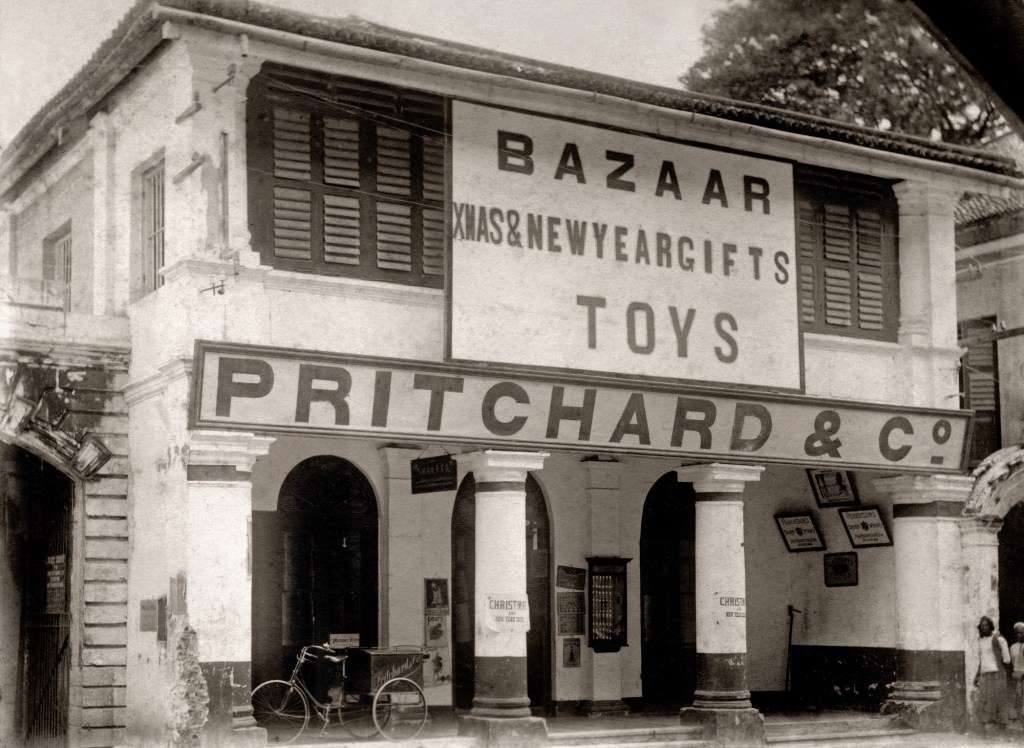

 15 Beach Street, where Pritchard & Co. began (Courtesy of The Robert Hussey Collection)

“During a research trip to Singapore around 2011, a well-spoken gentleman named Robert Hussey contacted me,” says Langdon in the book’s preface.

“In his possession were some old Penang photographs which had been left to him, and he wondered if they might have some historical interest.”

Langdon had recently relocated to Penang and Hussey, too, was making plans to move from Singapore to Penang—the place of his birth. Some three years later he made that move. 

“Over the next few years,” Langdon recalls “we met up regularly and I became aware of the extent of his collection.

“Essentially it was an assemblage of personal documents, photographs, drawings, and miscellaneous items relating to several generations of the Pritchard family, the core of the collection offered a wonderful insight into British life in Penang in the late nineteenth and early twentieth century. 

“Understanding that Pritchard’s (as it was colloquially known) was acknowledged as the first true British-style department store in Penang and northern Malaya, we both felt it was important that the relevant portions of this rare collection were recorded for posterity.”

And so the book project took off and Langdon spent a great amount of time on it when what he dubs “a microscopic virus dubbed COVID-19”, came along.

“With Malaysia and the majority of the world’s population shut down and confined to our homes, and without the usual daily distractions of a publishing business, more work was accomplished at my desk in those far-too-many long months than thought humanly possible. 

“The backbone of this book,” he explains, “was forged at that time.”

“Again, other projects and complications got in the way, and it is only now that the final touches, and providential updates, have been applied.”

The book chronicles Pritchard’s journey as more than just a store—it was a symbol of upscale shopping and a bellwether of Penang’s socio-economic landscape during its heyday. 

Before the advent of Whiteaways—another historic department store that eventually became more dominant—Pritchard’s played a significant role in the retail landscape of Penang, embodying the colonial-era shopping experience. 

Over the years, as shopping habits and retail environments evolved, Pritchard’s gradually declined in prominence, but it remains a nostalgic symbol of Penang’s rich commercial history.

Langdon’s meticulous approach shines through in his vivid descriptions and images of the store’s evolution, from its founding days during the British occupation, through the tumult of the Second World War, and into the post-war resurgence.
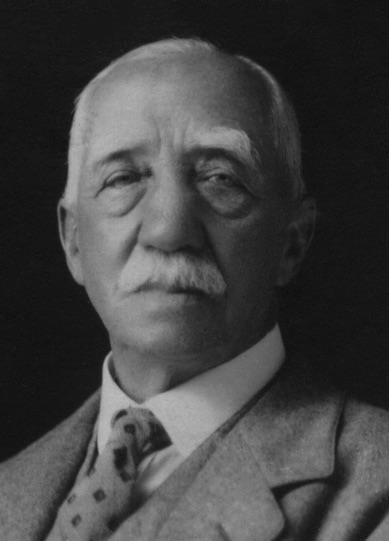

 George Henry Pritchard, 1927 (Courtesy of The Robert Hussey Collection)

One of the most compelling aspects of the book is its detailed account of the advertising campaigns that helped cement Pritchard’s reputation as a premier shopping destination. 

Langdon’s insights into marketing strategies of the time, are illuminated via the photographs and graphics of how the store maintained its allure and adapted to changing times. 

The narrative also thoughtfully addresses the challenges faced during wartime, highlighting the resilience of the business and its ability to bounce back after setbacks.

What sets this book apart is the author’s ability to combine solid research with a personal touch, bringing to life the stories behind the memorabilia that made Pritchard’s a household name. 

It is a nostalgic yet informative journey that not only celebrates a storied business but also offers a window into Penang’s broader cultural and economic history.

In sum, “Pritchard’s of Penang – Enterprise, Secession, and Murder”, is a must-read for history enthusiasts, retail aficionados, and anyone interested in the rich tapestry of Penang’s colonial past. 


Inside the Union Street store, 1930s (Courtesy of The Robert Hussey Collection)

In crafting a compelling narrative that honours the legacy of Pritchard’s while providing valuable insights into the evolution of retail in Southeast Asia, Langdon has this to say:

“I cannot express how grateful I am to have been given the opportunity to bring this treasured cache of family and business history to light for a wider audience to share and preserve for posterity.” 

“Despite the ‘colonial’ period now being frowned upon by upcoming generations, it is nevertheless an integral part of the development of Malaya as it was—and something future generations will undoubtedly be researching. 

“Even today,” Langdon adds, “many Penangites, and indeed those further afield, would not have even heard of Pritchard’s. It was, after all, essentially an era long before their time. 

“Hopefully this book, with its remarkable photographs, will restore Pritchard & Co. and the families behind it to its small but rightful niche in Penang, and indeed, Malaysian, history.”

Marcus Langdon (courtesy image from the author)

Below are several excerpts from the book for interested history buffs and shopaholics:

(For many years, Pritchard’s had been the tailors of choice to the Royal Court of Kedah under Sultan Abdul Hamid Halim Shah. 

Remarkably, it was the practice of the royalty and members of the Court to wear Western clothing outside their private abodes.

Lighter drill materials were used for office wear, and often heavy Tweed was donned for formal occasions. 

In his 1959 book Prince and Premier, Harry Miller stated that:

‘Twice a year an English tailor from Pritchard’s, a firm in Penang, travelled the sixty miles to Alor Star to measure members of the royal family for new clothes. 

He returned a few weeks later for fittings. When the sultan’s son, Tunku Abdul Rahman, was awarded a scholarship to Cambridge University in 1919, ‘The man from Pritchard’s in Penang was summoned to fit the sixteen-year-old prince with suits.’

Excitement is also said to have prevailed at the Penang store when King Rama VI of Siam paid a visit on 7 October 1924. 

After purchasing jewellery at B.P. de Silva’s store in Bishop Street, the King was reportedly hosted to tea at Pritchard’s.)

(“Pritchard’s of Penang – Enterprise, Secession, and Murder” will be launched during the George Town Literary Festival 2025 this November 28-30) 

About the Author 

Marcus Langdon has spent several decades researching the myriad fascinating stories in Penang’s developed history. Based in Penang, he also advises on historical projects and was a founding director of Entrepot Publishing Sdn Bhd.

Other titles by Marcus include:

• Penang: The Fourth Presidency of India 1805–1830

o Volume 1, ‘Ships, Men and Mansions’. Areca Books, 2013.

o Volume 2, ‘Fire, Spice and Edifice’. George Town World Heritage Incorporated, 2015.

o Volume 3, ‘Water, Wigs and Wisdom’. Entrepot Publishing, 2021.

• Biographical Dictionary of Mercantile Personalities of Penang, (contributing editor). Think City/MBRAS, 2014.

• George Town’s Historic Commercial and Civic Precincts(researcher/writer). George Town World Heritage Incorporated, 2015. 

• Epitaph: The Northam Road Protestant Cemetery, George Town, Penang. George Town World Heritage Incorporated, 2017.

• The Habitat Penang Hill: a pocket history, Marcus Langdon & Keith Hockton. Entrepot Publishing, 2018.

• Penang Then & Now: A Century of Change in Pictures.Marcus Langdon & Keith Hockton, Entrepot Publishing, 2019.

• Pastoral Port: An Agrarian History of Penang. Penang Institute, 2023.

• George Town & Adelaide: Sister Cities 50th Anniversary 1973–2023, Marcus Langdon & Rachel Yeoh, MBPP, 2024.
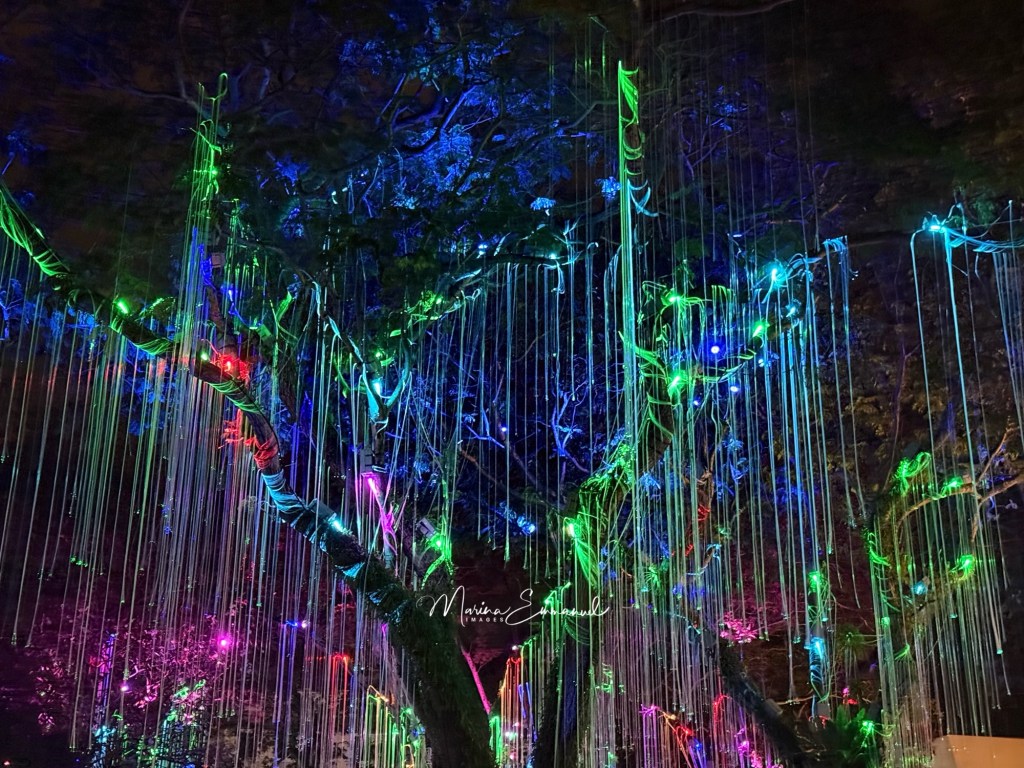
Sparkling Overlap … a tale of two celebrations

Every day is a celebration with these avatar-like vibes

In a diverse and multicultural nation like Malaysia, respect and sensitivity towards different cultures and religions should be at the core of every company’s values and practices. 

Recent observations highlight a concerning trend: before and during  the celebrations of Deepavali, (the Festival of Lights cherished by Hindus, Sikhs, Jains and some Buddhists globally), and many establishments have swiftly transitioned to Christmas decorations, often without regard for the cultural significance of either occasion.

This apparent lack of sensitivity raises important questions about corporate awareness and respect for Malaysia’s rich tapestry of traditions. 

It’s not merely about seasonal decorations; it’s about acknowledging and honoring the cultural and religious identities that make our society unique. When companies jump the gun or fail to recognize the significance of festivals like Deepavali, it can come across as dismissive or tone-deaf, fostering feelings of exclusion or disrespect among communities.

This isn’t an isolated incident. Such oversights have happened before and, regrettably, are likely to occur again if there isn’t a conscious effort to foster cultural awareness. 

For local companies and foreign corporations operating here, it’s imperative to understand that celebrating diversity isn’t just a moral obligation—it’s good business. 

Respecting cultural sensitivities builds trust, enhances brand reputation, and demonstrates genuine commitment to the communities they serve.

Moving forward, companies should adopt a more thoughtful approach to their marketing and decor choices. 

Recognizing and celebrating each festival in its appropriate time and manner sends a powerful message of inclusivity and respect. 

Simple gestures like delaying Christmas decorations until after major festivals like Deepavali can make a significant difference.

Malaysia’s multicultural fabric is a source of pride and strength. Let’s encourage our corporations—both local and foreign—to be more perceptive, respectful, and culturally-aware. After all, true inclusivity is about celebrating everyone’s traditions, not overshadowing them.

Deepavali vibes in Penang’s Little India

(UPDATE)

The tendency of some Malaysians to wish all Indians a “Happy Deepavali” without recognizing its religious significance highlights a broader issue of cultural misunderstanding and superficial appreciation.

Deepavali, also known as Diwali, is primarily a Hindu religious festival celebrating spiritual victory, light over darkness, and the triumph of good over evil. While it has culturally-rich traditions that many Malaysians observe, its core is rooted in religious beliefs and rituals.

This phenomenon may stem from a desire to be inclusive or show respect in a multicultural society.

However, it can inadvertently lead to the oversimplification of complex religious festivals into mere cultural events. Similarly, many people extend Christmas greetings without fully understanding its religious origins, viewing it as a cultural holiday celebrated worldwide rather than a Christian religious observance.

The core issue lies in awareness and education. Recognizing the distinctions between religious and cultural celebrations fosters genuine understanding and respect. It encourages celebrating festivals in their true spiritual context rather than as generic holidays.

As Malaysia continues to embrace its diversity, promoting informed appreciation of each community’s traditions can strengthen social cohesion while respecting the unique religious identities that underpin these celebrations.

From diyas to desserts …

Sweetness of Deepavali

More than just sugar and spice — these colourful treats are a celebration of light, love, and victory! 🪔

Deepavali (or Diwali) marks the triumph of good over evil, light over darkness, and hope over despair. As lamps glow in homes, so do hearts — and yes, so do dessert tables!  

From ladoo to halwa to coconut candy, every sweet tells a story of heritage, joy, and togetherness.  

So go for it — take another bite. This festival is meant to be savoured! 

#Deepavali2025 #FestivalOfLights #SweetTraditions #GoodOverEvil #LightWins #CelebrateWithJoy #IndianSweets #CulturalHeritage

Forget the lights, I’m just here for the sweets!

Fay & Food

My first “sighting” of this lovely and funny soul was at The Star Penang newsroom in 1993, when I joined as a reporter and she was the paper’s freelance writer/stringer.

Once she got behind the computer she would remain focussed and quiet as she went about putting together her famous food reviews.

The sub-editors usually found themselves needing to consult the dictionary when clearing her copies (Aiyo Fay, why are you using such big words, you think our readers can understand, meh? was usually conveyed to Fay by Anna Cheah our then chief sub-editor) Fay would simply smile and give some funny retort and everyone would laugh.

Her love for food was legendary. Some of us would join her for quick hawker meals close to the office when she stepped in to meet her deadlines. As most people know, this foodie was just as adept in appreciating fine food and made no bones when any dish did not meet her exacting standards.

When she moved on to other interests, especially in publishing, I used to pick up her nifty card sets with watercolour images of all things Malaysiana and even tried her ‘Miss Khoo’s Asian Deli’ gourmet products at the time, as I heard they had found their way to the shelves of Harvey Nichols in the United Kingdom.

The writer, TV and radio host, publisher, lover of all things nautical and much-loved daughter, always had a kind word for everyone and we missed her laughter and teasing when she left The Star to pursue other projects and adventures.

It was shocking and painful to many of us to hear that Fay, who was then 48, had left us after a brief illness in April, 2017.

Bettina Chua Abdullah and I had a mutual friend in Fay and our stories and friendship with this fun-loving soul are different and yet, the same. Fay shared different friendships with different people and made her mark which can never be erased.

Which now brings us to the third edition of the Fay Khoo Award for Food and Drink Writing which Bettina organised and has been directing to honour Fay’s legacy.

The call for entries has been made and details found below. The 2019 winners will be announced at this year’s George Town Literary Festival which takes place in Penang from Nov 21-24 (please mark your calendars)

Thank you Bettina, for your dedication in keeping Fay’s memory and our friendships alive!

(In addition to written narrative entries for the award, comics and graphic stories are also open to authors and illustrators wishing to submit illustrated narratives)

CALL FOR ENTRIES 2019

The aim of The Fay Khoo Award for Food+Drink Writing is to recognise new and talented voices, and to encourage and develop excellence in food and drink narratives. We believe that there is a space and a need for well-researched and impactful food journalism, because it is through such writing that we can shine a light on people, culture, health, economics and the environment of culinary delight.

This year we hope to present awards to the three best entries, regardless of category. Please read the conditions of entry and submission guidelines carefully, as these have changed from previous years.

The CONDITIONS OF ENTRY are as follows:

• All writing must fall into the categories of personal narrative, reportage or creative non-fiction.

• Entries should not exceed 2000 words.

• Entries must be submitted in English, and must be the sole work of the entrant.

• Entries must never have been published, self-published, broadcast or uploaded on any

website, blog or online forum.

• Anyone over the age of 16 years at the time of the closing date, who is a citizen or resident

of ASEAN countries, may submit up to three (3) entries.

• A fee of RM 20 per submission will be levied to cover administrative costs.

Processing of fees is made by Hikayat Lebuh Pantai, which manages The Fay Khoo Award, upon submission of entry/entries.

Bank details are as follows:

Maybank | Hikayat Lebuh Pantai Sdn Bhd | 557018565194

Please reference your payment with FKA and your WhatsApp number: eg FKA 012-345-6789

If you do not have a mobile phone, please use a landline number.

SUBMISSION GUIDELINES

• Entries must be saved in Microsoft Word format, and emailed to

thefaykhooaward@hikayat.asia

• Entries need to be double-spaced and the word-count noted at top of the first page.

• Entries must include a WhatsApp or landline number, so that you can be sent a confirmation

that your entry has been received, and we can link submission fees to your entry.

• To protect the integrity of the judging process, entries must not include your name or email address. We will contact you via the WhatsApp or landline number you have provided, for your name and other necessary information.

• Amendments or revised versions will not be accepted.

• Entries will be accepted from July 15, 2019 and must be received by September 15, 2019.

• A fee of RM 20 per submission will be levied to cover administrative costs.

• Entrants who have not turned 18 by November 1, 2019 must provide a parent/legal guardian’s name and contact details.

NOTES ON JUDGING

• There will be three (3) judges for the Fay Khoo Award. The judges’ decision is final.

• The judges will not comment on individual entries.

• The Fay Khoo Award reserves the right to change the panel of judges without notice.

• A Longlist of up to 15 entries will be announced by October 10, 2019, and writers notified by WhatsApp and email.

• A Shortlist of 6 entries will be announced by October 28, 2019, and writers notified by

WhatsApp and email.

PRIZE-GIVING

• The winning entries will be announced at the George Town Literary Festival between

November 21-24, 2019. Accommodation will be provided for the day of the prize-giving.

INTELLECTUAL PROPERTY

• Worldwide copyright of each entry remains with the author, but by virtue of submitting an entry, participants are assigning unrestricted right to publish the winning entry, shortlisted entries and long-listed entries in any format. This right is granted to the managers of The Fay Khoo Award, Hikayat Lebuh Pantai Sdn Bhd and its associates in perpetuity, upon submission of the entry for consideration.

• The Fay Khoo Award will retain fully all income generated by publication of the winning entries, shortlisted entries and long-listed entries, while the author will retain all income generated by their publication separate to this.

• In cases where the author of a winning, shortlisted or longlisted entry independently publishes said submission, the author will mention that the piece was a winner or shortlisted or longlisted entry in The Fay Khoo Award for Food+Drink Writing.

PRIZES:

• Each of the three winners receives a cash award of MYR1500, and a book voucher for MYR500

• Shortlisted entries may also receive other supplementary prizes, at the discretion of the organisers.

AMENDMENTS:

• The organisers of the Fay Khoo Award reserve the right to amend these conditions of entry

if deemed necessary. Any changes will be posted on the award’s Facebook page.

• For further information, please email thefaykhooaward@hikayat.asia

(Images courtesy from the FKAward Facebook and Fay’s)

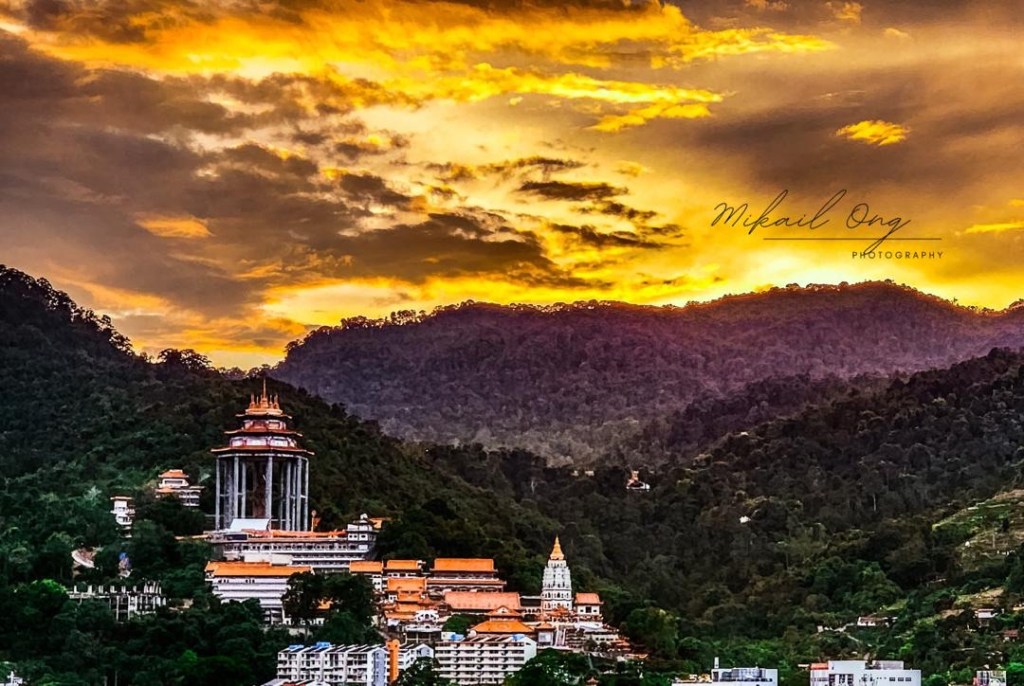
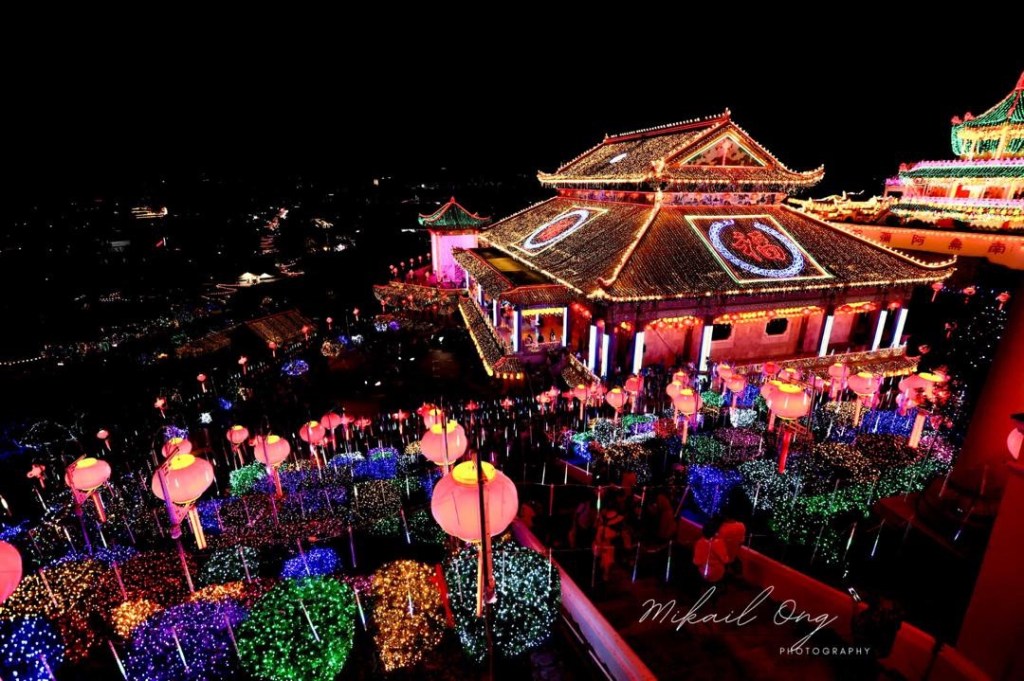
A Celestial Experience: Capturing the Magic of Kek Lok Si Temple on Lunar New Year’s Eve

Penang’s Kek Lok Si Temple

As the sun dips below the horizon and the vibrant hues of twilight envelop Penang, the Kek Lok Si Temple transforms into a mesmerizing spectacle, particularly on the eve of the Lunar New Year. This iconic Buddhist site, nestled atop a hill, becomes a beacon of hope and gratitude, drawing not only our Buddhist sisters and brothers but also Malaysians from all walks of life and visitors from around the globe.

The atmosphere is electric with anticipation as families and friends ascend the temple grounds, each step a journey of devotion—giving thanks for the past year and seeking blessings for the one to come. The air is filled with the soft sounds of prayers, the rustle of red envelopes, and the gentle whispers of wishes that float like the incense smoke rising to the heavens.

Family and friends make their way to the grounds of the Kek Lok Si Temple

What makes this gathering even more heartwarming is the sight of diverse communities coming together. 

Malaysians (and tourists) of various races and faiths joined in unison, united by a shared appreciation for the stunning beauty of the temple, which glowed with thousands of LED lights. The sight was nothing short of breathtaking—a harmonious blend of spirituality and artistry that captivates the senses and inspires the soul.

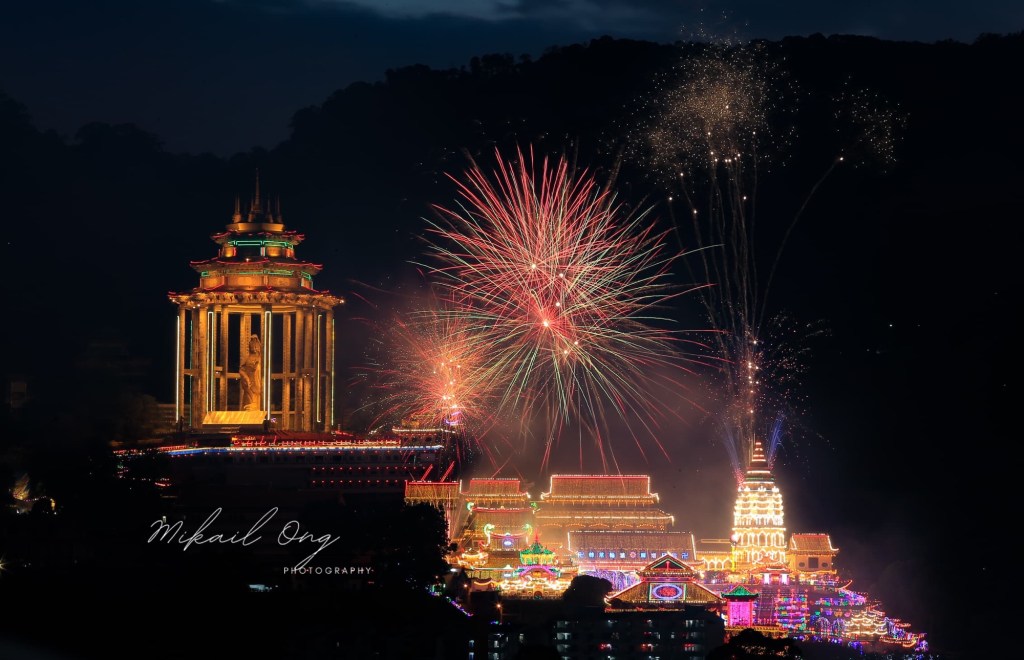
Among the highlights of the Kek Lok Si Temple at Air Itam on Penang island, are its intricate pagodas and the towering statue of the Goddess Kuan Yin, which stands as a reminder of compassion, unity, and love. 

The Goddess Kuan Yin smiles down on all visitors against the backdrop of a fireworks display

As visitors pause to admire the architectural wonders and intricate details, they are also reminded of the values that bind us all together, transcending differences in belief and background. It’s a beautiful testament to the spirit of Malaysia—a melting pot of cultures, where respect and appreciation for one another flourish.

Lensman Mikail Ong had the unique opportunity to capture this enchanting scene on assignment, and he has generously shared his stunning photographs with us. 

His lens reveals the magic of the moment—each shot telling a story of joy, reverence, and the shared human experience. Aud and I, as his sisters in the media, can only dream of capturing such beauty; Mikail’s work encapsulates the essence of what makes Kek Lok Si Temple on Lunar New Year’s Eve a sight to behold.

A Lunar New Year icon … the Kek Lok Si Temple

As you scroll through the images in this post, let each photograph transport you to that hilltop sanctuary, where the glow of lights and the warmth of community create an unforgettable tapestry of life and celebration. 

Whether you are a seasoned photographer or simply someone who enjoys the beauty of the world, visiting Kek Lok Si Temple during this festive season is truly a treat for shutterbugs and a heartwarming reminder of the bonds that tie us all together. 

May the blessings of the new year fill your hearts with joy, compassion, and unity, just as they do at the Kek Lok Si Temple. Happy Lunar New Year!

Penang’s magical Kek Lok Si Temple

Honing Malaysian pipe organ talents

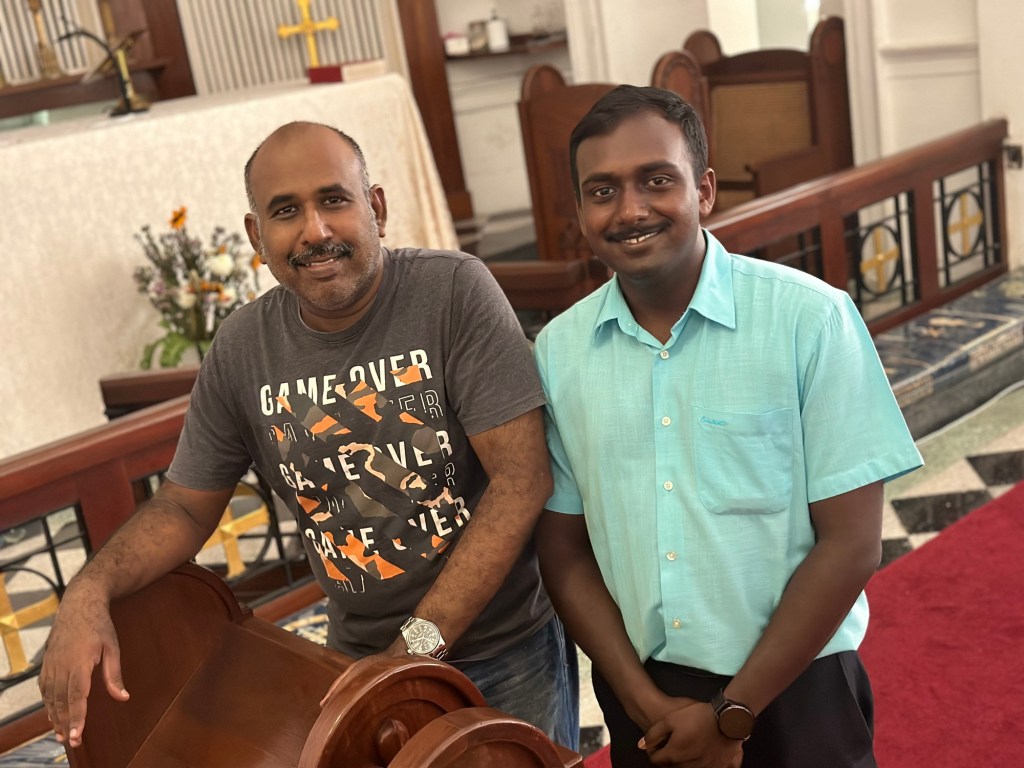
From left: Leonard, Hannah, Jason & Matthew (courtesy pix Leonard Selva Gurunathan)

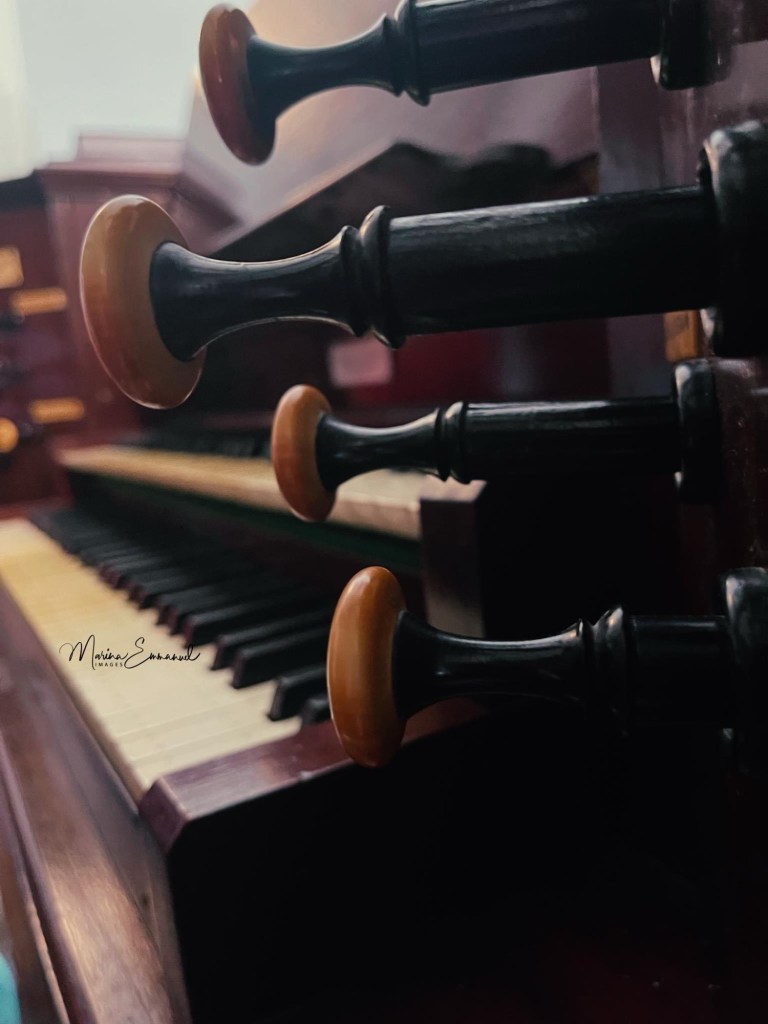
For many young musicians, the pipe organ is a daunting and complex instrument. With its massive size, myriad of keys and stops, and powerful sound, it can be intimidating for even the most seasoned musician. However, for those who are willing to put in the time and effort, the pipe organ can be an incredibly rewarding and fulfilling instrument to play.

Leonard on the pipe organ at St George’s Church

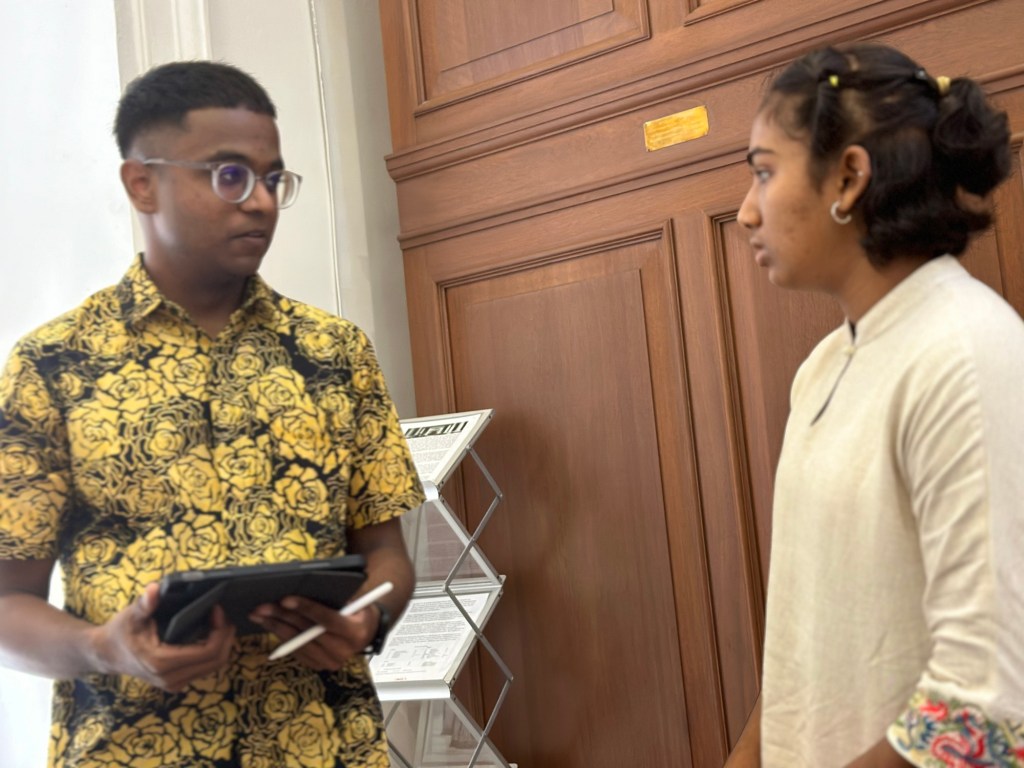
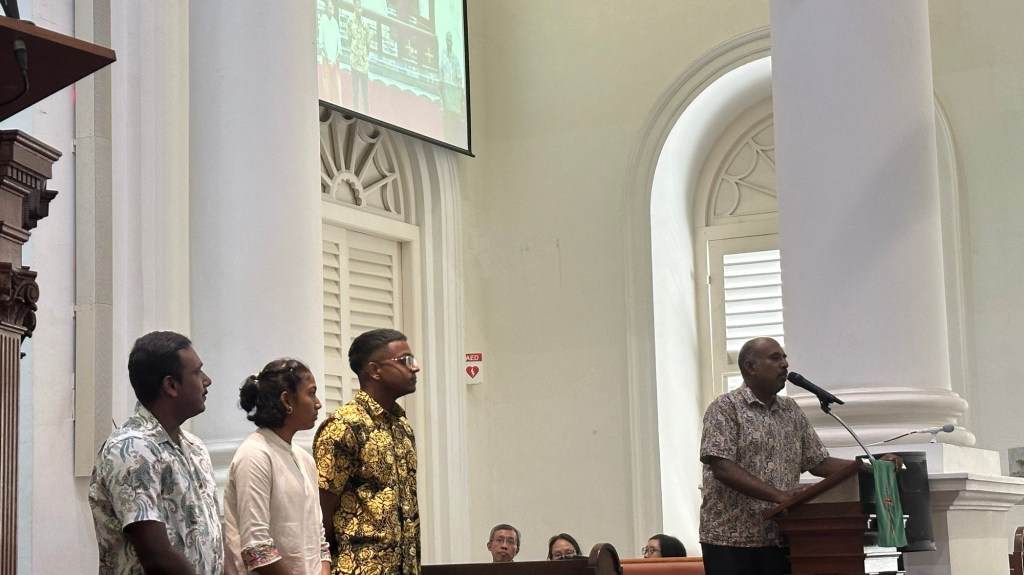
Young musicians Matthew Arwinraj Jaya Paul, Jason William and Hannah Thoraisingam seem to have found a good teacher in Leonard Selva Gurunathan in helping them navigate the complexities of this intricate instrument.

A free lunchtime pipe organ recital yesterday at St George’s Church in Penang was a good show that they are on the way to becoming very proficient pipe organ players.

One of the most inspiring things about learning to play the pipe organ is the rich history and tradition that surrounds this instrument.

Matthew with proud grandmum, Rani Rajamoney

The pipe organ has been a staple of Western music for centuries, and has been used in churches, concert halls, and even in popular music.

By mastering this organ, this group of young people are well on their way to being a part of this rich tradition and carrying on a legacy that spans generations.

Leonard and Jason

The latest edition of the George Town Festival has provided an opportunity for Leonard and young pipe organists in Penang to showcase their talent and inspire audiences from all walks of life with their passion for music.

If you happen to be a young pipe organist or nursing aspirations to be one (regardless of age!) there is still one more free recital during this annual arts festival to enjoy and be further inspired by.

See you next Saturday (July 27) at 1pm in the Church of the Assumption along Lebuh Farquhar.

Church of the Assumption

This heritage Roman Catholic church, is home to the country’s oldest pipe organ, where its resident organist and fierce custodian of the instrument, is Leonard.

Join him and his pipe organists as they take you on a (keyboard) journey of Malaysian music and those from around the world, as they try and inspire more people in Penang and elsewhere to make a home for and support the upkeep of pipe organs, while placing Malaysian talents on the world map of pipe organs.

https://www.nst.com.my/lifestyle/sunday-vibes/2019/08/512028/sir-leonard-rescues-old-lady

Journeying through George Town’s pipe organs

Malaysia’s oldest pipe organ is found at the Church of the Assumption on Lebuh Farquhar

On an island known for its richness in cultural and architectural heritage, music also plays an enriching role for its residents and visitors.

George Town’s Streets of Harmony (straddling Lebuh Farquhar and Jalan Masjid Kapitan Keling), has been home to magnificent and heritage-rich houses of worship for centuries.

A brisk or relaxing stroll beginning from the Church of the Assumption (whose grounds also houses a Roman Catholic museum), onto St George’s Church, Goddess of Mercy Temple, Sri Mariamman Temple and ending at the Kapitan Keling Mosque, tells a tale of how multi religions can co-exist in harmony.

Penang island has also the distinction of being home to two majestic pipe organs found in two heritage churches on the same street in the Unesco heritage core zone!

Southeast Asia’s oldest Anglican church – St George’s Church in Penang – in 2017, received a bicentennial blessing in the form of a 1,050-pipe Mander organ.

It then joined the ranks of its “neighbour” – the Church of the Assumption in hosting its very own pipe organ.

Southeast Asia’s oldest Anglican Church, St George’s

Erected in 1914 and assembled in Penang by 1916, the Assumption Church’s pipe organ was restored in 2013, and carries the pride of being Malaysia’s oldest pipe organ.

As the annual George Town Festival returns to the island next month, a special music treat awaits pipe organ buffs.

Timeless classics by sons of Penang like Tan Sri P.Ramlee, Jimmy Boyle, Edwin Rajamoney and Tan Sri Ahmad Merican are among the tunes that will fill the air, as both heritage churches host lunchtime organ recitals on July 20 and July 27 respectively.

“I am excited to feature the organists of both churches at this innaugral event featuring the two lovely pipe organs in Penang,” says Leonard Selva Gurunathan, who is the resident pipe organist at the Church of the Assumption.

Gurunathan will also be playing some of his original pieces (inspired during the pandemic when he used to chase sunrises).

Young and upcoming Malaysian pipe organists like Matthew Arwinraj Jaya Paul are among the performers who will be infusing a new twist to P.Ramlee songs like “Hujan di Tengah Hari.”

He is also set to share a heartfelt piece “Lay Thine Hands” composed by his late grandfather, Edwin Rajamoney.

Matthew Arwinraj Jaya Paul
Penang’s Church of the Assumption will play host to one of the pipe organ recitals during the 2024 George Town Festival

Here’s a sneak peek of what to expect during the concerts, kindly presented by Leonard and Matthew …

FREE TICKETS https://www.cloudjoi.com/shows/free-lunchtime-organ-recital

Fiesta with the Eurasians

What better way to celebrate Merdeka 🇲🇾month and shed state polls fatigue, than by coming together as family, friends, Penang residents and visitors for samplings of great Serani fare found usually in Eurasian homes and kitchens.

Bravo Penang Eurasian Association for organising the fiesta and to the La Salle Brothers for remaining gracious hosts in allowing the event to be held in Southeast Asia’s oldest Lasallian school. #eurasianfiesta2023 #stxaviersinstitution #penang #serani #sugeecake #pibeapplejamtarts #saltedfishpickle #devilcurry #PEA

Caring Matters

Dear Bibliophiles and those visiting Penang this weekend,

The George Town Literary Festival and it’s related events are set to keep us all on our toes as we have fun being introduced to new book titles and their authors and have a great start to Christmas shopping!

How about taking some time out and going on a photographic exploration of love, caring relationships, social and filial ties?

It is being presented by Karyn Coxall-Leong from Friday 22/11/2019 till 29/11/2019 at Viva Victoria’s Upstairs Gallery at 169, Lebuh Victoria.

The exhibition opens at 6pm this Friday and runs from 12 noon till 11.30pm on other days.

“In a time and place where technology, convenience, consumerism lead, it is so very easy to get caught up in the everyday goings-on, ” says Karyn.

“No matter your circumstances or where you come from, we must all make an effort to remember family and community as the true lynchpins of life.”

(Images courtesy of Karyn Coxall-Leong)

Stories of Sa Pek

Some stories require minimal words, because the photos say it all, and do so in a compelling and articulate manner.

Welcome to George Town where the month of July seems to have taken off with features of photographers who are standing out as fascinating storytellers of a city and island steeped in colour, culture, nature, heritage and endless charm.

Visual artist, photographer and graphic designer Goh Hun Meng and three generations before him lived in the clan houses of the Khoo Kongsi (Leong San Tong Khoo Kongsi) at Cannon Square, a George Town World Heritage site.

Pivotal to a photography exhibition he is presenting during the upcoming George Town Festival, is his 82 year old uncle and godfather, Goh Kong Chuan.

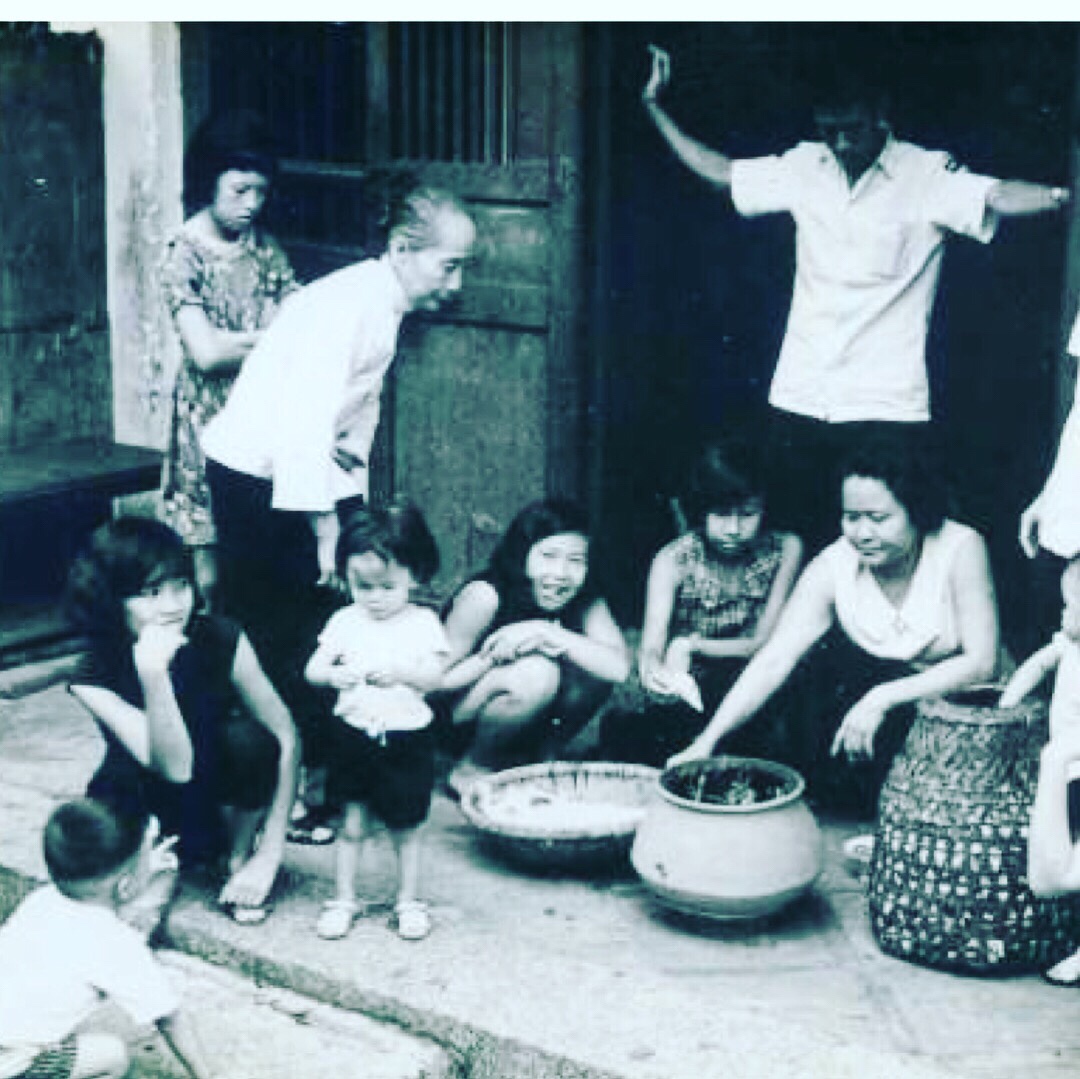
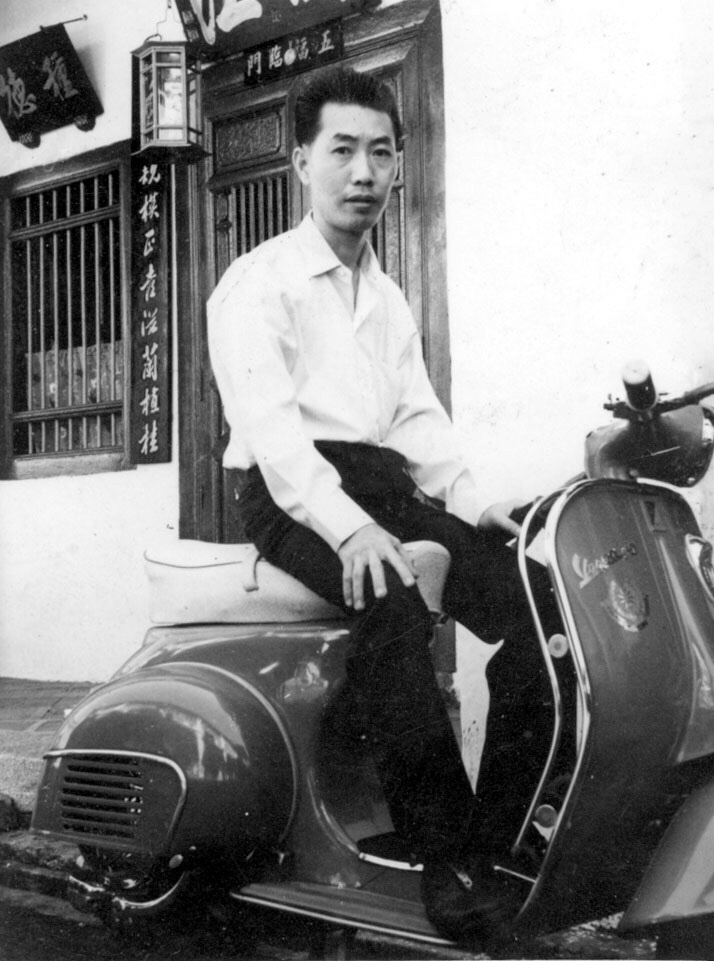
“Sa Pek” or Third Uncle as the elder Goh is referred to in the family, was an avid photographer and showered his nieces and nephews with much kindness when they were growing up.

He also served in the Reserve Army and gave ballroom dancing lessons.

He also used to capture milestones in his family’s lives and the laughter and tears punctuated in between, with his trusty camera.

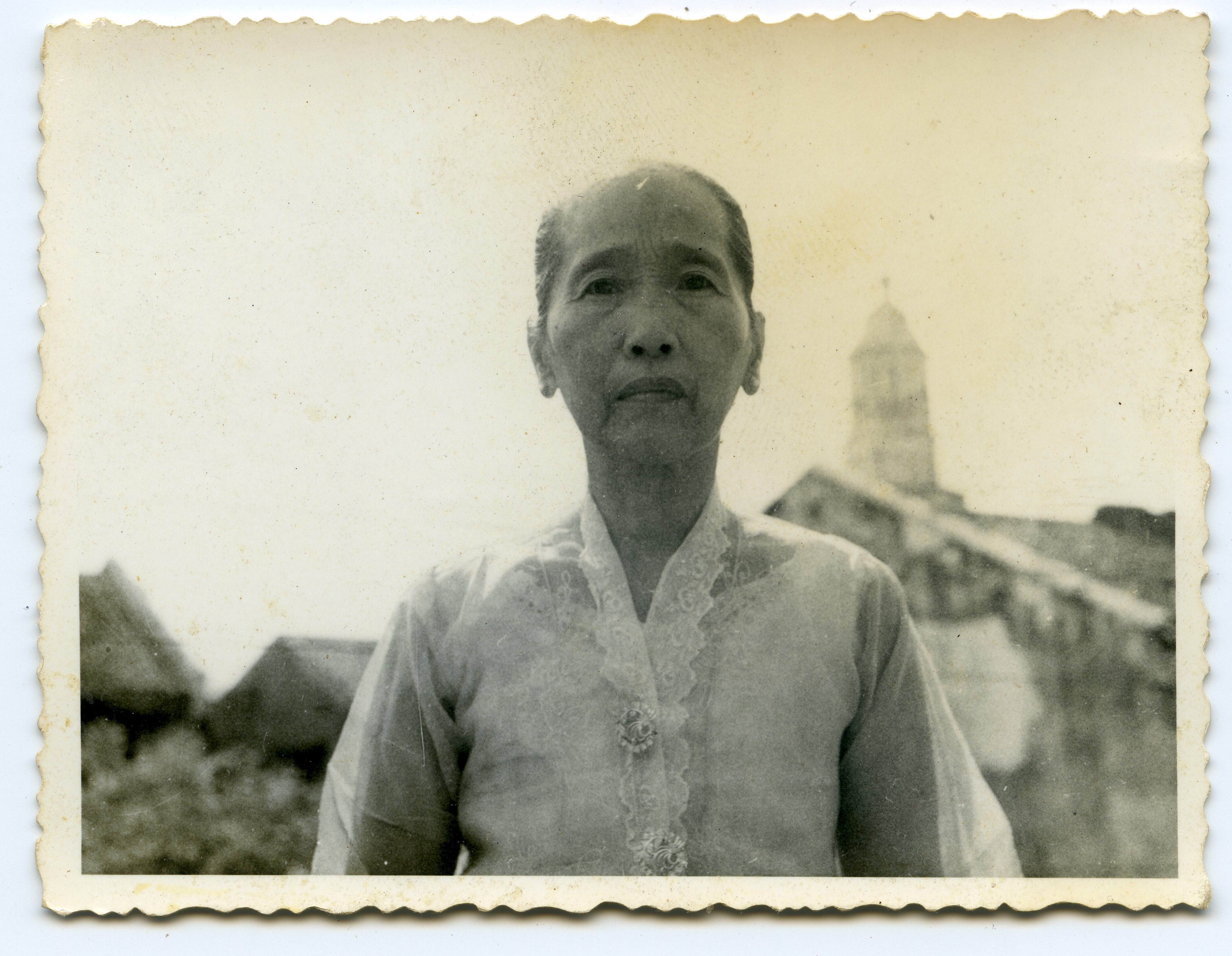
“My late grandmother (born between 1910 and 1912) was a Khoo who had lived in the clanhouse since she was five, “ Hun Meng said.

“When we were growing up, Sa Pek used to give pocket money to my cousins and I and took many precious family photos.

“Today he is 82, suffers from dementia and lives in Pulau Tikus with his wife Lim Poh Geok. His memory is not as good as before.

“The exhibition showcasing his precious collection of photos is my tribute to a man who has always cared for his family.”

Hun Meng is also looking to raise funds for his aging uncle by selling the photographs on display and donating all the proceeds to Goh Senior.

The exhibition which runs from 9 Aug to 3 September, 2018 (from 11am-6pm daily) opens on Aug 11 at 10.30am @Jetty 35 located on the ground floor of 35, Pengkalan Weld, George Town, 10300 Penang.

(All images courtesy of Goh Hun Meng)

(Note: the 16 clan houses which flank the alleyway from the main entrance to the central Clan Temple and courtyard of the Khoo Kongsi where Hun Meng and family lived, have morphed in recent times, into a 43 guest roomed boutique hotel called Clans Kongsi George Town. The story is found in an earlier posting ‘Amazing Slices of History @ClansKongsiGeorgeTown’ in this same blog https://postcodegeorgetown.wordpress.com/2018/06/21/amazing-slices-of-history-clanskongsigeorgetown

#postcodegeorgetown #georgetownfestival2018 #photographyexhibition #photoessay #unescoworldheritage #gohhunmeng #khookongsi