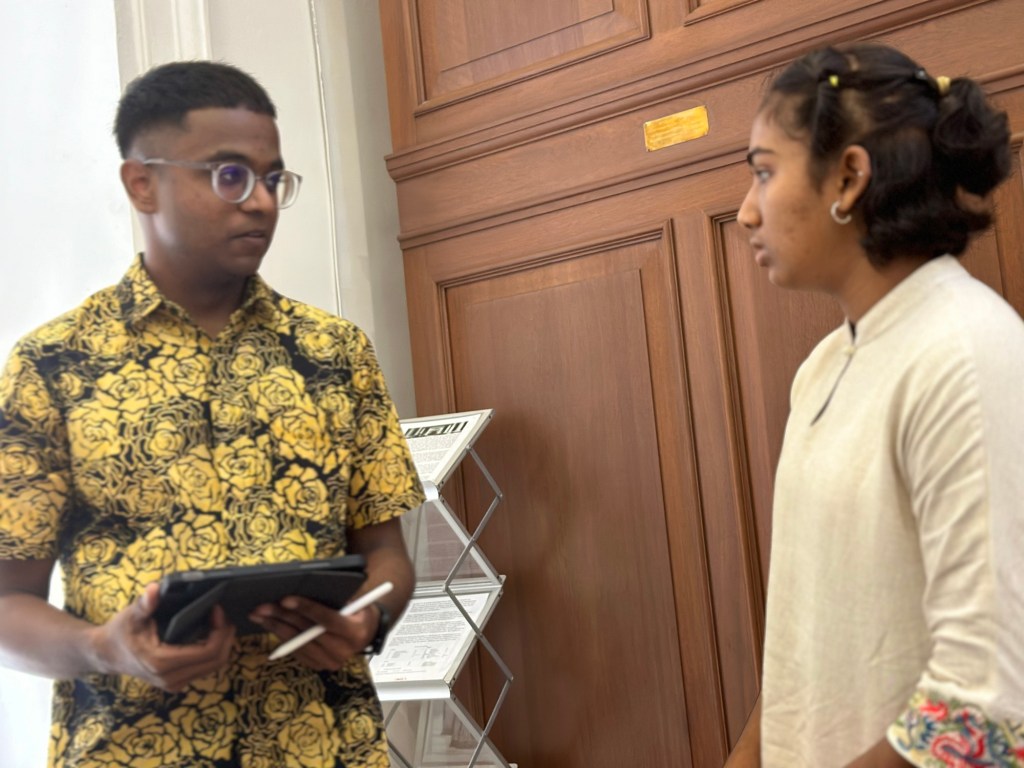
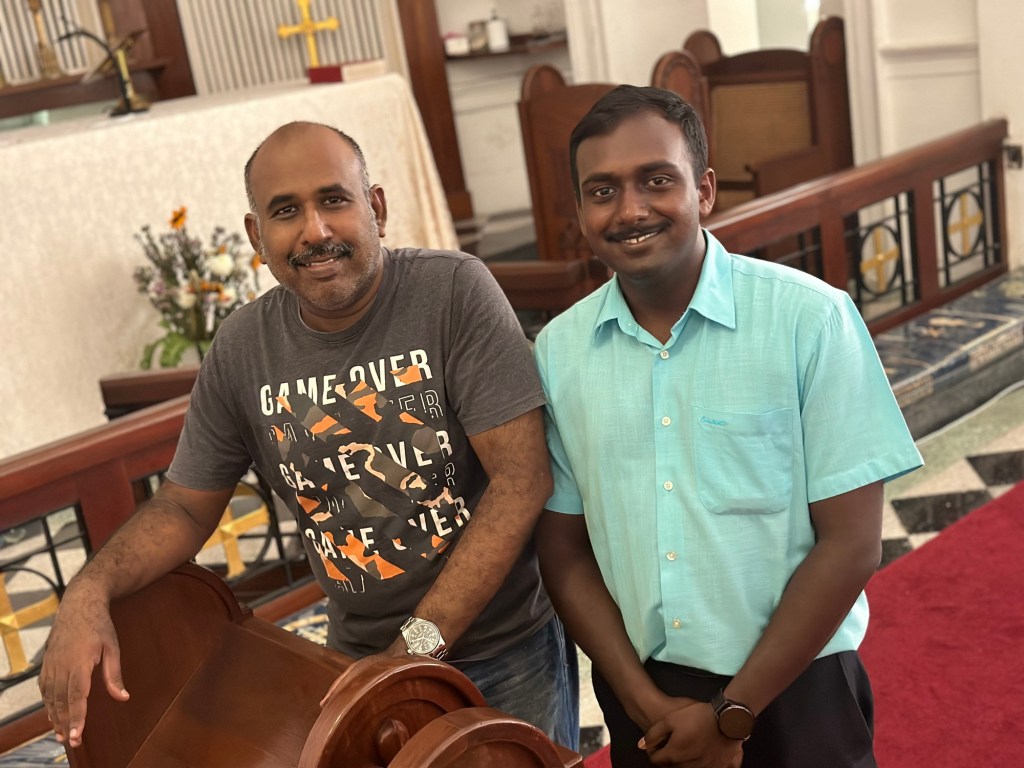
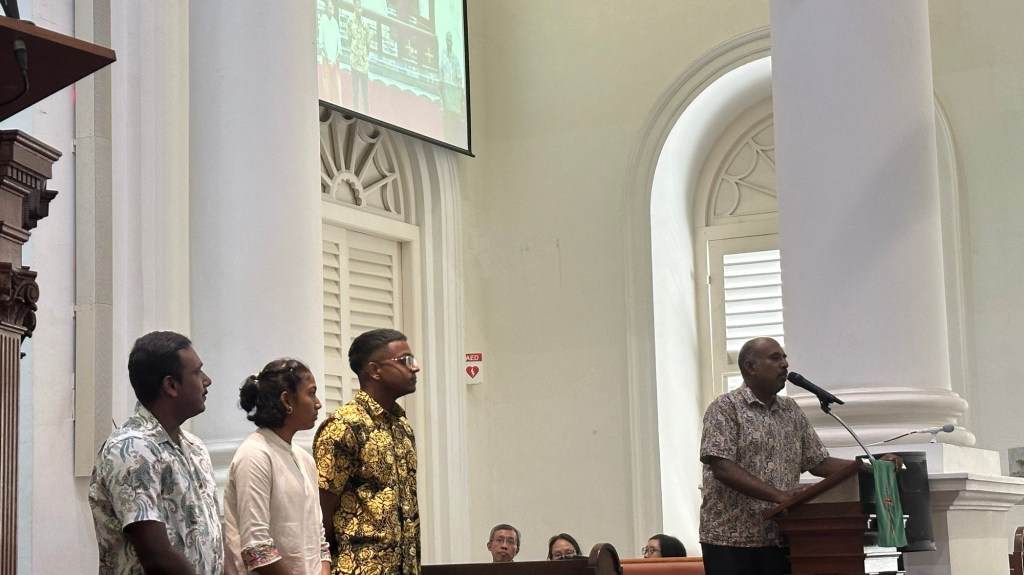
From left: Leonard, Hannah, Jason & Matthew (courtesy pix Leonard Selva Gurunathan)
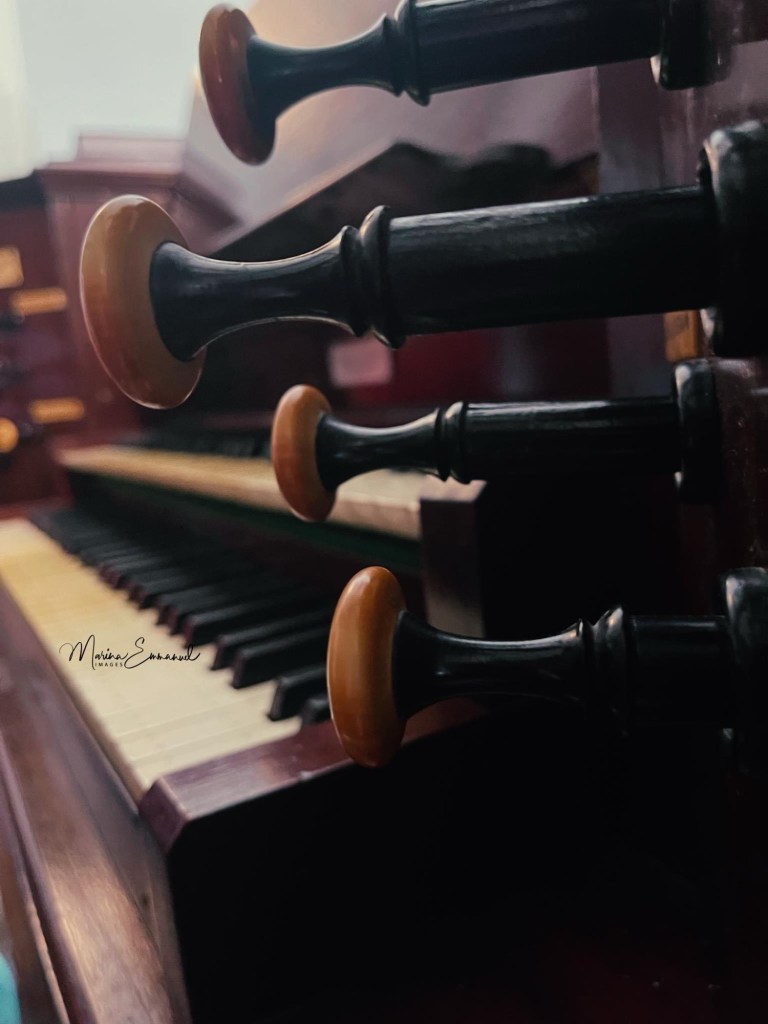
For many young musicians, the pipe organ is a daunting and complex instrument. With its massive size, myriad of keys and stops, and powerful sound, it can be intimidating for even the most seasoned musician. However, for those who are willing to put in the time and effort, the pipe organ can be an incredibly rewarding and fulfilling instrument to play.
Leonard on the pipe organ at St George’s Church
Young musicians Matthew Arwinraj Jaya Paul, Jason William and Hannah Thoraisingam seem to have found a good teacher in Leonard Selva Gurunathan in helping them navigate the complexities of this intricate instrument.
A free lunchtime pipe organ recital yesterday at St George’s Church in Penang was a good show that they are on the way to becoming very proficient pipe organ players.
One of the most inspiring things about learning to play the pipe organ is the rich history and tradition that surrounds this instrument.
Matthew with proud grandmum, Rani Rajamoney
The pipe organ has been a staple of Western music for centuries, and has been used in churches, concert halls, and even in popular music.
By mastering this organ, this group of young people are well on their way to being a part of this rich tradition and carrying on a legacy that spans generations.
Leonard and Jason
The latest edition of the George Town Festival has provided an opportunity for Leonard and young pipe organists in Penang to showcase their talent and inspire audiences from all walks of life with their passion for music.
If you happen to be a young pipe organist or nursing aspirations to be one (regardless of age!) there is still one more free recital during this annual arts festival to enjoy and be further inspired by.
See you next Saturday (July 27) at 1pm in the Church of the Assumption along Lebuh Farquhar.
Church of the Assumption
This heritage Roman Catholic church, is home to the country’s oldest pipe organ, where its resident organist and fierce custodian of the instrument, is Leonard.
Join him and his pipe organists as they take you on a (keyboard) journey of Malaysian music and those from around the world, as they try and inspire more people in Penang and elsewhere to make a home for and support the upkeep of pipe organs, while placing Malaysian talents on the world map of pipe organs.
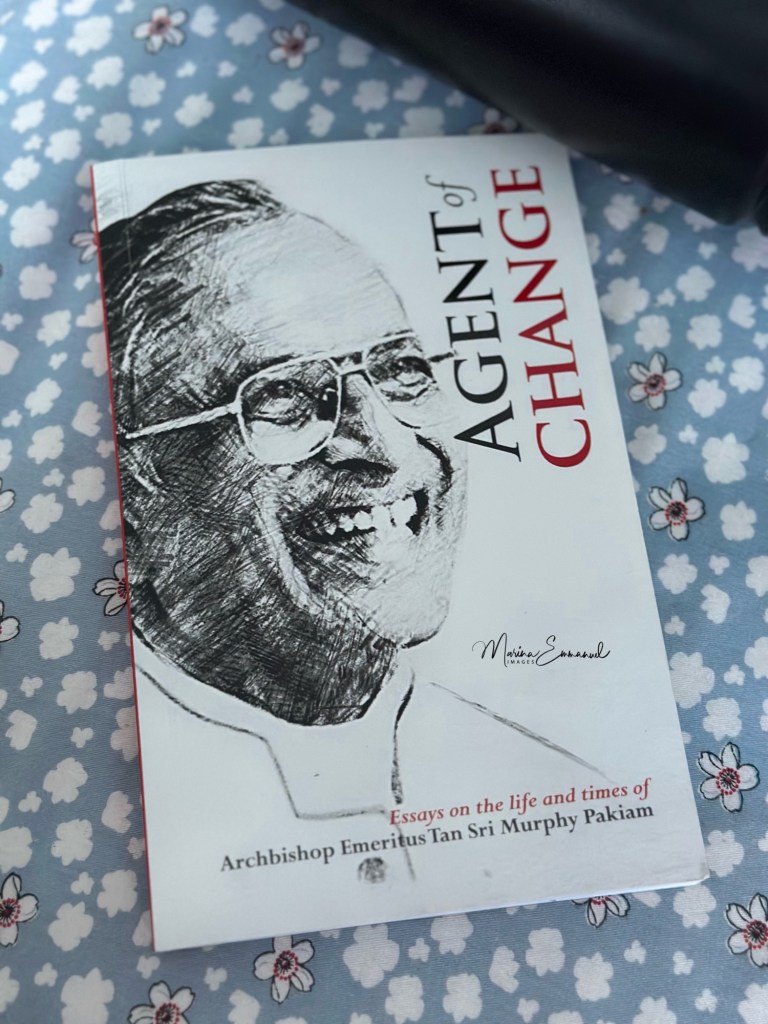
A chapter is dedicated to Sybil in the book “Agent of Change – Essays on the life and times of Archbishop Emeritus Tan Sri Murphy Pakiam”
Malaysia has a candidate for sainthood. While many claim they have no clue of who Sybil Medan Kathigasu is, others have brief recollections of her in their History textbooks.
Sybil is also the only Malayan woman to receive the British Crown’s George Medal for covertly supplying medicine, medical services and refuge to resistance fighters from her home (a shophouse in Papan, Perak) for years during World War II.
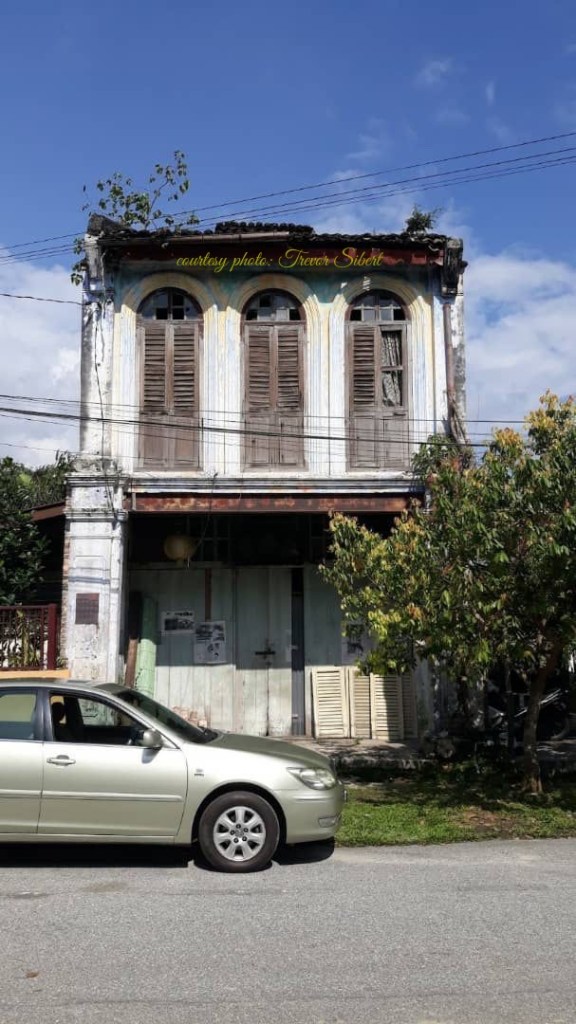
The shophouse in Papan, Perak where Sybil worked and lived.
Her legacy is also found in Roman Catholic cathecism books, a movie (Sybil Kathigasu – Apa Dosa Ku), a book she penned “No Dram of Mercy”, while a chapter is dedicated to her in a new book, “Agent of Change – Essays on the life and times of Archbishop Emeritus Tan Sri Murphy Pakiam.”
(The former archbishop who grew up in Batu Gajah, Perak where Sybil was incarcerated during the war, had a strong desire for her to become Malaysia’s first saint, because of his growing years and stories of her faith and courage which were relayed by family and friends.)
“Apart from my dad serving her medically while she was in prison, I feel strongly that Sybil should be made a saint as she has served as a faithful person who sacrificed so many things for the church’s sake and the community around her at the time can attest to it,” Archbishop Emeritus Murphy says in “Agent of Change.”
“Why I chose Sybil,” says Cardinal Sebastian Francis in the book , “is because she is a woman, a lay person (and not a cleric), a wife and mother and also a professional.”
“For the Catholic church,” notes Sebastian, who is also Bishop of Penang, “we are unique and are not taken up by stories of courage.”
“We (the Penang Diocese) have commenced with the collection of data and initial steps for the process of canonisation of (a saint from our soil).
“It is pretty obvious from the initial data that I have received and other sources of information that Sybil was a courageous freedom fighting heroine and we are reasonably convinced that we should proceed with (her canonization).”
His Eminence Cardinal Datuk Seri Sebastian Francis (left) is calling for Sybil’s beatification and canonisation
A movie titled “Sybil” is also reportedly in the making, while an opera “Solace of Papan” is set to open in Selangor this month.
The road to sainthood is a long, complex and expensive one and all help is needed in crafting a memorable and meaningful “brand” for potential candidates.
What qualities and characteristics do or did our potential saint embody? How can we best represent Sybil’s life and achievements through branding?
Malaysia’s oldest pipe organ is found at the Church of the Assumption on Lebuh Farquhar
On an island known for its richness in cultural and architectural heritage, music also plays an enriching role for its residents and visitors.
George Town’s Streets of Harmony (straddling Lebuh Farquhar and Jalan Masjid Kapitan Keling), has been home to magnificent and heritage-rich houses of worship for centuries.
A brisk or relaxing stroll beginning from the Church of the Assumption (whose grounds also houses a Roman Catholic museum), onto St George’s Church, Goddess of Mercy Temple, Sri Mariamman Temple and ending at the Kapitan Keling Mosque, tells a tale of how multi religions can co-exist in harmony.
Penang island has also the distinction of being home to two majestic pipe organs found in two heritage churches on the same street in the Unesco heritage core zone!
Southeast Asia’s oldest Anglican church – St George’s Church in Penang – in 2017, received a bicentennial blessing in the form of a 1,050-pipe Mander organ.
It then joined the ranks of its “neighbour” – the Church of the Assumption in hosting its very own pipe organ.
Southeast Asia’s oldest Anglican Church, St George’s
Erected in 1914 and assembled in Penang by 1916, the Assumption Church’s pipe organ was restored in 2013, and carries the pride of being Malaysia’s oldest pipe organ.
As the annual George Town Festival returns to the island next month, a special music treat awaits pipe organ buffs.
Timeless classics by sons of Penang like Tan Sri P.Ramlee, Jimmy Boyle, Edwin Rajamoney and Tan Sri Ahmad Merican are among the tunes that will fill the air, as both heritage churches host lunchtime organ recitals on July 20 and July 27 respectively.
“I am excited to feature the organists of both churches at this innaugral event featuring the two lovely pipe organs in Penang,” says Leonard Selva Gurunathan, who is the resident pipe organist at the Church of the Assumption.
Gurunathan will also be playing some of his original pieces (inspired during the pandemic when he used to chase sunrises).
Young and upcoming Malaysian pipe organists like Matthew Arwinraj Jaya Paul are among the performers who will be infusing a new twist to P.Ramlee songs like “Hujan di Tengah Hari.”
He is also set to share a heartfelt piece “Lay Thine Hands” composed by his late grandfather, Edwin Rajamoney.
Matthew Arwinraj Jaya PaulPenang’s Church of the Assumption will play host to one of the pipe organ recitals during the 2024 George Town Festival
Here’s a sneak peek of what to expect during the concerts, kindly presented by Leonard and Matthew …
WE were in the midst of a pandemic when this book project took off, and it took quite a bit of effort to reach out to various individuals and institutions for assistance with research and requests for personal interviews.
What amazed me with this exercise – which stretched over three years – was the kindness and generosity of people, ranging from the clergy to the laity, with opening their offices, homes and their hearts and giving their time and invaluable information to Theresa, Jacqueline and me.
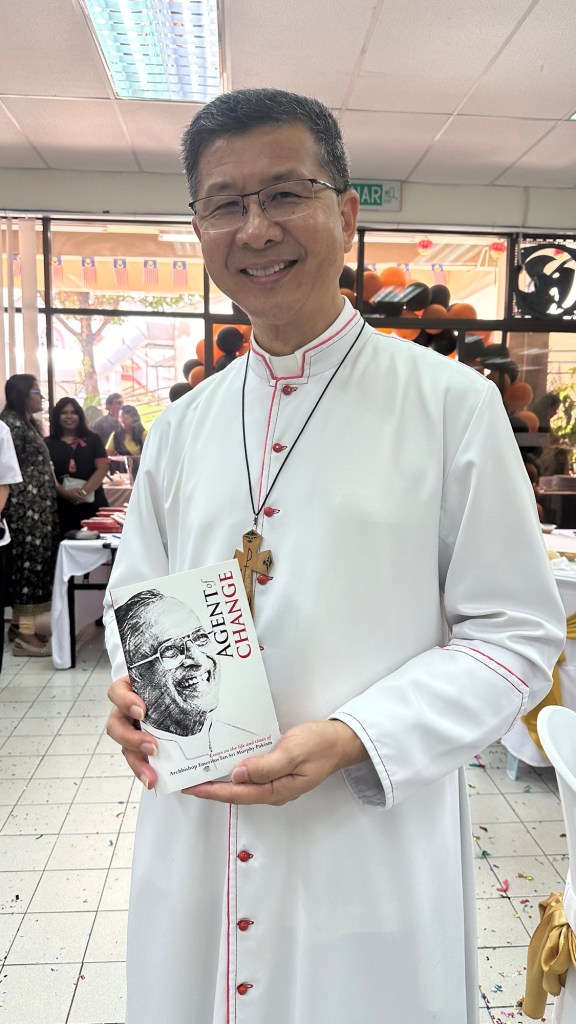
Archbishop Julian Leow with a copy of the book
These encounters, video and audio calls, emails and countless to-ing and fro-ing along the way, gave great insights into the person Archbishop Emeritus Murphy Pakiam was and continues to be.
With Rev Father Francis Anthony (courtesy photo: College General, Penang)
The book, which was launched yesterday to commemorate 60 years of His Grace’s journey as a priest, offers what we hope is a glimpse of a great man and his personal commitment to mercy and peace.
And yes, if someday, the book is adapted into a film, my dream cast for a Netflix-inspired movie would include Malaysians like Hans Isaac and Elaine Daly (who coincidentally, is a grandniece of freedom fighter Sybil Kathigasu, who is mentioned in the book).
Sybil is on the way to sainthoodAn undated photo of Archbishop Emeritus Tan Sri Murphy Pakiam (courtesy photo: College General, Penang)
(AGENT OF CHANGE: Essays on the life and times of Archbishop Emeritus Tan Sri Murphy Pakiam, is available at RM20, from the Catholic Research Centre in Kuala Lumpur. Call 03-20266472 or WhatsApp +6016-6386879 to order)
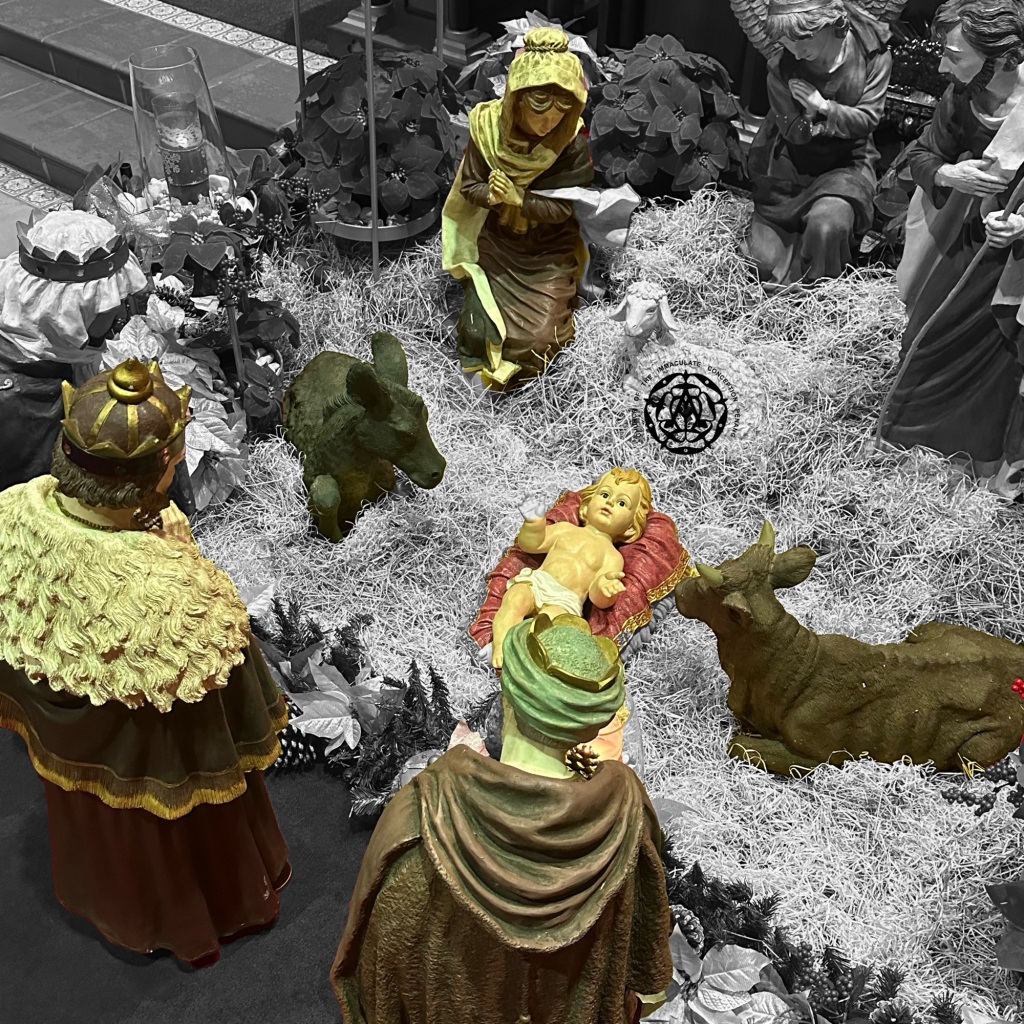
As the Advent season has drawn to a close, it is time to bid farewell to the beautiful Christmas crib that has been the centerpiece of our celebrations. This beloved tradition holds a special place in the hearts of many, as it reminds us of the sacredness and wonder of the Nativity.
The Christmas crib, also known as a nativity scene or manger scene, depicts the humble birth of Jesus Christ in a stable in Bethlehem. It typically includes figurines of the baby Jesus, Mary and Joseph, the shepherds, the Three Wise Men (Caspar, Melchior, and Balthasar) and various animals. The crib serves as a visual representation of the biblical story and invites us to reflect on the true meaning of Christmas.
A scene from the manger recreated at the Church of the Immaculate Conception, Penang
Throughout the Advent season, the crib has been a focal point of prayer and reflection, bringing us closer to the spirit of anticipation and hope. As we gathered around the crib, we were reminded of the immense love that God has for us, as he sent His only Son to redeem and save us.
Teacher and musician Leonard Selva Gurunathan generously shares the meaning of all things Christmas to him in this heartfelt video. His take on the meaning of family at Christmas, the spirit of the season embraced by Roman Catholics like him and his family with anticipation, and lovely anecdotes focussing on miniature photography, the pipe organ and Christmas carols, give a completely different spin to the loud and often obnoxious and over-the-top festive tones we embrace as we blindly take in all that is commercial and showy about the humble birth of Jesus Christ, and what the true gift of Christmas should mean for those who consider it a religious celebration.
So as we close the Advent season and bid farewell to the Christmas crib, let us carry the spirit of joy, love, and hope with us throughout the year. And may the story of the miraculous birth of Jesus Christ continue to inspire and guide us in all that we do.
Photography by BoonTiong
(video courtesy of Leonard Selva Gurunathan with scenes from his Mount Erskine family home and the Church of the Assumption, Penang, home to the country’s oldest pipe organ)
Courtesy photo Christopher Jude AnthonyCourtesy photo Dennis AuCourtesy photo Dennis Au
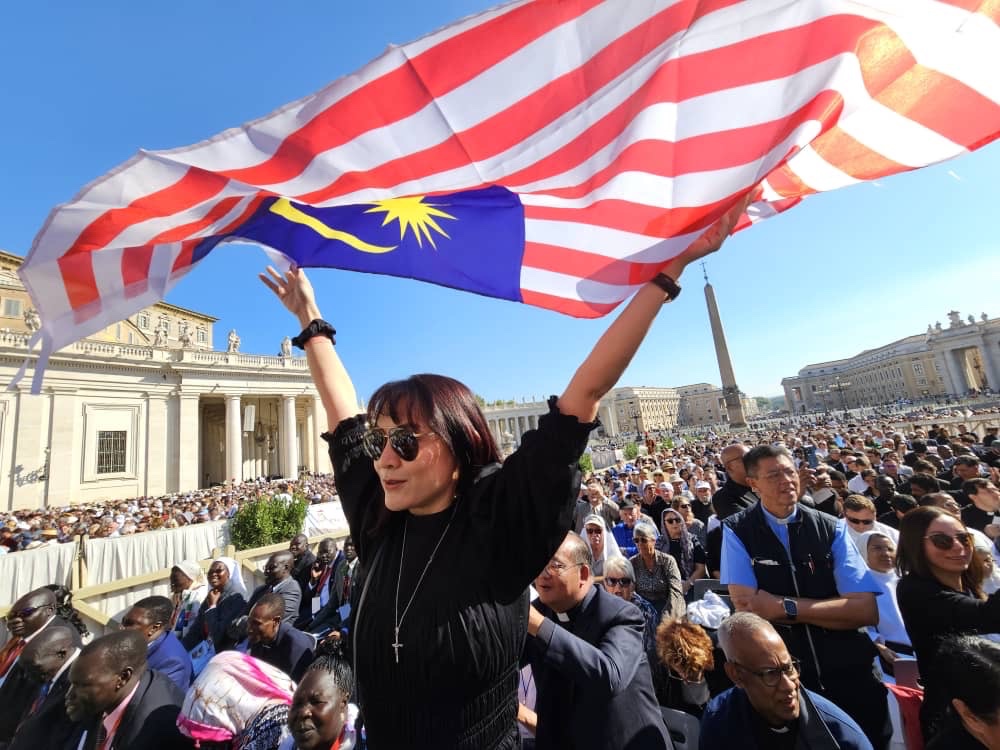
Roman Catholics in Malaysia and beyond have been beaming with gratitude and pride today in giving thanks for a special gift.
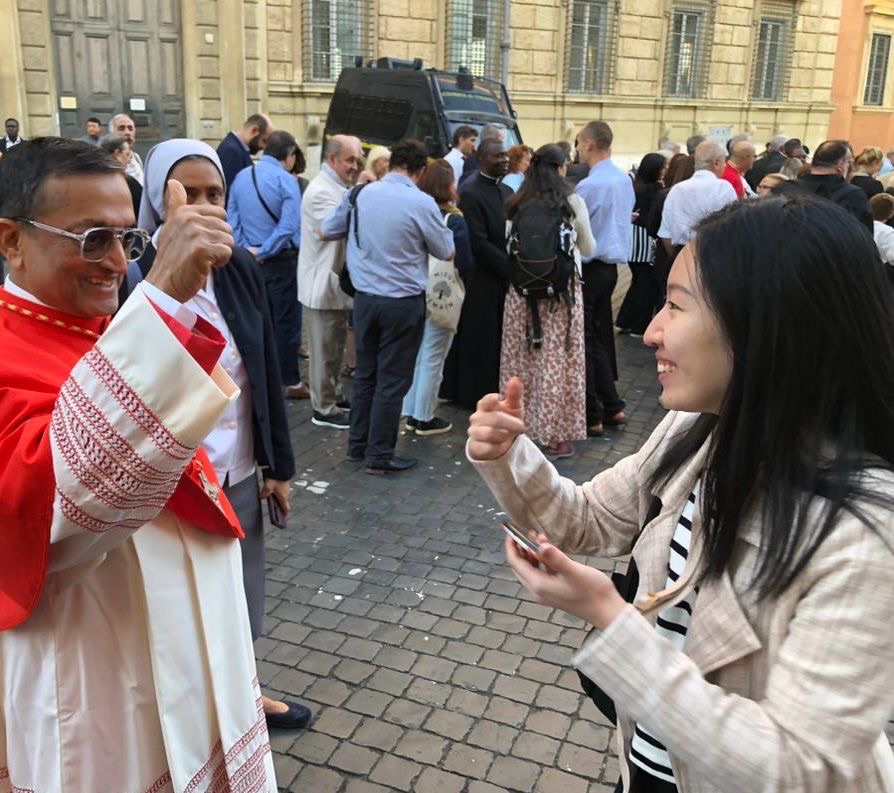
Penang Bishop Sebastian Francis has been elevated to the ranks of a Cardinal, a big honour and win for this country and Asia.
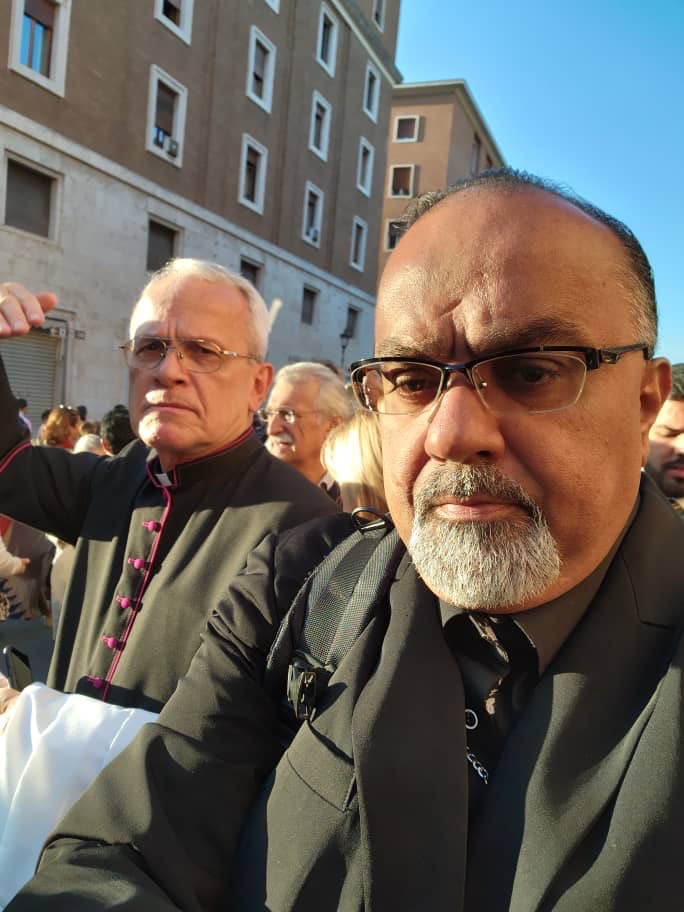
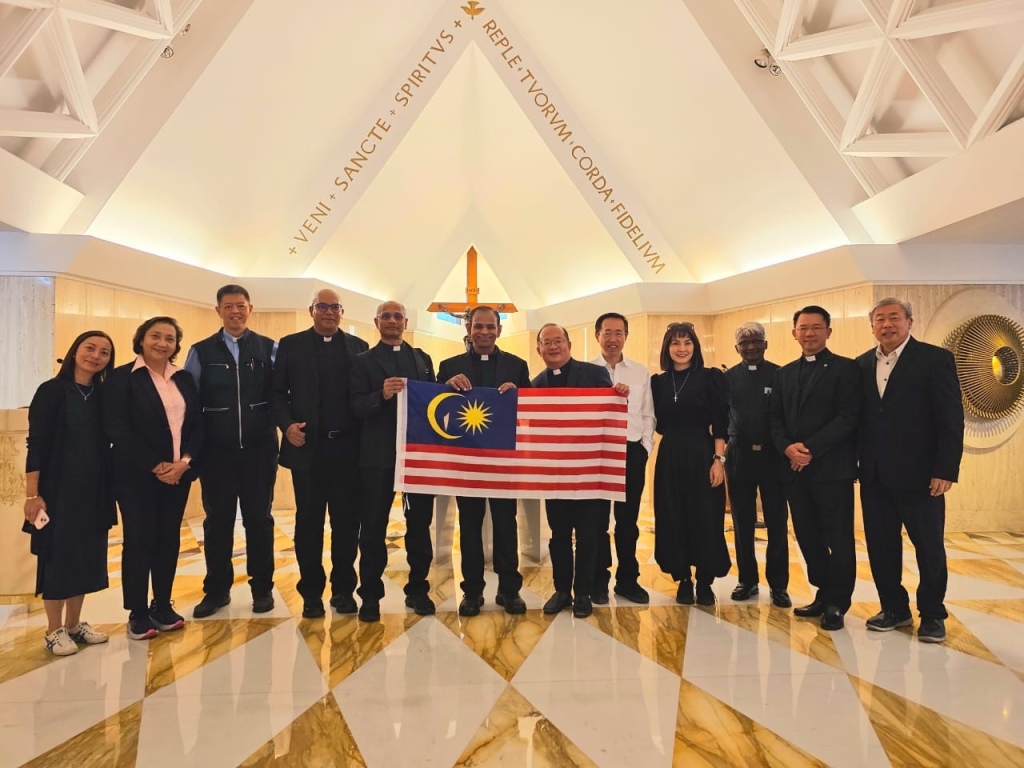
As Malaysians at St Peter’s Square in the Vatican gathered today and waved the Jalur Gemilang, they have carried the pride of all Catholics from the Penang Diocese and the rest of the country in celebrating a newly-minted cardinal who has always been one to promote inclusion and celebrates harmony and diversity.
Courtesy photo Bernadette LauCourtesy photo Monsignor Jude MirandaCourtesy photo Christopher Jude Anthony Courtesy photo Rev Father Aloysius Tan
The Holy Father sums today’s happenings best below …
HOMILY OF HIS HOLINESS POPE FRANCIS
Saint Peter’s Square Saturday, 30 September 2023
____________________________
Thinking of this celebration and particularly of you, dear brothers, who would become Cardinals, a text from the Acts of the Apostles came to mind (cf. 2:1-11). It is a fundamental text: the story of Pentecost, the baptism of the Church… But my thoughts were really drawn to one detail: the expression spoken by the Jews who “were dwelling in Jerusalem” (v. 5). They said: We are “Parthians and Medes and Elamites” (v. 9) and so on. This long list of peoples made me think of the Cardinals, who thanks be to God, are from all parts of the world, from the most diverse nations. That is the reason I chose this biblical passage.
Meditating on this, I became aware of a kind of “surprise” hidden in this association of ideas, a surprise in which, with joy, I seemed to recognize the humor of the Holy Spirit, so to speak. Please excuse the expression.
What is this “surprise”? It consists in the fact that normally we pastors, when we read the account of Pentecost, identify ourselves with the Apostles. It is natural to do so. Instead, those “Parthians, Medes, Elamites” et cetera, associated in my mind with the Cardinals, do not belong to the group of disciples. They are outside the Upper Room; they are part of the “crowd” that “gathered” upon hearing the noise of the rushing wind (cf. v. 6). The Apostles were “all Galileans” (cf. v. 7), while the people who gathered were “from every nation under heaven” (v. 5), just like the Bishops and Cardinals of our time.
This kind of role reversal gives us pause for thought and, when we look closely, it reveals an interesting perspective, which I would like to share with you. It is a matter of applying to ourselves – I will put myself first – the experience of those Jews who by a gift of God found themselves protagonists of the event of Pentecost, that is of the “baptism” by the Holy Spirit that gave birth to the One, Holy, Catholic and Apostolic Church. I would summarize the perspective in this way: to rediscover with amazement the gift of having received the Gospel “in our own tongues” (v.11), as the Jews said. To think back with gratitude on the gift of having been evangelized and having been drawn from various peoples who, each in their own time received the Kerygma, the proclamation of the mystery of salvation, and in welcoming it, were baptized in the Holy Spirit and became part of the Church. Mother Church, who speaks all languages, is One and is Catholic.
This word from the Acts of the Apostles makes us reflect that, before being “apostles”, before being priests, Bishops, Cardinals, we are “Parthians, Medes, Elamites”, et cetera, et cetera. And this should awaken awe and gratitude in us for having received the grace of the Gospel among our respective peoples of origin. I think this is very important and not to be forgotten. Because there, in the history of our people, I would say in the “flesh” of our people, the Holy Spirit has worked the wonder of communicating the mystery of Jesus Christ who died and rose again. And this came to us “in our language”, from the lips and the gestures of our grandparents and our parents, of catechists, priests, and religious… Every one of us can remember concrete voices and faces. The faith is transmitted “in dialect”. Don’t forget this: the faith is transmitted in dialect, by mothers and grandmothers.
Indeed, we are evangelizers to the extent we cherish in our hearts the wonder and gratitude of having been evangelized, even of being evangelized, because this is really a gift always present, that must be continually renewed in our memories and in faith. Evangelizers who have been evangelized, not functionaries.
Brothers and sisters, dearest Cardinals, Pentecost – like the Baptism of each one of us – is not a thing of the past; it is a creative act that God continually renews. The Church – and each of her members – lives this ever-present mystery. She does not live “off of her name”, still less does she live off of an archeological patrimony, however precious and noble. The Church, and every baptized member, lives the today of God, through the action of the Holy Spirit. Even the act we are carrying out now makes sense if we live it from this perspective of faith. And today, in the light of the Word, we can grasp this reality: you new Cardinals have come from different parts of the world, and the same Spirit that made the evangelization of your peoples fruitful now renews in you your vocation and mission in and for the Church.
From this reflection, drawn from a fruitful “surprise”, I would simply like to draw a consequence for you, brother Cardinals, and for your College. I would like to express this with an image, that of the orchestra: the College of Cardinals is called to resemble a symphony orchestra, representing the harmony and synodality of the Church. I also say “synodality”, not only because we are on the eve of the first Assembly of the Synod that has precisely this theme, but also because it seems to me that the metaphor of the orchestra can well illuminate the synodal character of the Church.
A symphony thrives on the skillful composition of the timbres of different instruments: each one makes its contribution, sometimes alone, sometimes united with someone else, sometimes with the whole ensemble. Diversity is necessary; it is indispensable. However, each sound must contribute to the common design. This is why mutual listening is essential: each musician must listen to the others. If one listens only to himself, however sublime his sound may be, it will not benefit the symphony; and the same would be the case if one section of the orchestra did not listen to the others, but played as if it were alone, as if it were the whole. In addition, the conductor of the orchestra is at the service of this kind of miracle that is each performance of a symphony. He has to listen more than anyone else, and at the same time his job is to help each person and the whole orchestra develop the greatest creative fidelity: fidelity to the work being performed, but also creative, able to give a soul to the score, to make it resonate in the here and now in a unique way.
Dear brothers and sisters, it does us good to reflect upon ourselves as the image of the orchestra, in order to learn to be an ever more symphonic and synodal Church. I propose this especially to you, members of the College of Cardinals, in the consoling confidence that we have the Holy Spirit – he is the protagonist – as our master: the interior master of each one of us and the master of walking together. He creates variety and unity; He is harmony itself. Saint Basil was looking for a synthesis when he said: “Ipse harmonia est”, he is harmony itself. We entrust ourselves to his gentle and strong guidance, and to the gracious care of the Virgin Mary.
Broadway actor Bruce Kuhn is coming to town! This will not be his first trip to Malaysia (he has performed in the Klang Valley and East Malaysia previously) but definitely his maiden visit to Penang.
Kuhn’s list of acting performances in the United States include playing Javert (the Police Inspector) and Thenardier (Master of the House) in “Les Miserables” on Broadway. He also starred in the national tour of Harry Chapin’s one-man Off-Broadway hit, “The Cotton Patch Gospel,” and performed in the national tour of “Chess,” directed by Trevor Nunn.
His one-man shows on his worldwide tours have included “The Gospel of Luke” and “Acts of the Apostles” which are told as stories in a compelling manner.
Kuhn’s gift in storytelling is one which he shares with others, via ‘Word by Heart’, an international training school (which he is a co-founder). Students around the world (from Vancouver in Canada to Oxford in the UK) have been taught via his courses, to present a gospel to an audience.
His Penang dates are from Friday (21/6/2019) to Saturday (22/6/2019) where he will be sharing his God-given talents via two monologue theatre performances and a workshop.
The Church of the Immaculate Conception at Pulau Tikus in George Town will host Bruce Kuhn and his performances.
With a donation of RM25, you get to attend all three sessions. Tickets are available during weekend masses at the church and at the parish office.
His Penang programme is as follows:
8 pm on Friday 21 June, 2019
Monologue on the Gospel of Luke
10 am on Saturday 22 June, 2019
Workshop on Memorizing & Story Telling
8 pm on Saturday 22 June , 2019
Monologue on the Acts of the Apostles
(Church of the Immaculate Conception, 1 Lorong Maktab, 10250 Penang)





















 postcodegeorgetown