Penang Island’s coastline, once celebrated for its pristine beaches, lively marine ecosystems, and breathtaking sea views, is undergoing rapid transformation. Reclamation projects continue to reshape the shoreline, driven by urban development ambitions and economic pursuits. While these projects promise progress, they also come at a cost — the loss of natural beauty, displacement of marine life, and a diminished sense of place for residents who cherish these coastal spaces.
One of the most visible symbols of this change is the ongoing reclamation along Gurney Drive. Once a vibrant seaside esplanade lined with local activity, it has gradually been overshadowed by towering constructions and expansive landfills. Over time, many of the sea birds that once called the area home have disappeared, their absence a stark reminder of the ecological toll these developments exact. The natural harmony that made Gurney Drive a beloved spot is now increasingly compromised as construction continues to rear its head on what was once a serene waterfront.
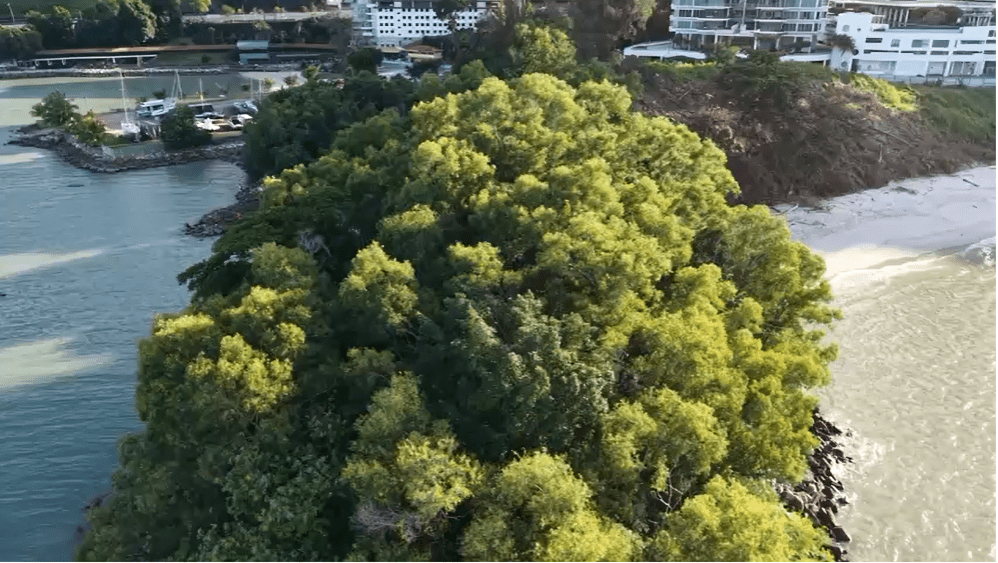
Most recently, residents of One Tanjung in Tanjung Bungah have voiced their concerns over a proposed development on a land parcel famously known as the “Sore Thumb.” This piece of land, perched precariously along the coast, offers panoramic views and a habitat for local birdlife. The planned development threatens not only to obscure these scenic vistas but also to displace the marine and avian species that have called this space home. The community’s protests highlight a growing awareness: development should not come at the expense of our environment and the livelihoods of those who depend on it.
Adding complexity to Penang’s reclamation story is the ambitious project dubbed ‘Silicon Island,’ a massive reclamation effort aimed at transforming parts of the coastline into a hub for technology and innovation. While such projects aim to elevate Penang’s status as a global tech center, they also raise pressing questions about ecological sustainability and community rights. The loss of natural coastal habitats, the disruption of marine ecosystems, and the visual impact on the island’s scenic beauty are concerns many residents and environmentalists have raised.
This ongoing narrative prompts a critical question: will more Penang residents stand up to protect their island’s coastline, or will they allow others to fight these battles alone? The future of Penang’s coastal environment depends on collective action and awareness. As history shows with Gurney Drive and now with the “Sore Thumb,” unchecked reclamation and development can erode the natural and cultural fabric of the island. It is vital that residents, activists, and policymakers work together to find sustainable solutions that balance growth with conservation.
The coastlines of Penang are more than just scenic backdrops; they are vital ecological corridors, cultural landmarks, and sources of livelihood. Preserving them requires vigilance, advocacy, and a willingness to challenge developments that threaten their integrity. As Penang continues to evolve, let us remember that safeguarding our coastal heritage is not just about protecting views — it’s about protecting the soul of the island for generations to come.
Presenting slices of precious insights into Penang’s retail scene (courtesy image: Marcus Langdon)
(BACK COVER BLURB)
Pritchard & Co. Ltd. (1888–1959) is a name which has almost faded from memory in Malaysia. Its foundation and development encompass a period when Malaya saw unprecedented growth driven by an export boom in tin, rubber, and other agricultural produce which coincided with advances in technology such as the invention of electricity, telephones, motorised vehicles, and aircraft.
As the first widely-diversified department store in northern Malaya, with its main store in Penang and branches in Ipoh, Butterworth, and Sungai Petani, Pritchard’s became a key player in the growth of retailing in Malaya during the best and worst of times of British colonial Malaya.
Drawn from family documents and richly-illustrated with nearly 300 images, including many rarely seen photographs from inside the stores, this book captures spectacularly the essence of times past as it follows the fortunes, activities, and fate of the business and the family behind it.
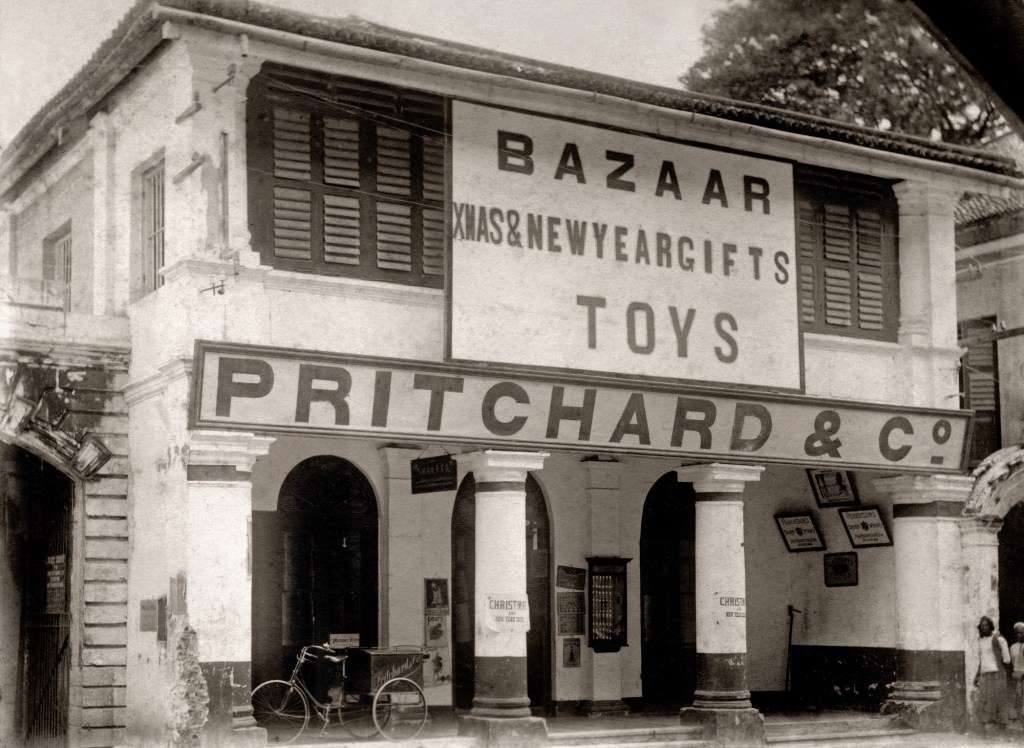
9-11 Union Street, constructed by Pritchard & Co. in 1916, currently the Maybank building (Courtesy of The Robert Hussey Collection)
“Pritchard’s of Penang – Enterprise, Secession, and Murder” featuring items from The Robert Hussey Collection is a thoroughly-researched and richly-detailed exploration of one of Penang’s most iconic retail establishments.
Drawing from a wealth of memorabilia and personal insights provided by someone intimately connected to the Pritchard family, historian Marcus Langdon masterfully weaves a narrative that captures the essence of the island’s retail history from the British colonial era to modern times.
15 Beach Street, where Pritchard & Co. began (Courtesy of The Robert Hussey Collection)
“During a research trip to Singapore around 2011, a well-spoken gentleman named Robert Hussey contacted me,” says Langdon in the book’s preface.
“In his possession were some old Penang photographs which had been left to him, and he wondered if they might have some historical interest.”
Langdon had recently relocated to Penang and Hussey, too, was making plans to move from Singapore to Penang—the place of his birth. Some three years later he made that move.
“Over the next few years,” Langdon recalls “we met up regularly and I became aware of the extent of his collection.
“Essentially it was an assemblage of personal documents, photographs, drawings, and miscellaneous items relating to several generations of the Pritchard family, the core of the collection offered a wonderful insight into British life in Penang in the late nineteenth and early twentieth century.
“Understanding that Pritchard’s (as it was colloquially known) was acknowledged as the first true British-style department store in Penang and northern Malaya, we both felt it was important that the relevant portions of this rare collection were recorded for posterity.”
And so the book project took off and Langdon spent a great amount of time on it when what he dubs “a microscopic virus dubbed COVID-19”, came along.
“With Malaysia and the majority of the world’s population shut down and confined to our homes, and without the usual daily distractions of a publishing business, more work was accomplished at my desk in those far-too-many long months than thought humanly possible.
“The backbone of this book,” he explains, “was forged at that time.”
“Again, other projects and complications got in the way, and it is only now that the final touches, and providential updates, have been applied.”
The book chronicles Pritchard’s journey as more than just a store—it was a symbol of upscale shopping and a bellwether of Penang’s socio-economic landscape during its heyday.
Before the advent of Whiteaways—another historic department store that eventually became more dominant—Pritchard’s played a significant role in the retail landscape of Penang, embodying the colonial-era shopping experience.
Over the years, as shopping habits and retail environments evolved, Pritchard’s gradually declined in prominence, but it remains a nostalgic symbol of Penang’s rich commercial history.
Langdon’s meticulous approach shines through in his vivid descriptions and images of the store’s evolution, from its founding days during the British occupation, through the tumult of the Second World War, and into the post-war resurgence.
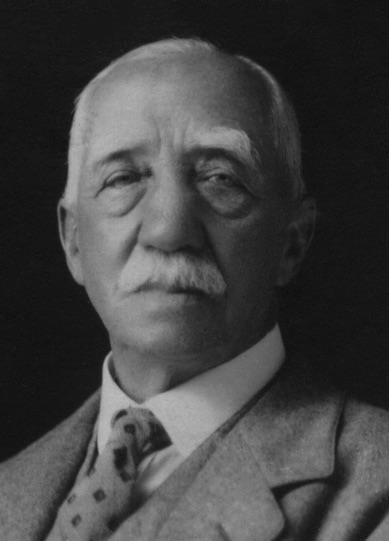
George Henry Pritchard, 1927 (Courtesy of The Robert Hussey Collection)
One of the most compelling aspects of the book is its detailed account of the advertising campaigns that helped cement Pritchard’s reputation as a premier shopping destination.
Langdon’s insights into marketing strategies of the time, are illuminated via the photographs and graphics of how the store maintained its allure and adapted to changing times.
The narrative also thoughtfully addresses the challenges faced during wartime, highlighting the resilience of the business and its ability to bounce back after setbacks.
What sets this book apart is the author’s ability to combine solid research with a personal touch, bringing to life the stories behind the memorabilia that made Pritchard’s a household name.
It is a nostalgic yet informative journey that not only celebrates a storied business but also offers a window into Penang’s broader cultural and economic history.
In sum, “Pritchard’s of Penang – Enterprise, Secession, and Murder”, is a must-read for history enthusiasts, retail aficionados, and anyone interested in the rich tapestry of Penang’s colonial past.
Inside the Union Street store, 1930s (Courtesy of The Robert Hussey Collection)
In crafting a compelling narrative that honours the legacy of Pritchard’s while providing valuable insights into the evolution of retail in Southeast Asia, Langdon has this to say:
“I cannot express how grateful I am to have been given the opportunity to bring this treasured cache of family and business history to light for a wider audience to share and preserve for posterity.”
“Despite the ‘colonial’ period now being frowned upon by upcoming generations, it is nevertheless an integral part of the development of Malaya as it was—and something future generations will undoubtedly be researching.
“Even today,” Langdon adds, “many Penangites, and indeed those further afield, would not have even heard of Pritchard’s. It was, after all, essentially an era long before their time.
“Hopefully this book, with its remarkable photographs, will restore Pritchard & Co. and the families behind it to its small but rightful niche in Penang, and indeed, Malaysian, history.”
Marcus Langdon (courtesy image from the author)
Below are several excerpts from the book for interested history buffs and shopaholics:
(For many years, Pritchard’s had been the tailors of choice to the Royal Court of Kedah under Sultan Abdul Hamid Halim Shah.
Remarkably, it was the practice of the royalty and members of the Court to wear Western clothing outside their private abodes.
Lighter drill materials were used for office wear, and often heavy Tweed was donned for formal occasions.
In his 1959 book Prince and Premier, Harry Miller stated that:
‘Twice a year an English tailor from Pritchard’s, a firm in Penang, travelled the sixty miles to Alor Star to measure members of the royal family for new clothes.
He returned a few weeks later for fittings. When the sultan’s son, Tunku Abdul Rahman, was awarded a scholarship to Cambridge University in 1919, ‘The man from Pritchard’s in Penang was summoned to fit the sixteen-year-old prince with suits.’
Excitement is also said to have prevailed at the Penang store when King Rama VI of Siam paid a visit on 7 October 1924.
After purchasing jewellery at B.P. de Silva’s store in Bishop Street, the King was reportedly hosted to tea at Pritchard’s.)
(“Pritchard’s of Penang – Enterprise, Secession, and Murder” will be launched during the George Town Literary Festival 2025 this November 28-30)
About the Author
Marcus Langdon has spent several decades researching the myriad fascinating stories in Penang’s developed history. Based in Penang, he also advises on historical projects and was a founding director of Entrepot Publishing Sdn Bhd.
Other titles by Marcus include:
• Penang: The Fourth Presidency of India 1805–1830
o Volume 1, ‘Ships, Men and Mansions’. Areca Books, 2013.
o Volume 2, ‘Fire, Spice and Edifice’. George Town World Heritage Incorporated, 2015.
o Volume 3, ‘Water, Wigs and Wisdom’. Entrepot Publishing, 2021.
• Biographical Dictionary of Mercantile Personalities of Penang, (contributing editor). Think City/MBRAS, 2014.
• George Town’s Historic Commercial and Civic Precincts(researcher/writer). George Town World Heritage Incorporated, 2015.
• Epitaph: The Northam Road Protestant Cemetery, George Town, Penang. George Town World Heritage Incorporated, 2017.
• The Habitat Penang Hill: a pocket history, Marcus Langdon & Keith Hockton. Entrepot Publishing, 2018.
• Penang Then & Now: A Century of Change in Pictures.Marcus Langdon & Keith Hockton, Entrepot Publishing, 2019.
• Pastoral Port: An Agrarian History of Penang. Penang Institute, 2023.
• George Town & Adelaide: Sister Cities 50th Anniversary 1973–2023, Marcus Langdon & Rachel Yeoh, MBPP, 2024.
A photo of the Assumption Church taken on a cloudy day . Transformed into an image on canvas with digitally-generated cotton representing the clouds based on actual photographs (courtesy image: Leonard Selva Gurunathan)
Nestled within the UNESCO World Heritage core zone of George Town, Penang, the Church of the Assumption stands as a testament to the island’s rich history and cultural tapestry.
Established in 1787, this historic Roman Catholic church has long been a spiritual and community cornerstone, seamlessly blending tradition with modernity.
Among its treasured heritage is its magnificent pipe organ, fondly known as ‘The Old Lady’ – a majestic instrument that has echoed through generations, accompanying countless masses, religious ceremonies, and musical celebrations, and holds the distinction of being Malaysia’s oldest pipe organ.
Recently, a passionate pipe organist and music enthusiast – Leonard Selva Gurunathan – embarked on an innovative project to trace and showcase the church’s musical roots.
Leveraging the power of artificial intelligence (AI) and a suite of cutting-edge tech tools with good old-fashioned research, he has crafted a compelling video narrative that highlights the journey of the pipe organ and its profound role in the life of the church.
The project began with meticulous research into the church’s history, archives, and the evolution of its musical traditions.
A digital image of the Assumption pipe organ transformed into a diorama setting by Leonard Selva Gurunathan
“ The visual part of the video was done with the use of AI, “said Leonard, “while the rest of it was based on old-school research methods which included going through newspaper archives as I typed the information I needed into the prompts,” he added.
The audio component of the video is based on a live recording put together by Leonard.
“I curated the story,” he notes, “based on the duration of the music.”
To visualize the church’s and pipe organ’s rich history, Leonard employed AI-powered video editing and animation software. These tools transformed static images and archival footage into dynamic visuals, illustrating the organ’s physical changes, restorations, and its integration into the church’s liturgical life over the years.
The entire production has served as a testament to how technology can serve as a bridge—connecting heritage, faith, and innovation.
The resulting video not only celebrates the Church of the Assumption’s storied past, but also highlights the enduring significance of its pipe organ as an instrument of worship and cultural identity.
It underscores how the organ has witnessed generations of worshippers and has become an integral part of the church’s spiritual and community life.
This project exemplifies how modern tools can be harnessed to preserve, interpret, and share heritage in compelling ways. It also emphasizes the importance of safeguarding such cultural treasures within UNESCO’s protected zones, ensuring that future generations continue to appreciate the rich tapestry of history, faith, and music.
As the Church of the Assumption continues to serve its community within the vibrant streets of George Town, its story—enhanced by AI, technology and old-school research methods – reminds us that tradition and innovation can go hand in hand.
By blending historical preservation with modern storytelling, Leonard’s creative endeavour invites us all to reflect on the enduring power of music, faith, and heritage in shaping our collective identity.
My first “sighting” of this lovely and funny soul was at The Star Penang newsroom in 1993, when I joined as a reporter and she was the paper’s freelance writer/stringer.
Once she got behind the computer she would remain focussed and quiet as she went about putting together her famous food reviews.
The sub-editors usually found themselves needing to consult the dictionary when clearing her copies (Aiyo Fay, why are you using such big words, you think our readers can understand, meh? was usually conveyed to Fay by Anna Cheah our then chief sub-editor) Fay would simply smile and give some funny retort and everyone would laugh.
Her love for food was legendary. Some of us would join her for quick hawker meals close to the office when she stepped in to meet her deadlines. As most people know, this foodie was just as adept in appreciating fine food and made no bones when any dish did not meet her exacting standards.
When she moved on to other interests, especially in publishing, I used to pick up her nifty card sets with watercolour images of all things Malaysiana and even tried her ‘Miss Khoo’s Asian Deli’ gourmet products at the time, as I heard they had found their way to the shelves of Harvey Nichols in the United Kingdom.
The writer, TV and radio host, publisher, lover of all things nautical and much-loved daughter, always had a kind word for everyone and we missed her laughter and teasing when she left The Star to pursue other projects and adventures.
It was shocking and painful to many of us to hear that Fay, who was then 48, had left us after a brief illness in April, 2017.
Bettina Chua Abdullah and I had a mutual friend in Fay and our stories and friendship with this fun-loving soul are different and yet, the same. Fay shared different friendships with different people and made her mark which can never be erased.
Which now brings us to the third edition of the Fay Khoo Award for Food and Drink Writing which Bettina organised and has been directing to honour Fay’s legacy.
The call for entries has been made and details found below. The 2019 winners will be announced at this year’s George Town Literary Festival which takes place in Penang from Nov 21-24 (please mark your calendars)
Thank you Bettina, for your dedication in keeping Fay’s memory and our friendships alive!
(In addition to written narrative entries for the award, comics and graphic stories are also open to authors and illustrators wishing to submit illustrated narratives)
CALL FOR ENTRIES 2019
The aim of The Fay Khoo Award for Food+Drink Writing is to recognise new and talented voices, and to encourage and develop excellence in food and drink narratives. We believe that there is a space and a need for well-researched and impactful food journalism, because it is through such writing that we can shine a light on people, culture, health, economics and the environment of culinary delight.
This year we hope to present awards to the three best entries, regardless of category. Please read the conditions of entry and submission guidelines carefully, as these have changed from previous years.
The CONDITIONS OF ENTRY are as follows:
• All writing must fall into the categories of personal narrative, reportage or creative non-fiction.
• Entries should not exceed 2000 words.
• Entries must be submitted in English, and must be the sole work of the entrant.
• Entries must never have been published, self-published, broadcast or uploaded on any
website, blog or online forum.
• Anyone over the age of 16 years at the time of the closing date, who is a citizen or resident
of ASEAN countries, may submit up to three (3) entries.
• A fee of RM 20 per submission will be levied to cover administrative costs.
Processing of fees is made by Hikayat Lebuh Pantai, which manages The Fay Khoo Award, upon submission of entry/entries.
Bank details are as follows:
Maybank | Hikayat Lebuh Pantai Sdn Bhd | 557018565194
Please reference your payment with FKA and your WhatsApp number: eg FKA 012-345-6789
If you do not have a mobile phone, please use a landline number.
SUBMISSION GUIDELINES
• Entries must be saved in Microsoft Word format, and emailed to
thefaykhooaward@hikayat.asia
• Entries need to be double-spaced and the word-count noted at top of the first page.
• Entries must include a WhatsApp or landline number, so that you can be sent a confirmation
that your entry has been received, and we can link submission fees to your entry.
• To protect the integrity of the judging process, entries must not include your name or email address. We will contact you via the WhatsApp or landline number you have provided, for your name and other necessary information.
• Amendments or revised versions will not be accepted.
• Entries will be accepted from July 15, 2019 and must be received by September 15, 2019.
• A fee of RM 20 per submission will be levied to cover administrative costs.
• Entrants who have not turned 18 by November 1, 2019 must provide a parent/legal guardian’s name and contact details.
NOTES ON JUDGING
• There will be three (3) judges for the Fay Khoo Award. The judges’ decision is final.
• The judges will not comment on individual entries.
• The Fay Khoo Award reserves the right to change the panel of judges without notice.
• A Longlist of up to 15 entries will be announced by October 10, 2019, and writers notified by WhatsApp and email.
• A Shortlist of 6 entries will be announced by October 28, 2019, and writers notified by
WhatsApp and email.
PRIZE-GIVING
• The winning entries will be announced at the George Town Literary Festival between
November 21-24, 2019. Accommodation will be provided for the day of the prize-giving.
INTELLECTUAL PROPERTY
• Worldwide copyright of each entry remains with the author, but by virtue of submitting an entry, participants are assigning unrestricted right to publish the winning entry, shortlisted entries and long-listed entries in any format. This right is granted to the managers of The Fay Khoo Award, Hikayat Lebuh Pantai Sdn Bhd and its associates in perpetuity, upon submission of the entry for consideration.
• The Fay Khoo Award will retain fully all income generated by publication of the winning entries, shortlisted entries and long-listed entries, while the author will retain all income generated by their publication separate to this.
• In cases where the author of a winning, shortlisted or longlisted entry independently publishes said submission, the author will mention that the piece was a winner or shortlisted or longlisted entry in The Fay Khoo Award for Food+Drink Writing.
PRIZES:
• Each of the three winners receives a cash award of MYR1500, and a book voucher for MYR500
• Shortlisted entries may also receive other supplementary prizes, at the discretion of the organisers.
AMENDMENTS:
• The organisers of the Fay Khoo Award reserve the right to amend these conditions of entry
if deemed necessary. Any changes will be posted on the award’s Facebook page.
• For further information, please email thefaykhooaward@hikayat.asia
(Images courtesy from the FKAward Facebook and Fay’s)
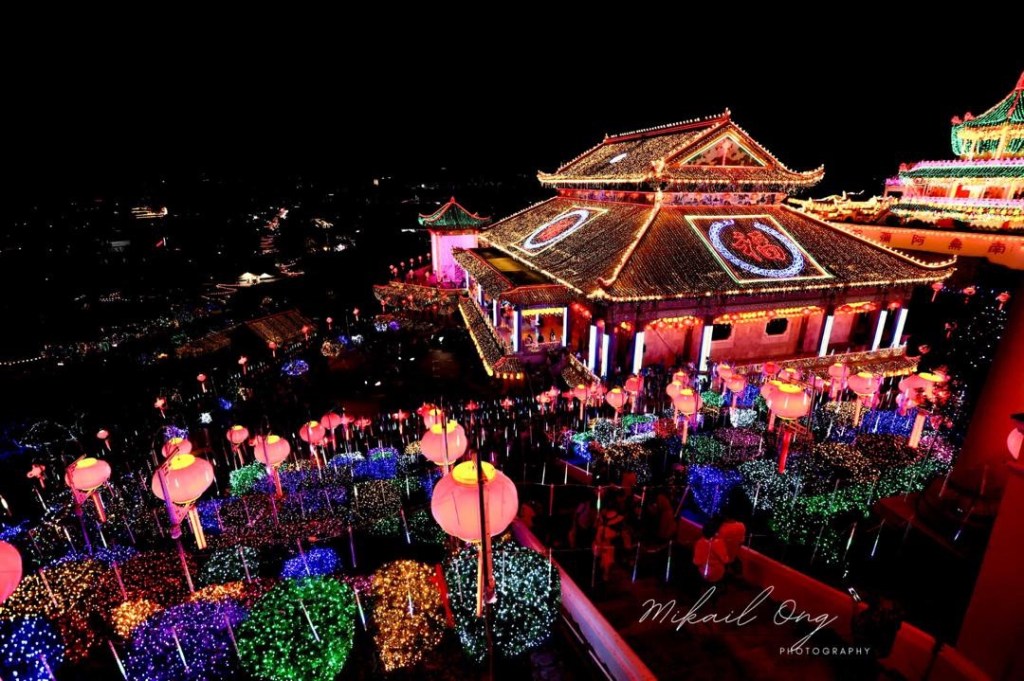
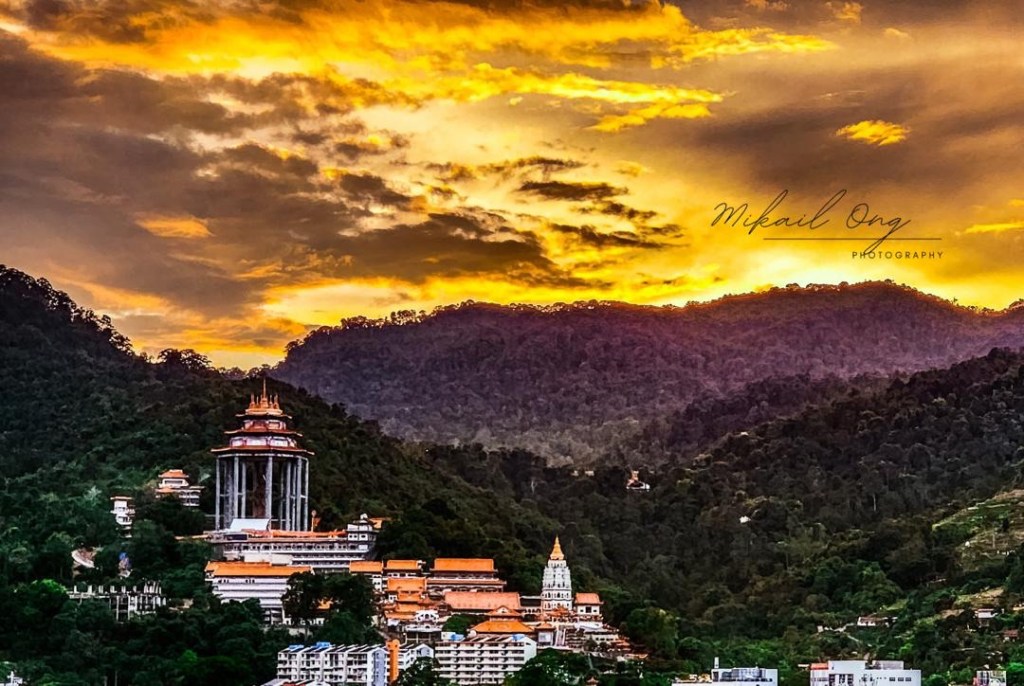
As the sun dips below the horizon and the vibrant hues of twilight envelop Penang, the Kek Lok Si Temple transforms into a mesmerizing spectacle, particularly on the eve of the Lunar New Year. This iconic Buddhist site, nestled atop a hill, becomes a beacon of hope and gratitude, drawing not only our Buddhist sisters and brothers but also Malaysians from all walks of life and visitors from around the globe.
The atmosphere is electric with anticipation as families and friends ascend the temple grounds, each step a journey of devotion—giving thanks for the past year and seeking blessings for the one to come. The air is filled with the soft sounds of prayers, the rustle of red envelopes, and the gentle whispers of wishes that float like the incense smoke rising to the heavens.
Family and friends make their way to the grounds of the Kek Lok Si Temple
What makes this gathering even more heartwarming is the sight of diverse communities coming together.
Malaysians (and tourists) of various races and faiths joined in unison, united by a shared appreciation for the stunning beauty of the temple, which glowed with thousands of LED lights. The sight was nothing short of breathtaking—a harmonious blend of spirituality and artistry that captivates the senses and inspires the soul.
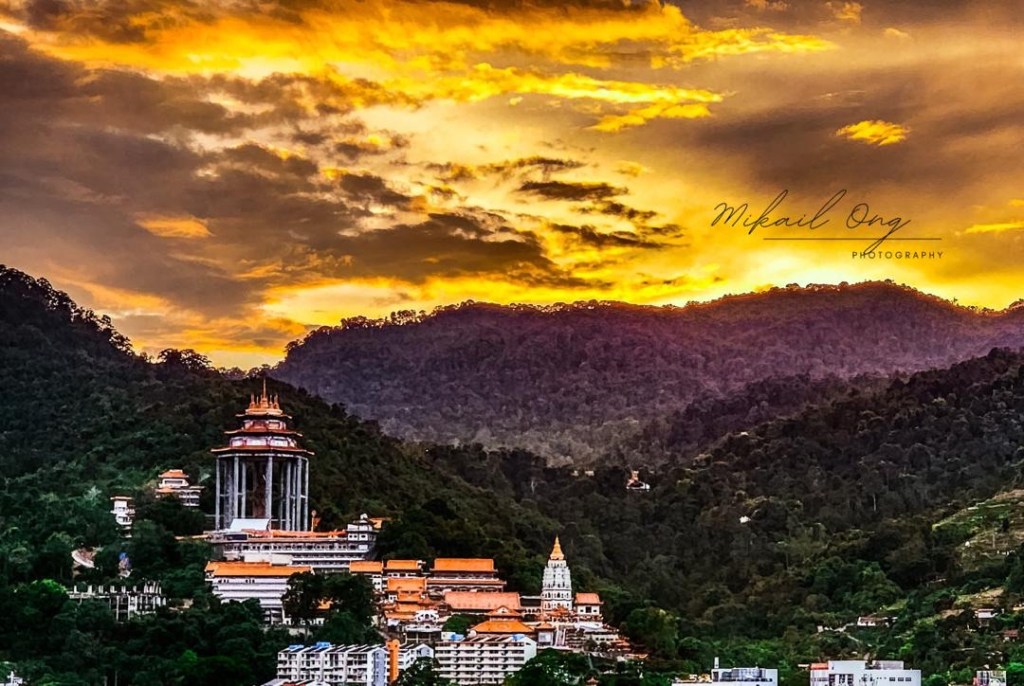
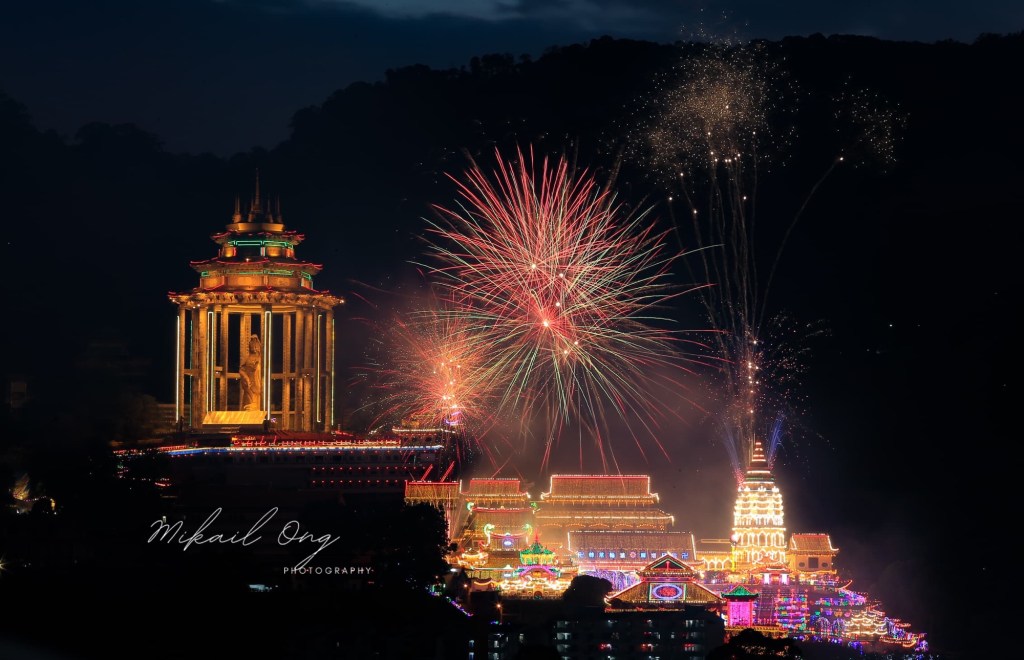
Among the highlights of the Kek Lok Si Temple at Air Itam on Penang island, are its intricate pagodas and the towering statue of the Goddess Kuan Yin, which stands as a reminder of compassion, unity, and love.
The Goddess Kuan Yin smiles down on all visitors against the backdrop of a fireworks display
As visitors pause to admire the architectural wonders and intricate details, they are also reminded of the values that bind us all together, transcending differences in belief and background. It’s a beautiful testament to the spirit of Malaysia—a melting pot of cultures, where respect and appreciation for one another flourish.
Lensman Mikail Ong had the unique opportunity to capture this enchanting scene on assignment, and he has generously shared his stunning photographs with us.
His lens reveals the magic of the moment—each shot telling a story of joy, reverence, and the shared human experience. Aud and I, as his sisters in the media, can only dream of capturing such beauty; Mikail’s work encapsulates the essence of what makes Kek Lok Si Temple on Lunar New Year’s Eve a sight to behold.
A Lunar New Year icon … the Kek Lok Si Temple
As you scroll through the images in this post, let each photograph transport you to that hilltop sanctuary, where the glow of lights and the warmth of community create an unforgettable tapestry of life and celebration.
Whether you are a seasoned photographer or simply someone who enjoys the beauty of the world, visiting Kek Lok Si Temple during this festive season is truly a treat for shutterbugs and a heartwarming reminder of the bonds that tie us all together.
May the blessings of the new year fill your hearts with joy, compassion, and unity, just as they do at the Kek Lok Si Temple. Happy Lunar New Year!
As the Advent season has drawn to a close, it is time to bid farewell to the beautiful Christmas crib that has been the centerpiece of our celebrations. This beloved tradition holds a special place in the hearts of many, as it reminds us of the sacredness and wonder of the Nativity.
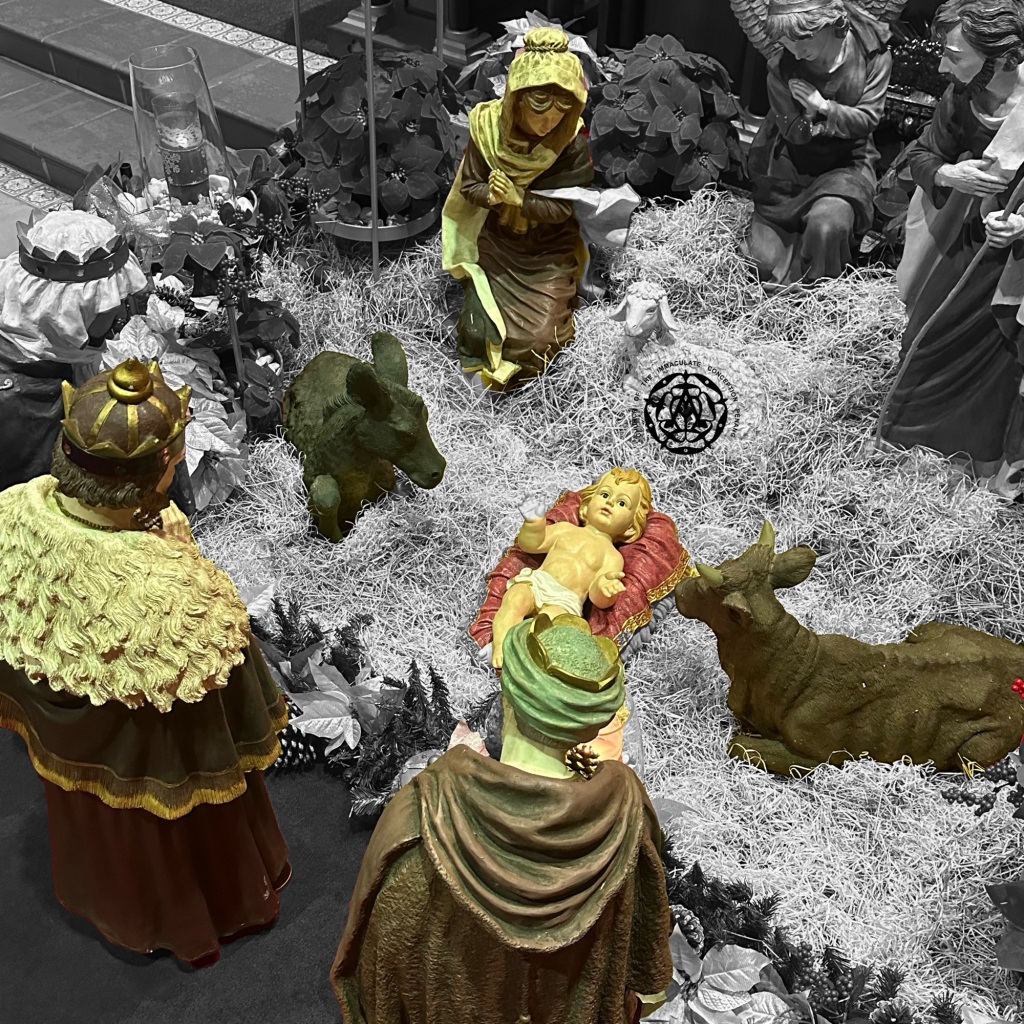
The Christmas crib, also known as a nativity scene or manger scene, depicts the humble birth of Jesus Christ in a stable in Bethlehem. It typically includes figurines of the baby Jesus, Mary and Joseph, the shepherds, the Three Wise Men (Caspar, Melchior, and Balthasar) and various animals. The crib serves as a visual representation of the biblical story and invites us to reflect on the true meaning of Christmas.
A scene from the manger recreated at the Church of the Immaculate Conception, Penang
Throughout the Advent season, the crib has been a focal point of prayer and reflection, bringing us closer to the spirit of anticipation and hope. As we gathered around the crib, we were reminded of the immense love that God has for us, as he sent His only Son to redeem and save us.
Teacher and musician Leonard Selva Gurunathan generously shares the meaning of all things Christmas to him in this heartfelt video. His take on the meaning of family at Christmas, the spirit of the season embraced by Roman Catholics like him and his family with anticipation, and lovely anecdotes focussing on miniature photography, the pipe organ and Christmas carols, give a completely different spin to the loud and often obnoxious and over-the-top festive tones we embrace as we blindly take in all that is commercial and showy about the humble birth of Jesus Christ, and what the true gift of Christmas should mean for those who consider it a religious celebration.
So as we close the Advent season and bid farewell to the Christmas crib, let us carry the spirit of joy, love, and hope with us throughout the year. And may the story of the miraculous birth of Jesus Christ continue to inspire and guide us in all that we do.
Photography by BoonTiong
(video courtesy of Leonard Selva Gurunathan with scenes from his Mount Erskine family home and the Church of the Assumption, Penang, home to the country’s oldest pipe organ)
The sea-fronting colonial mansions along Penang’s Millionaire’s Row (Jalan Sultan Ahmad Shah) have never failed to impress visitors and locals with their distinct architecture and stories of the well-heeled, their lawn parties and a time where social etiquette and classy ways ruled the day.
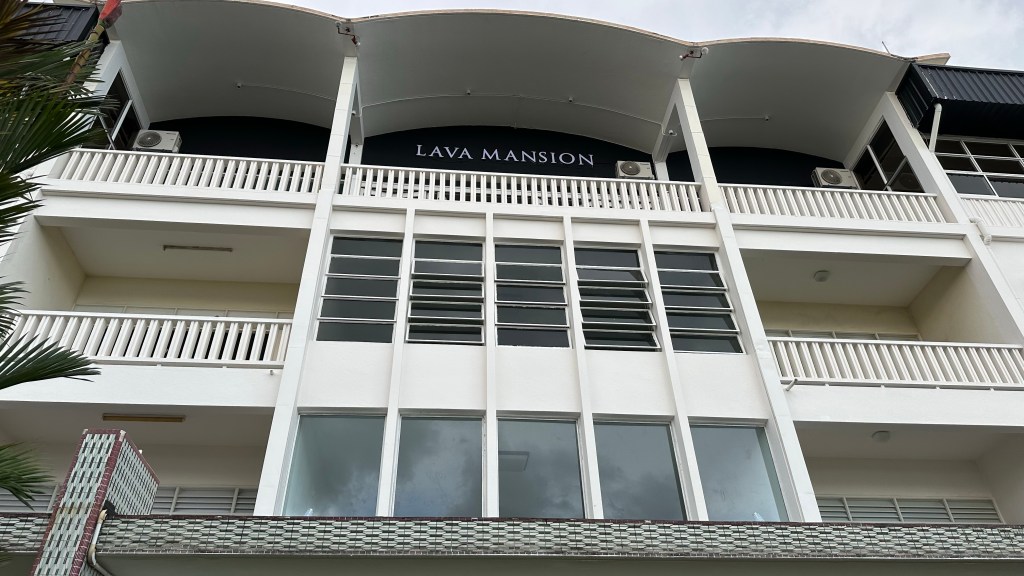
The Ng Mansion has morphed into Lava Mansion and is today a space for events, a clothing atelier and food & beverage outlet
If there is one thing which stands out with all properties along this stretch (which include homes, a university, palace, condominium, a private club, restaurants, corporate buildings and a hotel and school) is the amazing views they offer from their sea-fronting addresses.
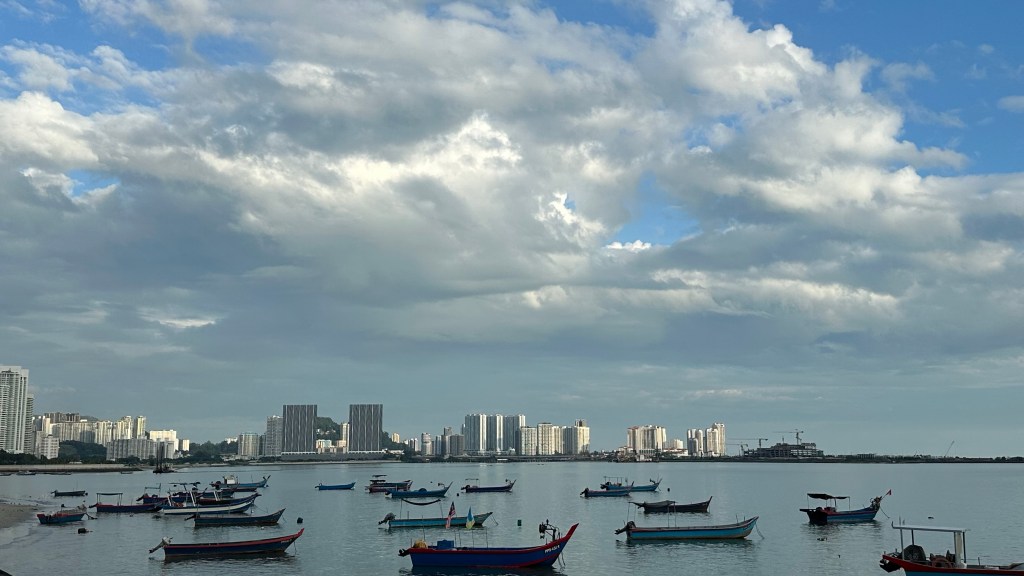
Sunset from the Lava MansionGood morning from the Lava Mansion
Lava Mansion is the newest kid on the block and functions as a multi-usage space. A boutique hotel is expected to make its debut on the grounds of the two-acre grounds by year-end, and there are also talks of a wellness space in the works.
The four-storey property with an adjoining British-inspired two-level mews (comprising servants’ quarters with garages below) boasts beautiful and expansive lawns and a sea-fronting pavillion (which will soon be featured as a bar), was the stately home of an illustrious Penang family. The clever use of space (with a forward-thinking elevator installed by its owners) tells a tale of a family home in the true sense of the word, where generations enjoyed the fresh breezes, stunning sunrises and sunsets and most likely even fun rounds of mahjong with family and friends.
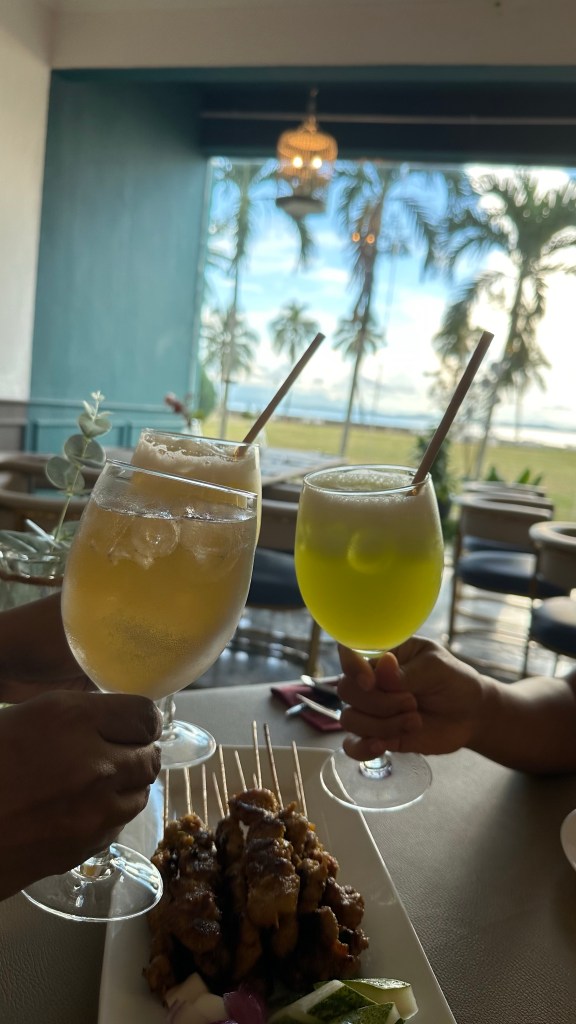
The mansion’s custodian and business operator, Daniel Chee, is obviously a foodie who takes his menus seriously and is not afraid to get his chefs to experiment in the kitchen.
His designer wife Vivian is looking forward to welcoming her patrons to her atelier on the first floor, which commands a grand view of Kedah Peak and the fishing boats bobbing around the northern shore.
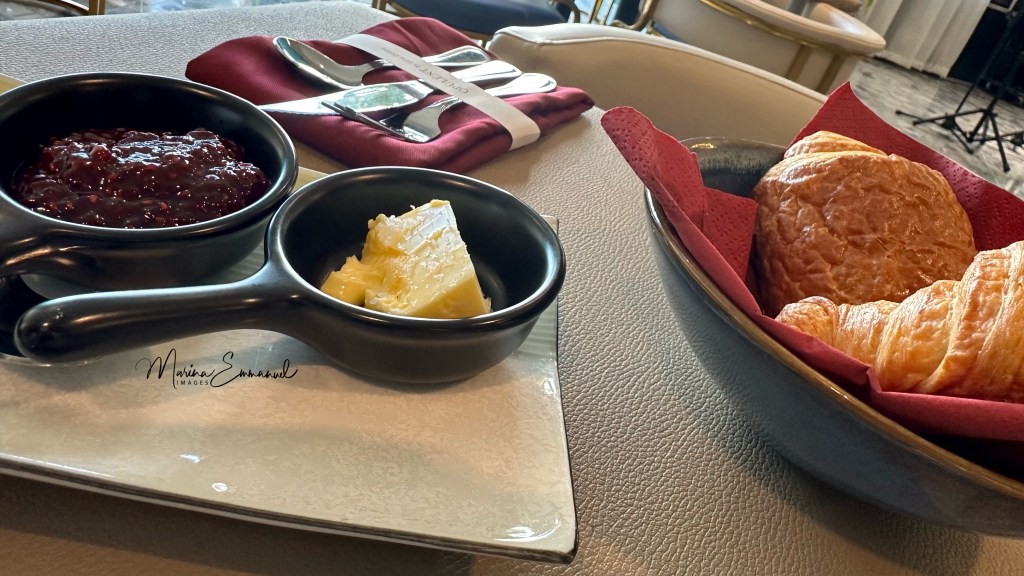
A great way to start one’s morning with-a-view is with breakfast (served from 8am) at the mansion.
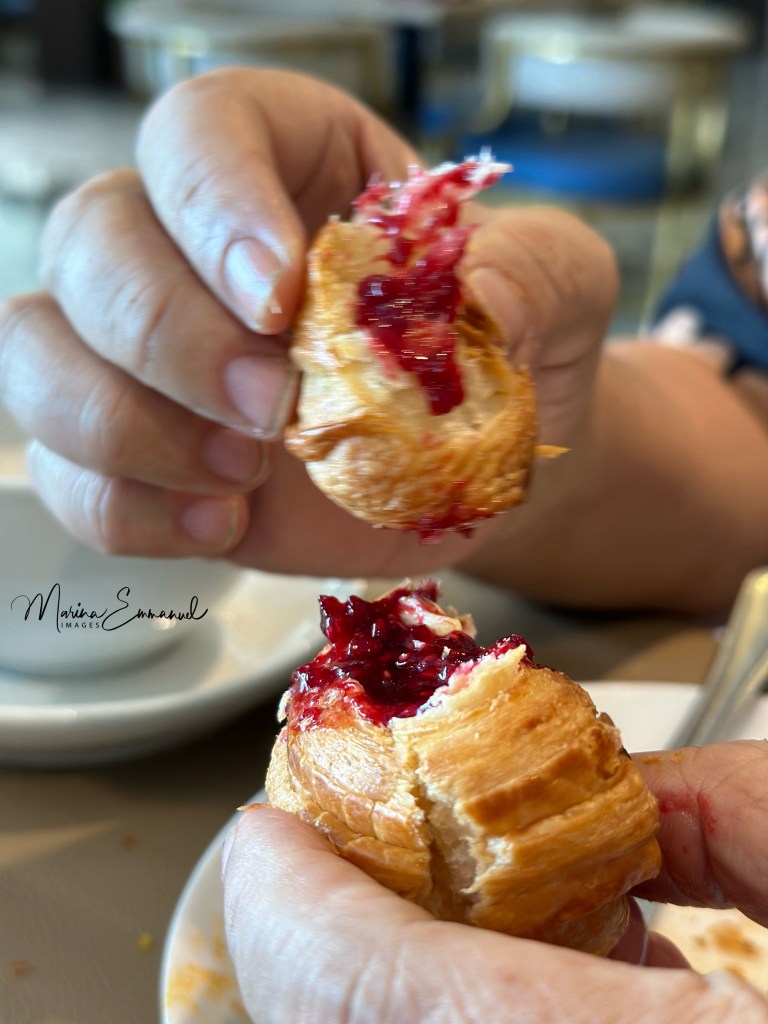
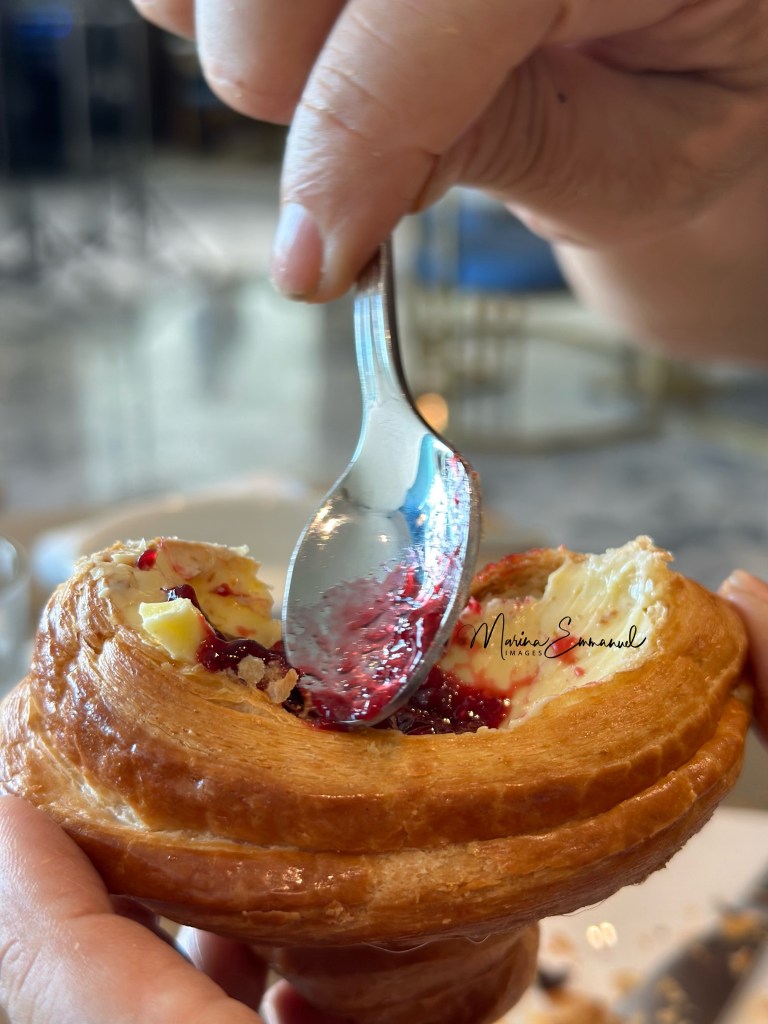
Attention is given to the littlest of details like the salt sprinkles on the butterFresh croissants and pastries are among the breakfast offerings Lava Mansion is located at 46A Jalan Sultan Ahmad Shah in George Town
Courtesy photo Christopher Jude AnthonyCourtesy photo Dennis AuCourtesy photo Dennis Au
Roman Catholics in Malaysia and beyond have been beaming with gratitude and pride today in giving thanks for a special gift.
Penang Bishop Sebastian Francis has been elevated to the ranks of a Cardinal, a big honour and win for this country and Asia.
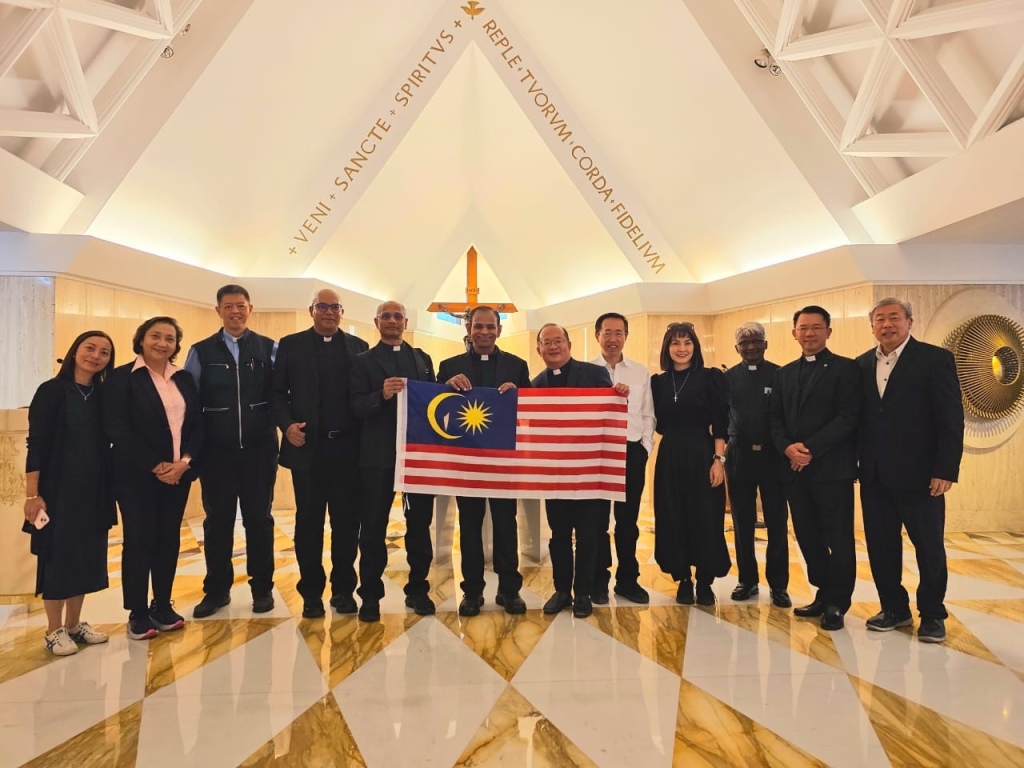
As Malaysians at St Peter’s Square in the Vatican gathered today and waved the Jalur Gemilang, they have carried the pride of all Catholics from the Penang Diocese and the rest of the country in celebrating a newly-minted cardinal who has always been one to promote inclusion and celebrates harmony and diversity.
Courtesy photo Bernadette LauCourtesy photo Monsignor Jude MirandaCourtesy photo Christopher Jude Anthony Courtesy photo Rev Father Aloysius Tan
The Holy Father sums today’s happenings best below …
HOMILY OF HIS HOLINESS POPE FRANCIS
Saint Peter’s Square Saturday, 30 September 2023
____________________________
Thinking of this celebration and particularly of you, dear brothers, who would become Cardinals, a text from the Acts of the Apostles came to mind (cf. 2:1-11). It is a fundamental text: the story of Pentecost, the baptism of the Church… But my thoughts were really drawn to one detail: the expression spoken by the Jews who “were dwelling in Jerusalem” (v. 5). They said: We are “Parthians and Medes and Elamites” (v. 9) and so on. This long list of peoples made me think of the Cardinals, who thanks be to God, are from all parts of the world, from the most diverse nations. That is the reason I chose this biblical passage.
Meditating on this, I became aware of a kind of “surprise” hidden in this association of ideas, a surprise in which, with joy, I seemed to recognize the humor of the Holy Spirit, so to speak. Please excuse the expression.
What is this “surprise”? It consists in the fact that normally we pastors, when we read the account of Pentecost, identify ourselves with the Apostles. It is natural to do so. Instead, those “Parthians, Medes, Elamites” et cetera, associated in my mind with the Cardinals, do not belong to the group of disciples. They are outside the Upper Room; they are part of the “crowd” that “gathered” upon hearing the noise of the rushing wind (cf. v. 6). The Apostles were “all Galileans” (cf. v. 7), while the people who gathered were “from every nation under heaven” (v. 5), just like the Bishops and Cardinals of our time.
This kind of role reversal gives us pause for thought and, when we look closely, it reveals an interesting perspective, which I would like to share with you. It is a matter of applying to ourselves – I will put myself first – the experience of those Jews who by a gift of God found themselves protagonists of the event of Pentecost, that is of the “baptism” by the Holy Spirit that gave birth to the One, Holy, Catholic and Apostolic Church. I would summarize the perspective in this way: to rediscover with amazement the gift of having received the Gospel “in our own tongues” (v.11), as the Jews said. To think back with gratitude on the gift of having been evangelized and having been drawn from various peoples who, each in their own time received the Kerygma, the proclamation of the mystery of salvation, and in welcoming it, were baptized in the Holy Spirit and became part of the Church. Mother Church, who speaks all languages, is One and is Catholic.
This word from the Acts of the Apostles makes us reflect that, before being “apostles”, before being priests, Bishops, Cardinals, we are “Parthians, Medes, Elamites”, et cetera, et cetera. And this should awaken awe and gratitude in us for having received the grace of the Gospel among our respective peoples of origin. I think this is very important and not to be forgotten. Because there, in the history of our people, I would say in the “flesh” of our people, the Holy Spirit has worked the wonder of communicating the mystery of Jesus Christ who died and rose again. And this came to us “in our language”, from the lips and the gestures of our grandparents and our parents, of catechists, priests, and religious… Every one of us can remember concrete voices and faces. The faith is transmitted “in dialect”. Don’t forget this: the faith is transmitted in dialect, by mothers and grandmothers.
Indeed, we are evangelizers to the extent we cherish in our hearts the wonder and gratitude of having been evangelized, even of being evangelized, because this is really a gift always present, that must be continually renewed in our memories and in faith. Evangelizers who have been evangelized, not functionaries.
Brothers and sisters, dearest Cardinals, Pentecost – like the Baptism of each one of us – is not a thing of the past; it is a creative act that God continually renews. The Church – and each of her members – lives this ever-present mystery. She does not live “off of her name”, still less does she live off of an archeological patrimony, however precious and noble. The Church, and every baptized member, lives the today of God, through the action of the Holy Spirit. Even the act we are carrying out now makes sense if we live it from this perspective of faith. And today, in the light of the Word, we can grasp this reality: you new Cardinals have come from different parts of the world, and the same Spirit that made the evangelization of your peoples fruitful now renews in you your vocation and mission in and for the Church.
From this reflection, drawn from a fruitful “surprise”, I would simply like to draw a consequence for you, brother Cardinals, and for your College. I would like to express this with an image, that of the orchestra: the College of Cardinals is called to resemble a symphony orchestra, representing the harmony and synodality of the Church. I also say “synodality”, not only because we are on the eve of the first Assembly of the Synod that has precisely this theme, but also because it seems to me that the metaphor of the orchestra can well illuminate the synodal character of the Church.
A symphony thrives on the skillful composition of the timbres of different instruments: each one makes its contribution, sometimes alone, sometimes united with someone else, sometimes with the whole ensemble. Diversity is necessary; it is indispensable. However, each sound must contribute to the common design. This is why mutual listening is essential: each musician must listen to the others. If one listens only to himself, however sublime his sound may be, it will not benefit the symphony; and the same would be the case if one section of the orchestra did not listen to the others, but played as if it were alone, as if it were the whole. In addition, the conductor of the orchestra is at the service of this kind of miracle that is each performance of a symphony. He has to listen more than anyone else, and at the same time his job is to help each person and the whole orchestra develop the greatest creative fidelity: fidelity to the work being performed, but also creative, able to give a soul to the score, to make it resonate in the here and now in a unique way.
Dear brothers and sisters, it does us good to reflect upon ourselves as the image of the orchestra, in order to learn to be an ever more symphonic and synodal Church. I propose this especially to you, members of the College of Cardinals, in the consoling confidence that we have the Holy Spirit – he is the protagonist – as our master: the interior master of each one of us and the master of walking together. He creates variety and unity; He is harmony itself. Saint Basil was looking for a synthesis when he said: “Ipse harmonia est”, he is harmony itself. We entrust ourselves to his gentle and strong guidance, and to the gracious care of the Virgin Mary.
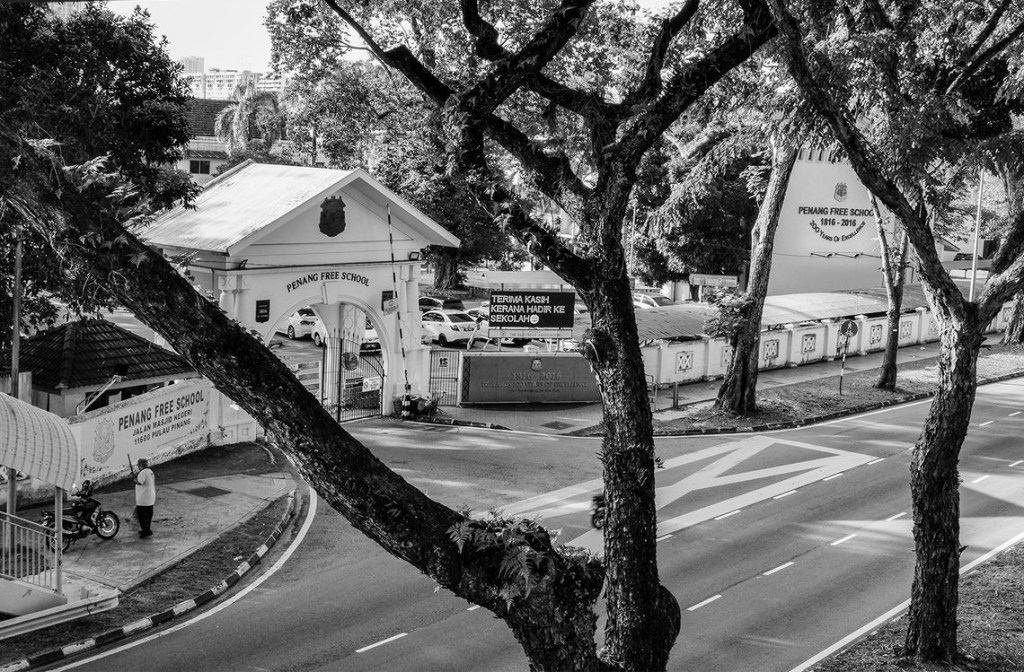
Southeast Asia’s oldest English-medium school – Penang Free School (PFS) – on Penang island, was founded in 1816.
The many luminaries who have graced its halls include Malaysian prime ministers, chief ministers, captains of industry, media titans, musicians and those in the creative and performing arts, legal eagles, religious and grassroots leaders and the list goes on.
Image courtesy of Lim Siang Jin
Over the years, many sons of PFS have given back to their alma mater in various ways.
Self-taught artist Lim Siang Jin, is one such son, whose association with PFS has ranged on various platforms.
Image courtesy of Lim Siang Jin
Until recently, the Kuala Lumpur-based Siang Jin, has been only showing his works to family and friends.
He returns to his hometown Penang this week to pay tribute to his former school.
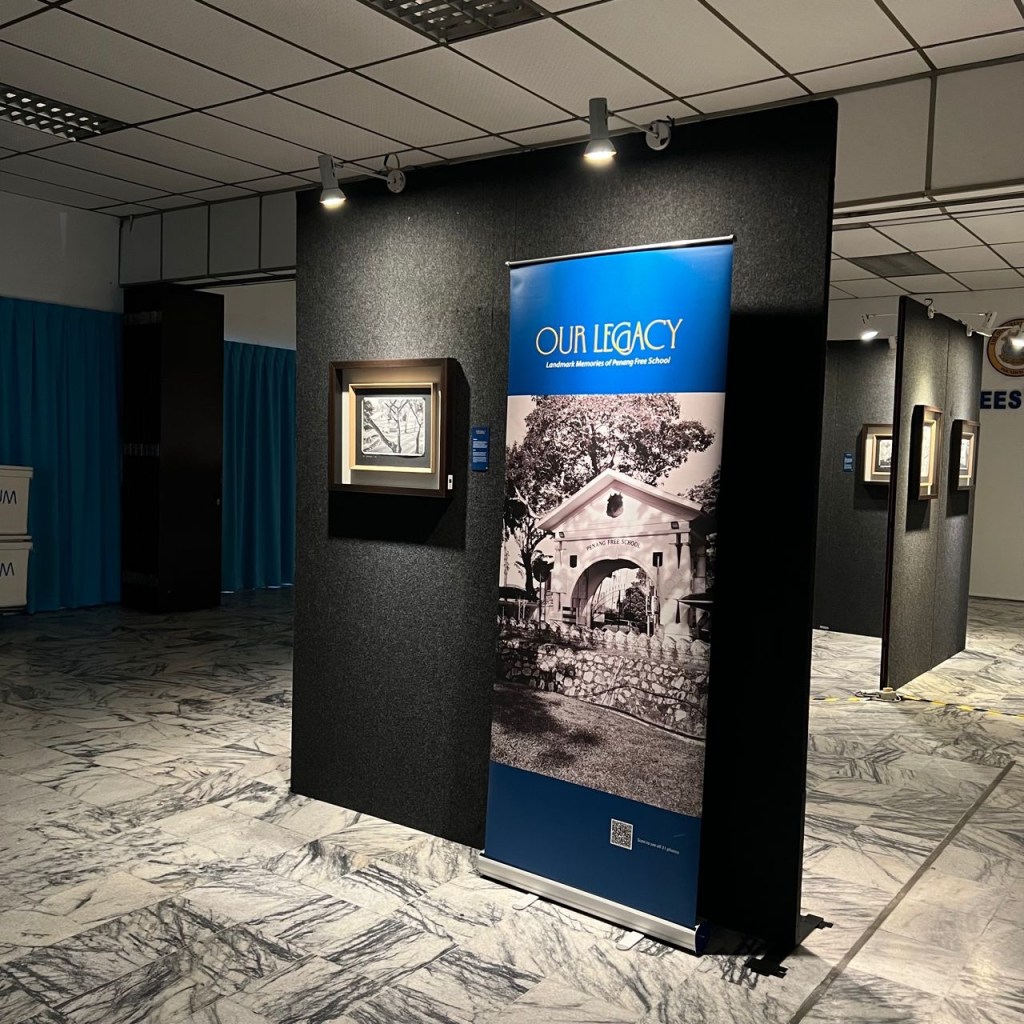
His latest solo: “Our Legacy: Landmark Memories of Penang Free School”, starts today till Oct 3, at The Old Frees’ Association in conjunction with the school’s centenary celebrations.
The exhibition consists of 31 black-and-white prints, each with a write-up by the artist.
Image courtesy of Lim Siang Jin
Siang Jin spent some three decades deeply involved in work, mainly in publishing, communications, branding and marketing.
He was, for example, a founder director of The Edge. He went on to head the media business of Nexnews Bhd that owned the business weekly and theSun.
His website says that in all these endeavours, he continued to take an active interest in the “backroom”, in the production and creative processes of the business.
“Like his art, his work, from publishing to management, is girded by the ideas of Quality, Timing and Aufhebung (the idea that every new development is an inextricable combination of the old and new).”
Siang Jin held his first solo exhibition in Kuala Lumpur in October 2022 where he exhibited some 70 pieces; all these were created during the Covid years (2020-2022).
While his favourite artists, and therefore his main influences, are mainly Western-modern (notably Picasso, Dali, Van Gogh, Matisse, Miro, Klee and Kandinsky), he continues to innovate.
This is especially apparent in the digital-analog creative space where he combines his experience in painting, photography and media production.
Image courtesy of Lim Siang Jin
(“Our Legacy: Landmark Memories of Penang Free School”, will be showcased from 10am-5pm at The Old Frees’ Association, 41 Jalan Sultan Ahmad Shah, 10050 George Town, Penang)
And the gifting continues …
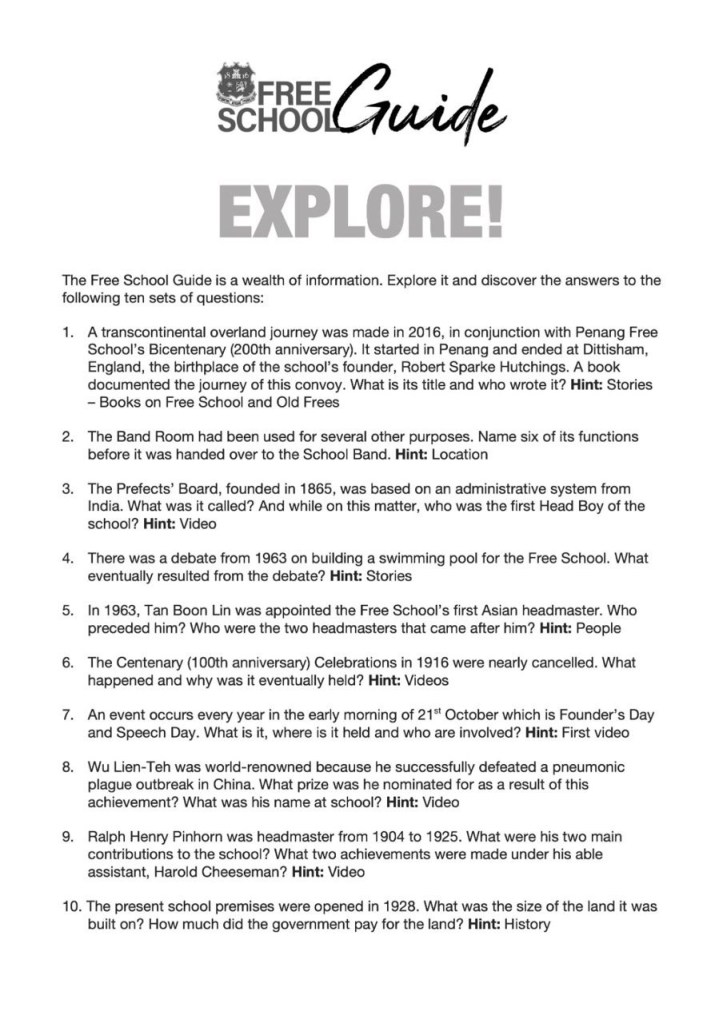
The interactive Free School Guide is available in PDF form. Just click on the subheadings to access the system, and forward all these to people who may be interested in Penang Free School. The 10 sets of “Explore!” questions are to draw them to different parts of the Guide.
(Another gift to his alma mater by Lim Siang Jin and schoolmate SS Quah)
I had my second solo, “Our Legacy: Landmark Memories of Penang Free School”, last September at The Old Frees’ Association in Penang in conjunction with the OFA’s Centenary. I am pleased to inform that I will have it in Kuala Lumpur too. The following are the details:
Date: March 1-31, 2024 Venue: Jin’s Art Gallery, Unit A-3-17, Centrio Pantai Hillpark, 1 Jalan Pantai Murni, 59200 Kuala Lumpur Opening hours: Weekends 10am to 5pm. Weekdays by appointment (please call 019 2219680)
The meals may have been way below their past award-winning and ‘atas’ levels, and much has already been said about it in past weeks.
While the airline sorts out its catering dramas, let’s continue to focus and support our national flag carrier – Malaysia Airlines – for its outstanding crew, new planes and all things that remain amazing about Malaysian Hospitality (MH).
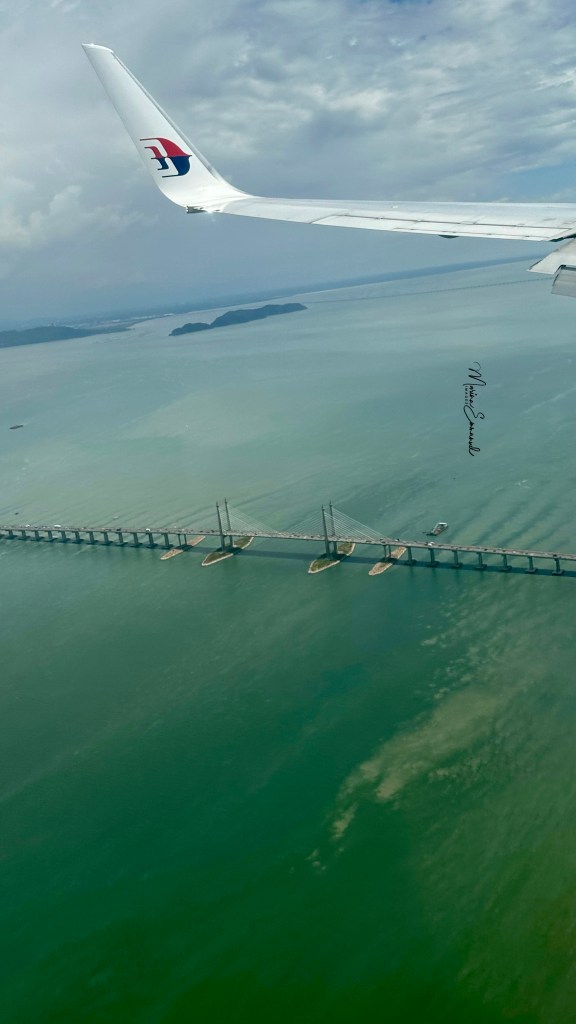
Thank you MH1148 for bringing us home safely and on-time today. If there were any food issues to a destination like Penang (which we did not experience), most residents were more focussed on the nasi kandar and char kuay teow awaiting them on this isle of foodies.























 postcodegeorgetown