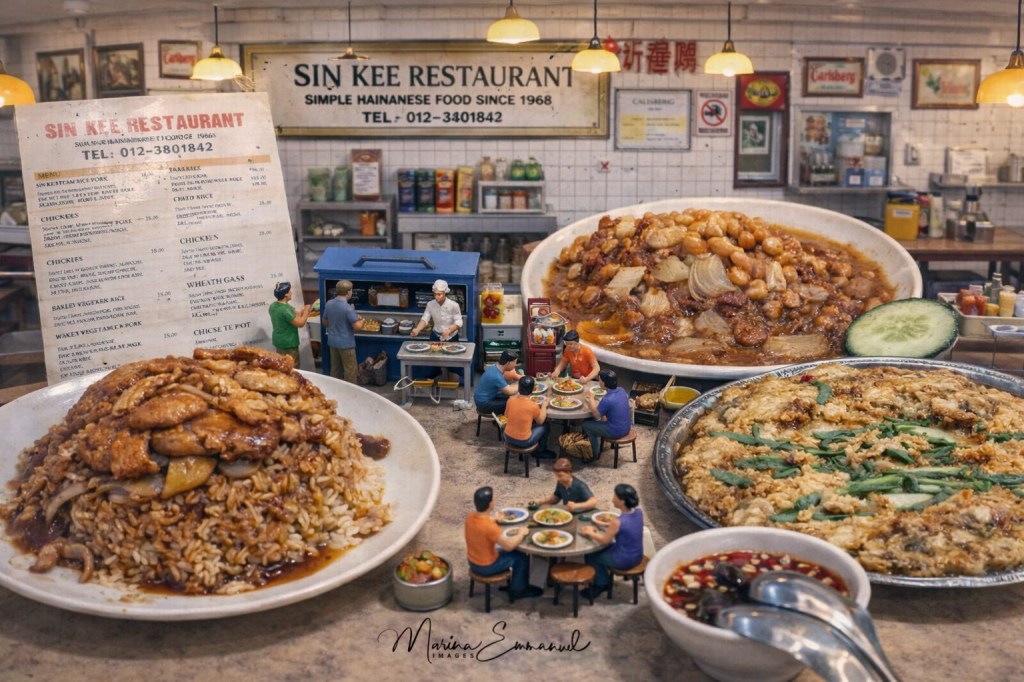
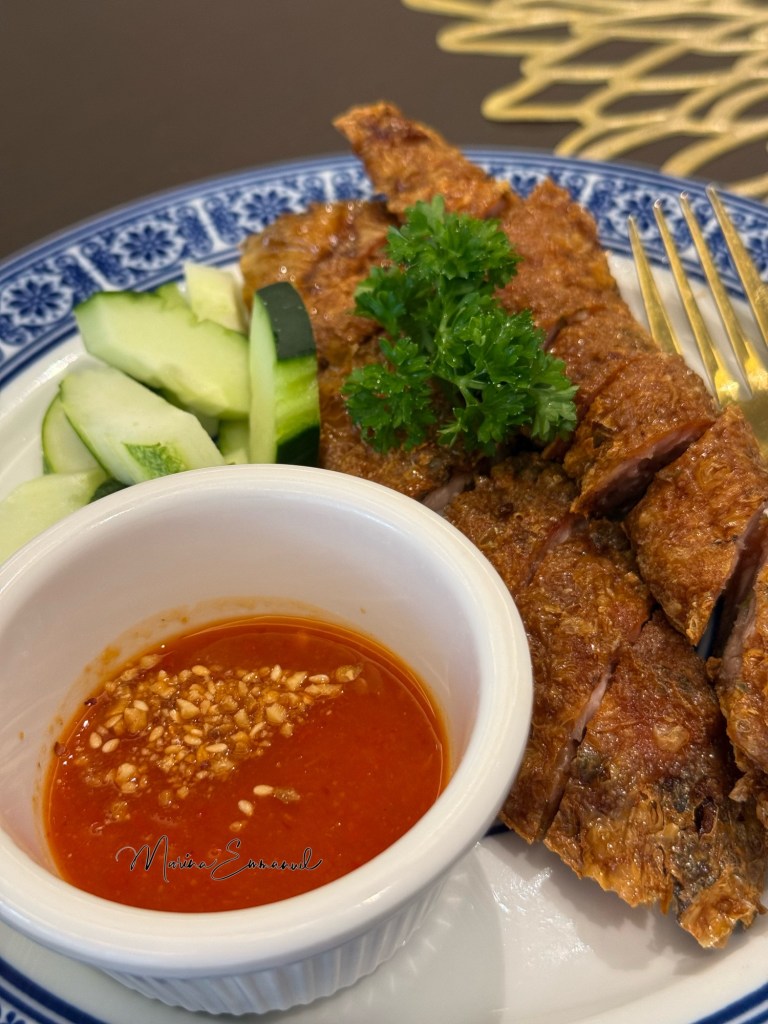
Welcome to my miniature take on Sin Kee Restaurant — a true old-school Hainanese kopitiam tucked away in Brickfields, Kuala Lumpur.
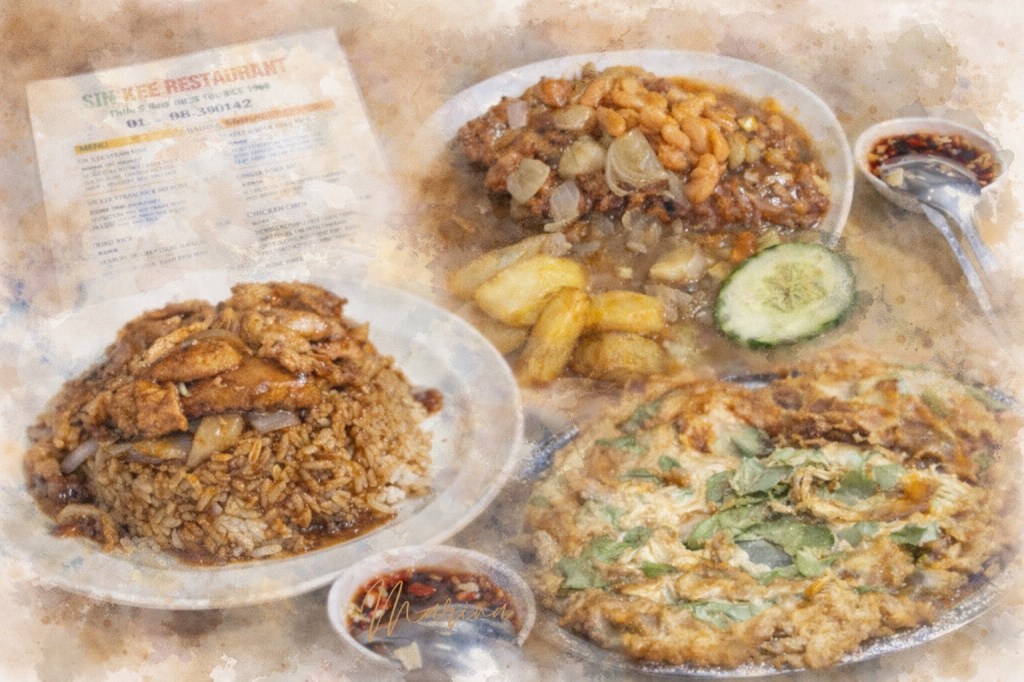
No frills, no fuss — just decades of honest cooking since 1968. Sin Kee has quietly built its reputation on comforting classics like Hainanese chicken chop, pork chop rice, and rich, gravy-soaked fried rice that hits every nostalgic note. It’s the kind of place where recipes haven’t changed, and neither has the charm.
In this little diorama, I imagined their iconic dishes as a bustling kopitiam scene — where tiny diners gather around larger-than-life plates, soaking in that familiar, comforting atmosphere we all know and love.
Because sometimes, the simplest places leave the biggest impressions.
In a world where trust is a rare gem, someone seems to have flipped the script!
Baking with honour
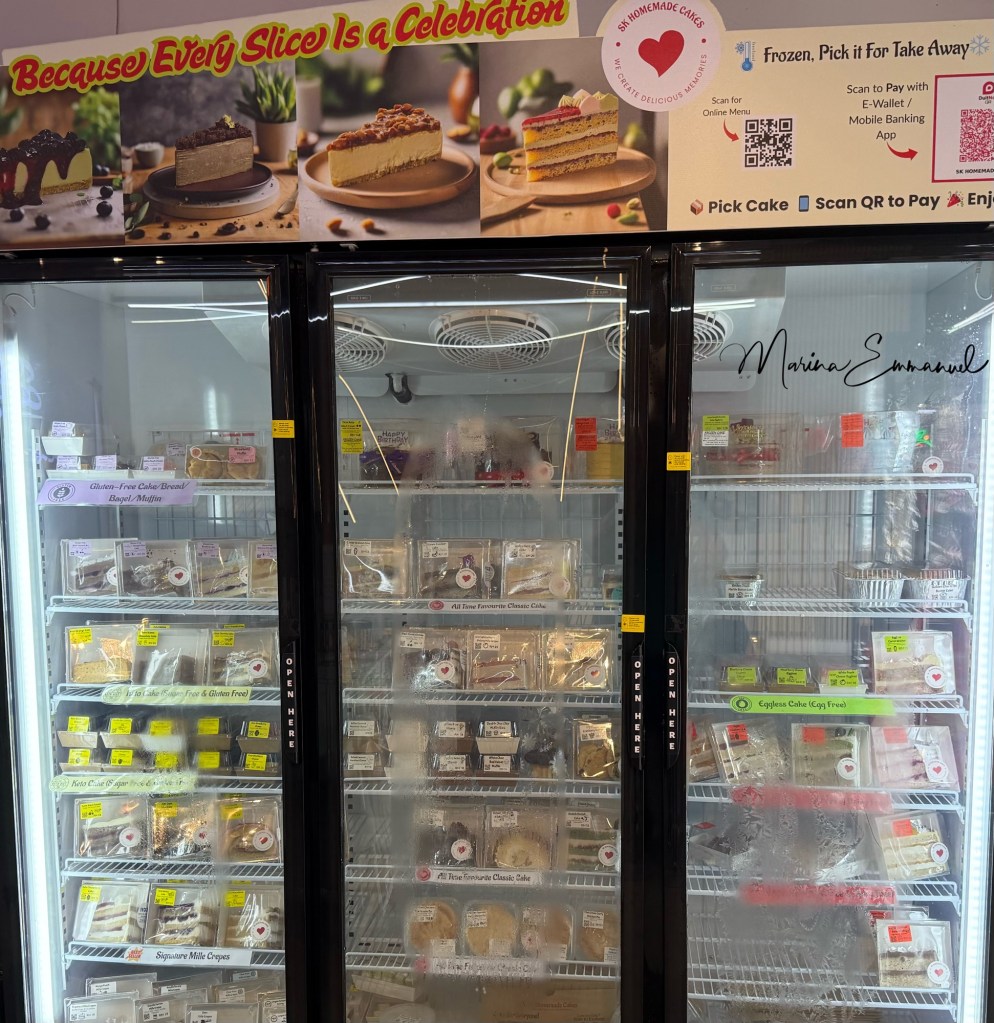
Welcome to SK Homemade Cakes’ self-serve kiosk at Island 88 (Island Plaza) where honesty is the best policy. Pick your treats (gluten-free,eggless, or indulgent buttery numbers), enter what you owe, and make cashless payment.
Sweet trust kiosk
Help yourself to their carrier bags and get your receipt straight to your email inbox.
Find them also at their 6, Jalan Merbau bricks & mortar bakery in Tanjong Tokong.
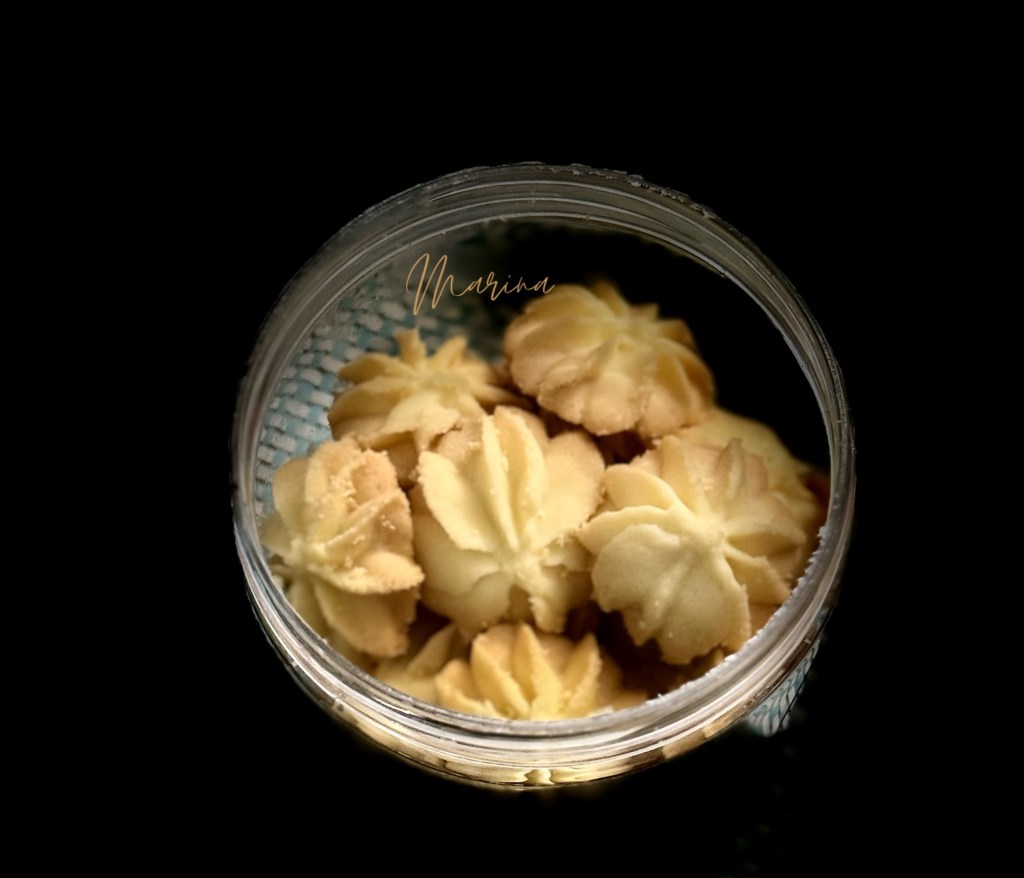
Psst… cake and cookie samples available! So go experience the power of trust and decency.
In the heart of George Town’s heritage district, Bishop Street whispers stories of elegance, history, and reinvention.
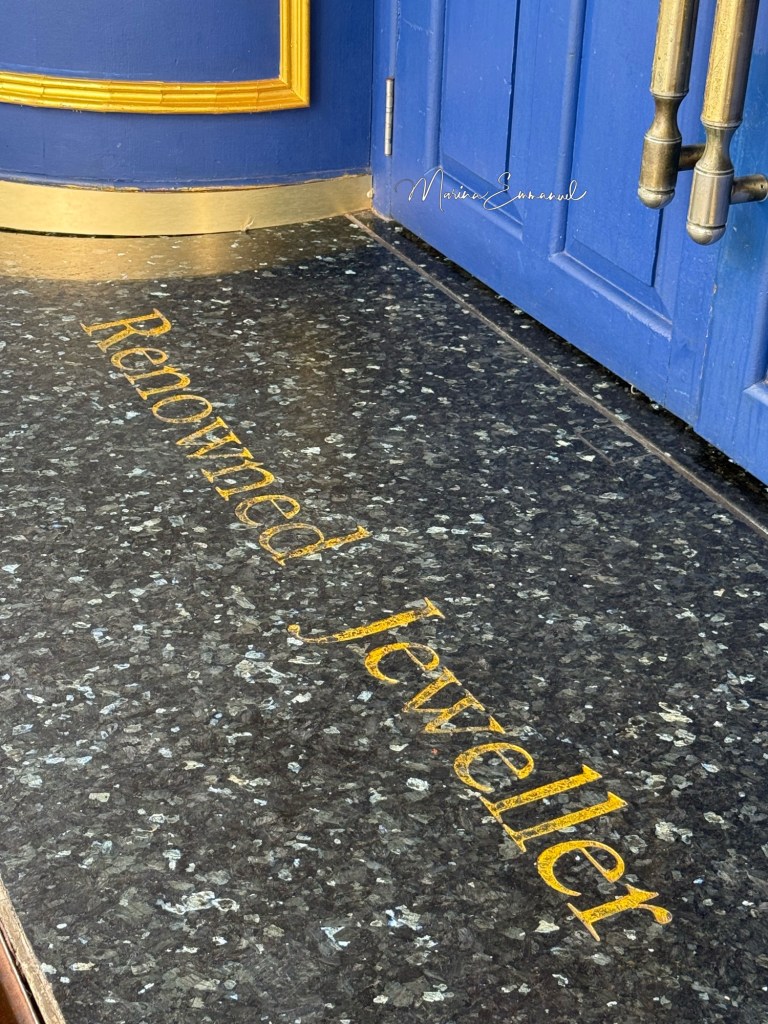
Once home to the prestigious B.P. de Silva jewellers, this iconic row carried a reputation for luxury, refinement, and timeless craftsmanship — with a clientele that included royalty and dignitaries along with high society from across the region.
Today, in a delightful twist of heritage, that very space once filled with velvet-lined showcases now draws admirers of a different kind — food lovers.
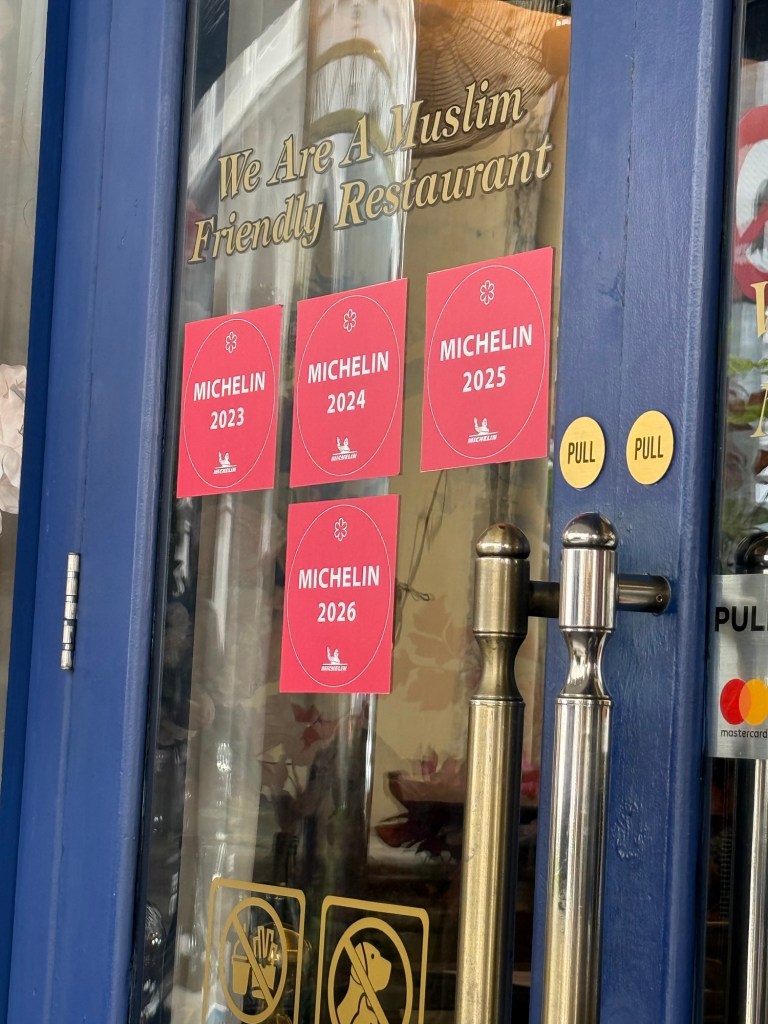
Entrance to the former B.P De Silva which is today home to Aunty Gaik Lean’s Old School EateryAward-winning one star Michelin restaurant
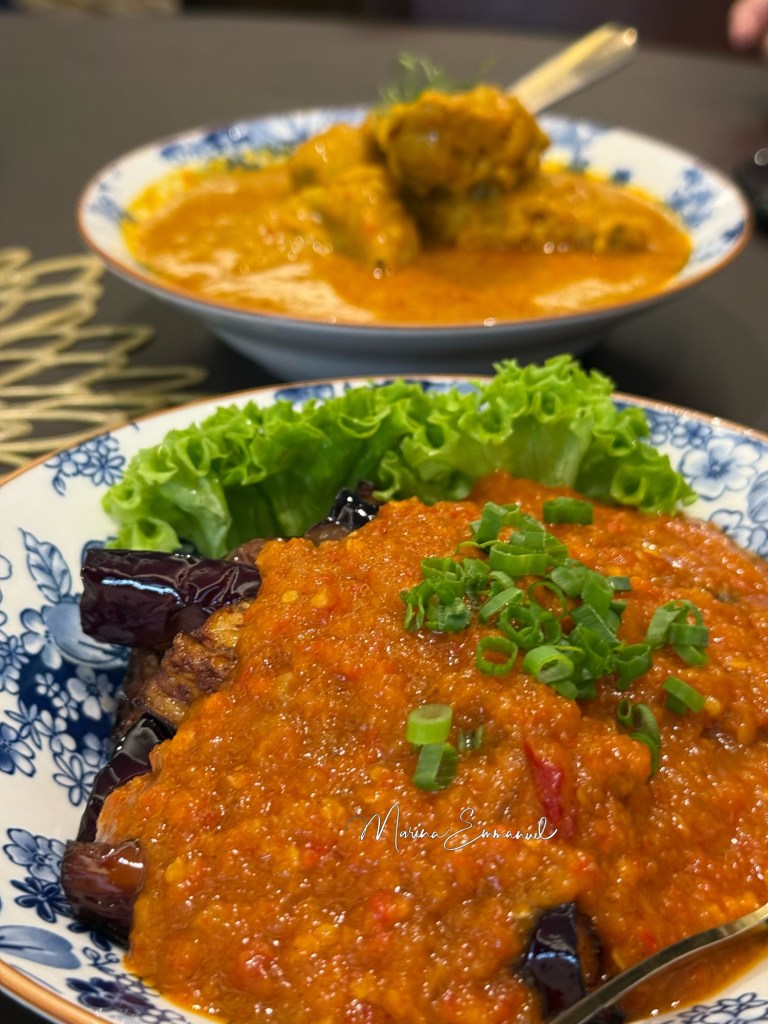
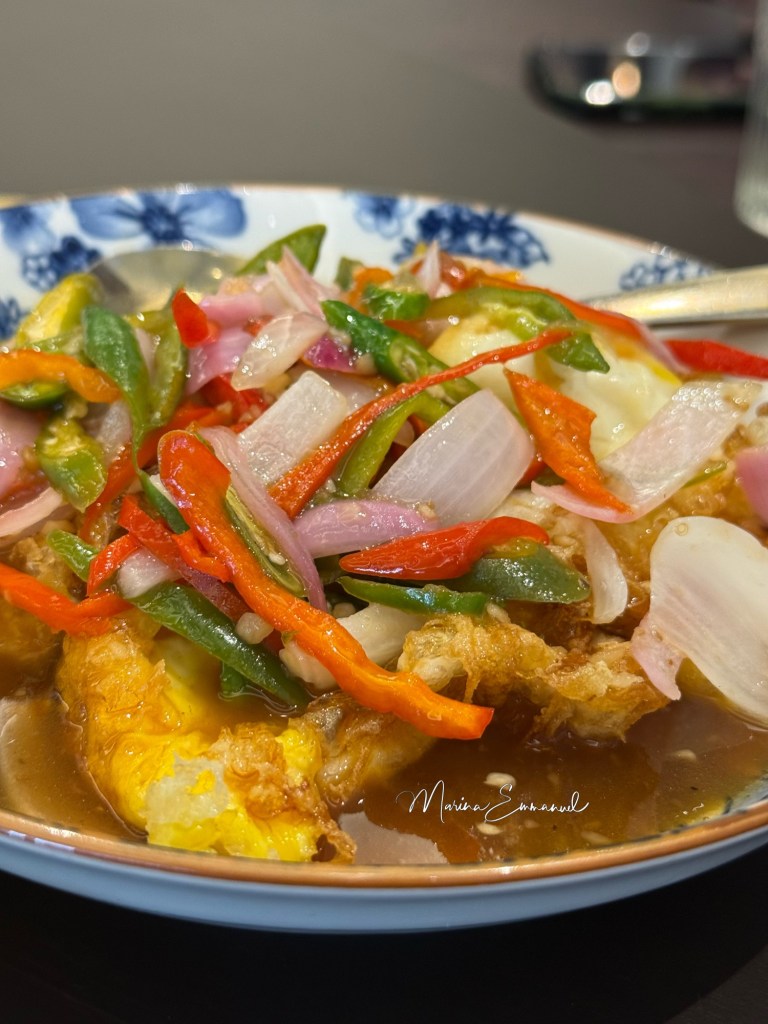
Stepping into the four-times awarded one-star Michelin Aunty Gaik Lean’s Old School Eatery, feels like walking into a lovingly preserved memory — with warm Peranakan hospitality, family recipes, and an unmistakable sense of home.
A Taste of Nostalgia, Reimagined
What sets Aunty Gaik Lean’s apart is not just its rich, authentic Nyonya flavours, but its Muslim-friendly menu that has not compromised on quality or taste. It’s a rare and respectful adaptation of traditional cuisine, made accessible to more diners without losing the heart of its heritage.
The nasi ulam is aromatic and vibrant, and the sambal belacan — bold as ever. Even vegetarian diners, including many from the Indian subcontinent, have found the dishes flavourful and deeply satisfying — a testament to the careful balance and generosity in the kitchen.
Where History Meets Heart
To dine here is to savour more than food. You sit where once patrons browsed fine gems under chandeliers, in a building that quietly cradles Penang’s evolving story — from colonial-era commerce to culinary celebration.
The echoes of B.P. de Silva’s prestige lend a quiet dignity to the eatery, while the cheerful clatter of cutlery and scent of shallots signal a more grounded kind of luxury: a meal made with love.
Whether you’re drawn by memories of kampung cooking or curiosity for the space’s storied past, Aunty Gaik Lean’s offers more than just lunch or dinner — it offers a taste of heritage, harmony, and hospitality.
So, pull up a chair. The past has never felt so warm.
Auntie Gaik Lean’s Old School Eatery is located at 1, Lebuh Bishop, 10200 George Town, Penang, Malaysia.
Presenting slices of precious insights into Penang’s retail scene (courtesy image: Marcus Langdon)
(BACK COVER BLURB)
Pritchard & Co. Ltd. (1888–1959) is a name which has almost faded from memory in Malaysia. Its foundation and development encompass a period when Malaya saw unprecedented growth driven by an export boom in tin, rubber, and other agricultural produce which coincided with advances in technology such as the invention of electricity, telephones, motorised vehicles, and aircraft.
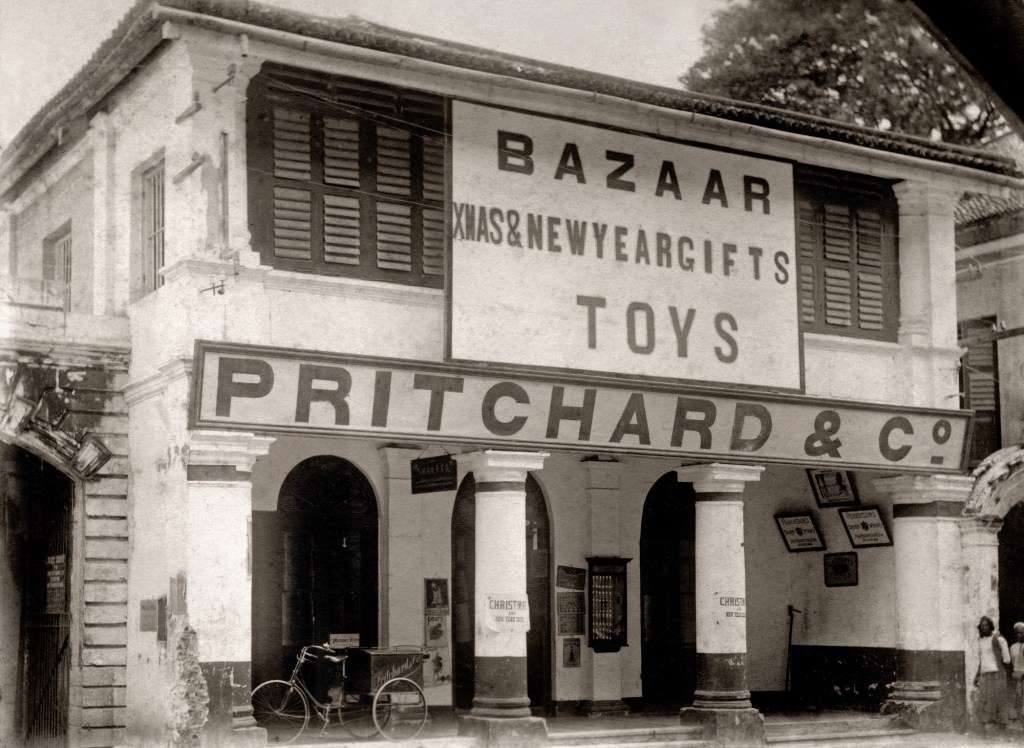
As the first widely-diversified department store in northern Malaya, with its main store in Penang and branches in Ipoh, Butterworth, and Sungai Petani, Pritchard’s became a key player in the growth of retailing in Malaya during the best and worst of times of British colonial Malaya.
Drawn from family documents and richly-illustrated with nearly 300 images, including many rarely seen photographs from inside the stores, this book captures spectacularly the essence of times past as it follows the fortunes, activities, and fate of the business and the family behind it.
9-11 Union Street, constructed by Pritchard & Co. in 1916, currently the Maybank building (Courtesy of The Robert Hussey Collection)
“Pritchard’s of Penang – Enterprise, Secession, and Murder” featuring items from The Robert Hussey Collection is a thoroughly-researched and richly-detailed exploration of one of Penang’s most iconic retail establishments.
Drawing from a wealth of memorabilia and personal insights provided by someone intimately connected to the Pritchard family, historian Marcus Langdon masterfully weaves a narrative that captures the essence of the island’s retail history from the British colonial era to modern times.
15 Beach Street, where Pritchard & Co. began (Courtesy of The Robert Hussey Collection)
“During a research trip to Singapore around 2011, a well-spoken gentleman named Robert Hussey contacted me,” says Langdon in the book’s preface.
“In his possession were some old Penang photographs which had been left to him, and he wondered if they might have some historical interest.”
Langdon had recently relocated to Penang and Hussey, too, was making plans to move from Singapore to Penang—the place of his birth. Some three years later he made that move.
“Over the next few years,” Langdon recalls “we met up regularly and I became aware of the extent of his collection.
“Essentially it was an assemblage of personal documents, photographs, drawings, and miscellaneous items relating to several generations of the Pritchard family, the core of the collection offered a wonderful insight into British life in Penang in the late nineteenth and early twentieth century.
“Understanding that Pritchard’s (as it was colloquially known) was acknowledged as the first true British-style department store in Penang and northern Malaya, we both felt it was important that the relevant portions of this rare collection were recorded for posterity.”
And so the book project took off and Langdon spent a great amount of time on it when what he dubs “a microscopic virus dubbed COVID-19”, came along.
“With Malaysia and the majority of the world’s population shut down and confined to our homes, and without the usual daily distractions of a publishing business, more work was accomplished at my desk in those far-too-many long months than thought humanly possible.
“The backbone of this book,” he explains, “was forged at that time.”
“Again, other projects and complications got in the way, and it is only now that the final touches, and providential updates, have been applied.”
The book chronicles Pritchard’s journey as more than just a store—it was a symbol of upscale shopping and a bellwether of Penang’s socio-economic landscape during its heyday.
Before the advent of Whiteaways—another historic department store that eventually became more dominant—Pritchard’s played a significant role in the retail landscape of Penang, embodying the colonial-era shopping experience.
Over the years, as shopping habits and retail environments evolved, Pritchard’s gradually declined in prominence, but it remains a nostalgic symbol of Penang’s rich commercial history.
Langdon’s meticulous approach shines through in his vivid descriptions and images of the store’s evolution, from its founding days during the British occupation, through the tumult of the Second World War, and into the post-war resurgence.
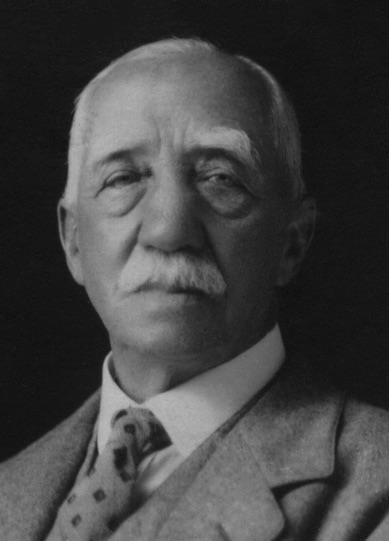
George Henry Pritchard, 1927 (Courtesy of The Robert Hussey Collection)
One of the most compelling aspects of the book is its detailed account of the advertising campaigns that helped cement Pritchard’s reputation as a premier shopping destination.
Langdon’s insights into marketing strategies of the time, are illuminated via the photographs and graphics of how the store maintained its allure and adapted to changing times.
The narrative also thoughtfully addresses the challenges faced during wartime, highlighting the resilience of the business and its ability to bounce back after setbacks.
What sets this book apart is the author’s ability to combine solid research with a personal touch, bringing to life the stories behind the memorabilia that made Pritchard’s a household name.
It is a nostalgic yet informative journey that not only celebrates a storied business but also offers a window into Penang’s broader cultural and economic history.
In sum, “Pritchard’s of Penang – Enterprise, Secession, and Murder”, is a must-read for history enthusiasts, retail aficionados, and anyone interested in the rich tapestry of Penang’s colonial past.
Inside the Union Street store, 1930s (Courtesy of The Robert Hussey Collection)
In crafting a compelling narrative that honours the legacy of Pritchard’s while providing valuable insights into the evolution of retail in Southeast Asia, Langdon has this to say:
“I cannot express how grateful I am to have been given the opportunity to bring this treasured cache of family and business history to light for a wider audience to share and preserve for posterity.”
“Despite the ‘colonial’ period now being frowned upon by upcoming generations, it is nevertheless an integral part of the development of Malaya as it was—and something future generations will undoubtedly be researching.
“Even today,” Langdon adds, “many Penangites, and indeed those further afield, would not have even heard of Pritchard’s. It was, after all, essentially an era long before their time.
“Hopefully this book, with its remarkable photographs, will restore Pritchard & Co. and the families behind it to its small but rightful niche in Penang, and indeed, Malaysian, history.”
Marcus Langdon (courtesy image from the author)
Below are several excerpts from the book for interested history buffs and shopaholics:
(For many years, Pritchard’s had been the tailors of choice to the Royal Court of Kedah under Sultan Abdul Hamid Halim Shah.
Remarkably, it was the practice of the royalty and members of the Court to wear Western clothing outside their private abodes.
Lighter drill materials were used for office wear, and often heavy Tweed was donned for formal occasions.
In his 1959 book Prince and Premier, Harry Miller stated that:
‘Twice a year an English tailor from Pritchard’s, a firm in Penang, travelled the sixty miles to Alor Star to measure members of the royal family for new clothes.
He returned a few weeks later for fittings. When the sultan’s son, Tunku Abdul Rahman, was awarded a scholarship to Cambridge University in 1919, ‘The man from Pritchard’s in Penang was summoned to fit the sixteen-year-old prince with suits.’
Excitement is also said to have prevailed at the Penang store when King Rama VI of Siam paid a visit on 7 October 1924.
After purchasing jewellery at B.P. de Silva’s store in Bishop Street, the King was reportedly hosted to tea at Pritchard’s.)
(“Pritchard’s of Penang – Enterprise, Secession, and Murder” will be launched during the George Town Literary Festival 2025 this November 28-30)
About the Author
Marcus Langdon has spent several decades researching the myriad fascinating stories in Penang’s developed history. Based in Penang, he also advises on historical projects and was a founding director of Entrepot Publishing Sdn Bhd.
Other titles by Marcus include:
• Penang: The Fourth Presidency of India 1805–1830
o Volume 1, ‘Ships, Men and Mansions’. Areca Books, 2013.
o Volume 2, ‘Fire, Spice and Edifice’. George Town World Heritage Incorporated, 2015.
o Volume 3, ‘Water, Wigs and Wisdom’. Entrepot Publishing, 2021.
• Biographical Dictionary of Mercantile Personalities of Penang, (contributing editor). Think City/MBRAS, 2014.
• George Town’s Historic Commercial and Civic Precincts(researcher/writer). George Town World Heritage Incorporated, 2015.
• Epitaph: The Northam Road Protestant Cemetery, George Town, Penang. George Town World Heritage Incorporated, 2017.
• The Habitat Penang Hill: a pocket history, Marcus Langdon & Keith Hockton. Entrepot Publishing, 2018.
• Penang Then & Now: A Century of Change in Pictures.Marcus Langdon & Keith Hockton, Entrepot Publishing, 2019.
• Pastoral Port: An Agrarian History of Penang. Penang Institute, 2023.
• George Town & Adelaide: Sister Cities 50th Anniversary 1973–2023, Marcus Langdon & Rachel Yeoh, MBPP, 2024.
More than just sugar and spice — these colourful treats are a celebration of light, love, and victory! 🪔
Deepavali (or Diwali) marks the triumph of good over evil, light over darkness, and hope over despair. As lamps glow in homes, so do hearts — and yes, so do dessert tables!
From ladoo to halwa to coconut candy, every sweet tells a story of heritage, joy, and togetherness.
So go for it — take another bite. This festival is meant to be savoured!
A photo of the Assumption Church taken on a cloudy day . Transformed into an image on canvas with digitally-generated cotton representing the clouds based on actual photographs (courtesy image: Leonard Selva Gurunathan)
Nestled within the UNESCO World Heritage core zone of George Town, Penang, the Church of the Assumption stands as a testament to the island’s rich history and cultural tapestry.
Established in 1787, this historic Roman Catholic church has long been a spiritual and community cornerstone, seamlessly blending tradition with modernity.
Among its treasured heritage is its magnificent pipe organ, fondly known as ‘The Old Lady’ – a majestic instrument that has echoed through generations, accompanying countless masses, religious ceremonies, and musical celebrations, and holds the distinction of being Malaysia’s oldest pipe organ.
Recently, a passionate pipe organist and music enthusiast – Leonard Selva Gurunathan – embarked on an innovative project to trace and showcase the church’s musical roots.
Leveraging the power of artificial intelligence (AI) and a suite of cutting-edge tech tools with good old-fashioned research, he has crafted a compelling video narrative that highlights the journey of the pipe organ and its profound role in the life of the church.
The project began with meticulous research into the church’s history, archives, and the evolution of its musical traditions.
A digital image of the Assumption pipe organ transformed into a diorama setting by Leonard Selva Gurunathan
“ The visual part of the video was done with the use of AI, “said Leonard, “while the rest of it was based on old-school research methods which included going through newspaper archives as I typed the information I needed into the prompts,” he added.
The audio component of the video is based on a live recording put together by Leonard.
“I curated the story,” he notes, “based on the duration of the music.”
To visualize the church’s and pipe organ’s rich history, Leonard employed AI-powered video editing and animation software. These tools transformed static images and archival footage into dynamic visuals, illustrating the organ’s physical changes, restorations, and its integration into the church’s liturgical life over the years.
The entire production has served as a testament to how technology can serve as a bridge—connecting heritage, faith, and innovation.
The resulting video not only celebrates the Church of the Assumption’s storied past, but also highlights the enduring significance of its pipe organ as an instrument of worship and cultural identity.
It underscores how the organ has witnessed generations of worshippers and has become an integral part of the church’s spiritual and community life.
This project exemplifies how modern tools can be harnessed to preserve, interpret, and share heritage in compelling ways. It also emphasizes the importance of safeguarding such cultural treasures within UNESCO’s protected zones, ensuring that future generations continue to appreciate the rich tapestry of history, faith, and music.
As the Church of the Assumption continues to serve its community within the vibrant streets of George Town, its story—enhanced by AI, technology and old-school research methods – reminds us that tradition and innovation can go hand in hand.
By blending historical preservation with modern storytelling, Leonard’s creative endeavour invites us all to reflect on the enduring power of music, faith, and heritage in shaping our collective identity.
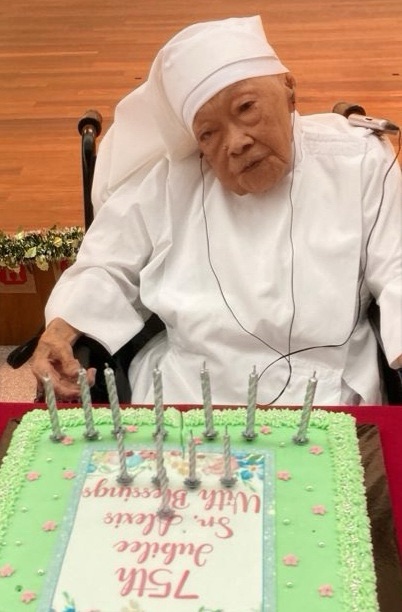
As we take a step back to honour, arguably, the more important 50 per cent of our humankind, let us still ourselves to recognise two super centenarians, who may be forgotten to many in our faith community, but who still live a life of purpose in the twilight years of their lives.
Loh Siew In, baptismal name Cecilia, was born on 31st August 1920. Her parents were Benedict Loh and Genevieve Lee. She was the eighth child in a large family.
She realised a call to religious life at the age of 20 but owing to the outbreak of the Second World War, this was not realised until hostilities ceased.
She entered the novitiate of Petite Soeurs de Pauvres (Little Sisters of Poor), a congregation established by Sister Jeane Marie Jugan in 1839, to care for the many impoverished elderly living in the streets of Paris.
Loh took vows of chastity, poverty, obedience and hospitality and the name Sister Alexis de Ste Madeliene at the mother chapter house of Saint Pern in France. She speaks fluent French.
Pope Bendict XVI canonised Saint Jeane Jugan in October 2019.
Today the Little Sisters of the Poor continues its mission of providing care for the elderly, especially those who find themselves without family and cannot care for themselves. They look after thousands of elderly in over 30 countries around the globe including the United States, United Kingdom, France, Morocco, Taiwan, Hong Kong, India and the Philippines.
The Holy Family Home for the Elderly on Batu Lanchang Road in Penang, was built on land generously donated by philanthropist Aw Boon Par (Tiger Balm) and has provided sterling work for the sometimes forgotten elderly in the northern region, together with its sister home, in Cheras, Kuala Lumpur.
Both are charitable homes, entirely funded by public and corporate donations.
In her time, Sister Alexis served as a member of the congregation in the homes in New Zealand, Australia, Hong Kong and France and recalls with affection and pride her many adventures.
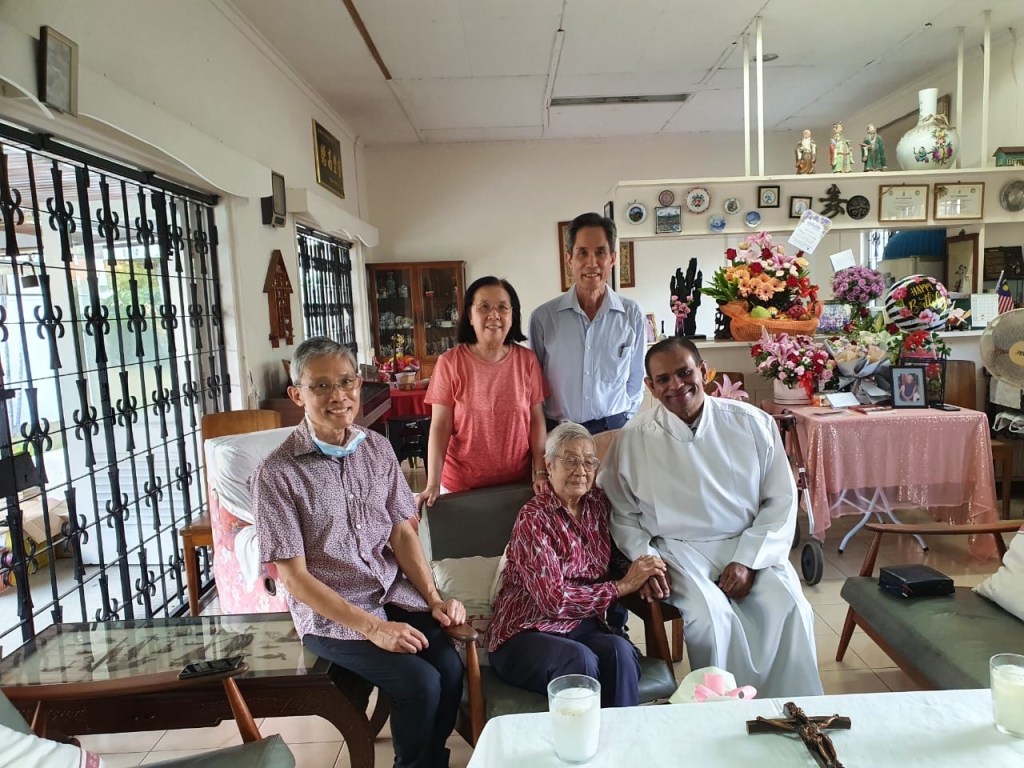
When she herself retired, Sister Alexis returned to Penang and now resides in the Holy Family Home for the Elderly in Penang, where she is its oldest resident.
Always dressed in the immaculate starched white habit , and sitting slightly bent over in her wheelchair, Sister Alexis still adheres to a daily personal routine and private prayer despite her years.
She has hearing issues, but has sufficient sight to appreciate when visitors call on her; she has good memory and is able to hold a conversation well.
Overall, she is blessed with good health including some scary times during the pandemic years of 2019 – 2022, when the entire home and community was in lockdown, owing to Covid cases among the residents and staff.
Sister Alexis’ birthday is always well celebrated as it falls on Merdeka Day, with a special Thanksgiving Mass in the chapel followed by a simple reception attended by the religious, priests, residents and of course her own family members.
She has a sister Lucy, who is three years younger, also staying at a residential home in Petaling Jaya, Selangor. Last year their family specially arranged for the two centenarian sisters to meet up in PJ to celebrate Lucy’s birthday. Her niece Dorothy organised for a special ambulance service to bring Sister Alexis from Penang to PJ, stay overnight in a service apartment and then return.
By God’s grace, everything went smoothly.
Her hospitality extends to all around her and she will readily intercede for you in her prayers.
Sister Alexis looks forward to her 105th birth anniversary this year 2025, the Jubilee Year of Hope.
May God Bless her.
Ends.
by Marina Emmanuel
Datin Seri Dr. Eleanor Eu: A Pioneer in Medicine
Datin Seri Dr. Eleanor Eu has made remarkable strides in the field of medicine, dedicating her life to healing and caring for others.
Her journey has been one of resilience, marked by her relentless pursuit of knowledge and her commitment to patient care.
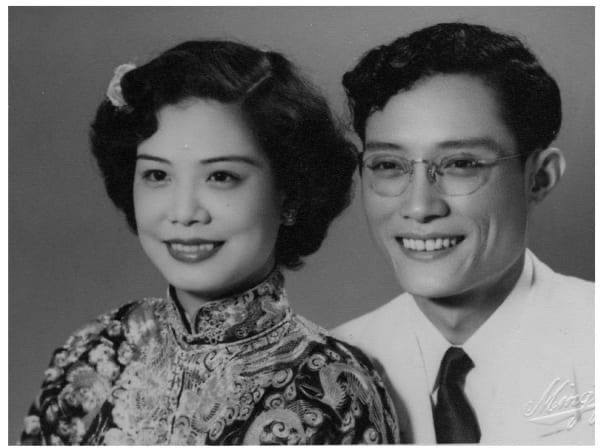
“Prescriptions of Faith” is a book which chronicles the remarkable journeys of two distinguished doctors, (Eleanor and her late husband, Datuk Seri Dr. Peter Tan Ewe Aik) whose paths crossed amid the turmoil of war.
Set against the backdrop of Hong Kong and China during the late 1930s and early 1940s, this compelling tale begins in 1939 with Eleanor, a young woman from Kuala Lumpur, who embarks on a voyage from Malaysia to the esteemed University of Hong Kong in pursuit of her medical degree.
Two years later, her future husband, Peter arrives from Penang at the same university, mere months before the outbreak of World War II in Asia.
Unbeknownst to each other, both Eleanor and Peter found the escalating tensions of a war-torn Hong Kong unbearable.
In August 1942, Eleanor made the brave decision to escape to Free China, while Peter followed suit two years later. After the war, fate led them back to Hong Kong to complete their medical studies where their journeys had begun.
It was also here, through a twist of serendipity, that their paths finally converged.
The book delves into their challenges and triumphs, detailing their courageous flight from Hong Kong in search of safety and their eventual return to the place where their dreams of becoming doctors first took root.
In addition to their academic pursuits, “Prescriptions of Faith” also shares the heartwarming story of Peter and Eleanor’s family life and their return to Malaya after marriage, weaving together themes of resilience, love, and the enduring spirit of hope.
“I look back at Mum’s life and career and how she (and many others like Sister Alexis) went through so much, so long ago when “equality” was not even on the table for discussion,” says her son, Dr Francis Tan.
“Yet, they worked with love and dedication in their chosen vocations, and no man could ever have filled their shoes.”
“Mum’s early professional life,” he adds, “was with the Colonial Medical Service of Malaya (pre-Merdeka). I believe that as a woman, she missed out on opportunities including being placed onto a government pension scheme even after independence, for the bureaucracy and the regulations at the time were as daunting as they are today.”
“Mum worked from 1951, ran a household and also raised three children, was at Dad’s side in countless things and only decided to “retire” for a new role in 1984 when her first grand-daughter Claire was born. And that was forty years ago!”
As she turns 104 today, Dr. Eleanor continues to inspire others through her dedication to healthcare and her unwavering belief in the importance of community. Her legacy is not only in the lives she has healed but also in the countless young medical professionals she has mentored, encouraging them to follow their passion with integrity and compassion.
Today, we celebrate both Sister Alexis Oh and Datin Seri Dr. Eleanor Eu—not just for their age, but for the lives they have transformed through their unwavering commitment to love and service. Their stories remind us that the impact of one individual can ripple through generations, creating a legacy of hope, friendship, and community spirit.
As we honour these remarkable women today, let us draw inspiration from their lives.
May we embrace the values they have exemplified—compassion, resilience, and dedication to serving others. In doing so, we can contribute to a world that celebrates the unique gifts each person brings, fostering love and understanding in our families, friendships, and communities.
Happy International Women’s Day!
(courtesy images from the families of Sister Alexis Loh and Datin Seri Dr. Eleanor Eu)
My first “sighting” of this lovely and funny soul was at The Star Penang newsroom in 1993, when I joined as a reporter and she was the paper’s freelance writer/stringer.
Once she got behind the computer she would remain focussed and quiet as she went about putting together her famous food reviews.
The sub-editors usually found themselves needing to consult the dictionary when clearing her copies (Aiyo Fay, why are you using such big words, you think our readers can understand, meh? was usually conveyed to Fay by Anna Cheah our then chief sub-editor) Fay would simply smile and give some funny retort and everyone would laugh.
Her love for food was legendary. Some of us would join her for quick hawker meals close to the office when she stepped in to meet her deadlines. As most people know, this foodie was just as adept in appreciating fine food and made no bones when any dish did not meet her exacting standards.
When she moved on to other interests, especially in publishing, I used to pick up her nifty card sets with watercolour images of all things Malaysiana and even tried her ‘Miss Khoo’s Asian Deli’ gourmet products at the time, as I heard they had found their way to the shelves of Harvey Nichols in the United Kingdom.
The writer, TV and radio host, publisher, lover of all things nautical and much-loved daughter, always had a kind word for everyone and we missed her laughter and teasing when she left The Star to pursue other projects and adventures.
It was shocking and painful to many of us to hear that Fay, who was then 48, had left us after a brief illness in April, 2017.
Bettina Chua Abdullah and I had a mutual friend in Fay and our stories and friendship with this fun-loving soul are different and yet, the same. Fay shared different friendships with different people and made her mark which can never be erased.
Which now brings us to the third edition of the Fay Khoo Award for Food and Drink Writing which Bettina organised and has been directing to honour Fay’s legacy.
The call for entries has been made and details found below. The 2019 winners will be announced at this year’s George Town Literary Festival which takes place in Penang from Nov 21-24 (please mark your calendars)
Thank you Bettina, for your dedication in keeping Fay’s memory and our friendships alive!
(In addition to written narrative entries for the award, comics and graphic stories are also open to authors and illustrators wishing to submit illustrated narratives)
CALL FOR ENTRIES 2019
The aim of The Fay Khoo Award for Food+Drink Writing is to recognise new and talented voices, and to encourage and develop excellence in food and drink narratives. We believe that there is a space and a need for well-researched and impactful food journalism, because it is through such writing that we can shine a light on people, culture, health, economics and the environment of culinary delight.
This year we hope to present awards to the three best entries, regardless of category. Please read the conditions of entry and submission guidelines carefully, as these have changed from previous years.
The CONDITIONS OF ENTRY are as follows:
• All writing must fall into the categories of personal narrative, reportage or creative non-fiction.
• Entries should not exceed 2000 words.
• Entries must be submitted in English, and must be the sole work of the entrant.
• Entries must never have been published, self-published, broadcast or uploaded on any
website, blog or online forum.
• Anyone over the age of 16 years at the time of the closing date, who is a citizen or resident
of ASEAN countries, may submit up to three (3) entries.
• A fee of RM 20 per submission will be levied to cover administrative costs.
Processing of fees is made by Hikayat Lebuh Pantai, which manages The Fay Khoo Award, upon submission of entry/entries.
Bank details are as follows:
Maybank | Hikayat Lebuh Pantai Sdn Bhd | 557018565194
Please reference your payment with FKA and your WhatsApp number: eg FKA 012-345-6789
If you do not have a mobile phone, please use a landline number.
SUBMISSION GUIDELINES
• Entries must be saved in Microsoft Word format, and emailed to
thefaykhooaward@hikayat.asia
• Entries need to be double-spaced and the word-count noted at top of the first page.
• Entries must include a WhatsApp or landline number, so that you can be sent a confirmation
that your entry has been received, and we can link submission fees to your entry.
• To protect the integrity of the judging process, entries must not include your name or email address. We will contact you via the WhatsApp or landline number you have provided, for your name and other necessary information.
• Amendments or revised versions will not be accepted.
• Entries will be accepted from July 15, 2019 and must be received by September 15, 2019.
• A fee of RM 20 per submission will be levied to cover administrative costs.
• Entrants who have not turned 18 by November 1, 2019 must provide a parent/legal guardian’s name and contact details.
NOTES ON JUDGING
• There will be three (3) judges for the Fay Khoo Award. The judges’ decision is final.
• The judges will not comment on individual entries.
• The Fay Khoo Award reserves the right to change the panel of judges without notice.
• A Longlist of up to 15 entries will be announced by October 10, 2019, and writers notified by WhatsApp and email.
• A Shortlist of 6 entries will be announced by October 28, 2019, and writers notified by
WhatsApp and email.
PRIZE-GIVING
• The winning entries will be announced at the George Town Literary Festival between
November 21-24, 2019. Accommodation will be provided for the day of the prize-giving.
INTELLECTUAL PROPERTY
• Worldwide copyright of each entry remains with the author, but by virtue of submitting an entry, participants are assigning unrestricted right to publish the winning entry, shortlisted entries and long-listed entries in any format. This right is granted to the managers of The Fay Khoo Award, Hikayat Lebuh Pantai Sdn Bhd and its associates in perpetuity, upon submission of the entry for consideration.
• The Fay Khoo Award will retain fully all income generated by publication of the winning entries, shortlisted entries and long-listed entries, while the author will retain all income generated by their publication separate to this.
• In cases where the author of a winning, shortlisted or longlisted entry independently publishes said submission, the author will mention that the piece was a winner or shortlisted or longlisted entry in The Fay Khoo Award for Food+Drink Writing.
PRIZES:
• Each of the three winners receives a cash award of MYR1500, and a book voucher for MYR500
• Shortlisted entries may also receive other supplementary prizes, at the discretion of the organisers.
AMENDMENTS:
• The organisers of the Fay Khoo Award reserve the right to amend these conditions of entry
if deemed necessary. Any changes will be posted on the award’s Facebook page.
• For further information, please email thefaykhooaward@hikayat.asia
(Images courtesy from the FKAward Facebook and Fay’s)
Nestled along the picturesque coastline of Penang, the Eastern and Oriental Hotel (E&O) is a treasure trove of history and charm. As you wander through its hallowed halls, you’ll uncover a wealth of unique features that pay homage to Penang & Malaysia’s rich heritage.
A courtesy map in every room is a good reference and here are some highlights:
The E & O Map
E & O Gallery
One of the highlights of your visit should undoubtedly be the E & O Gallery, where the exquisite handsewn wedding dress of Patsy Addington is proudly displayed. This stunning piece is not just a garment; it’s a testament to love and craftsmanship that resonates with the stories held within the hotel’s walls.
Waygood-Otis Lift
Step into the historic Waygood-Otis lift, a marvel of engineering from the 1920s. This charming lift whisks you between floors while evoking a sense of nostalgia, reminding you of the elegance of a bygone era.
19th Century Cannon
Don’t miss the iconic 19th-century cannon that stands sentinel, pointing out towards the Andaman Sea. This relic of the past serves as a reminder of the hotel’s storied history and the strategic importance of Penang in maritime trade.
Echo Dome
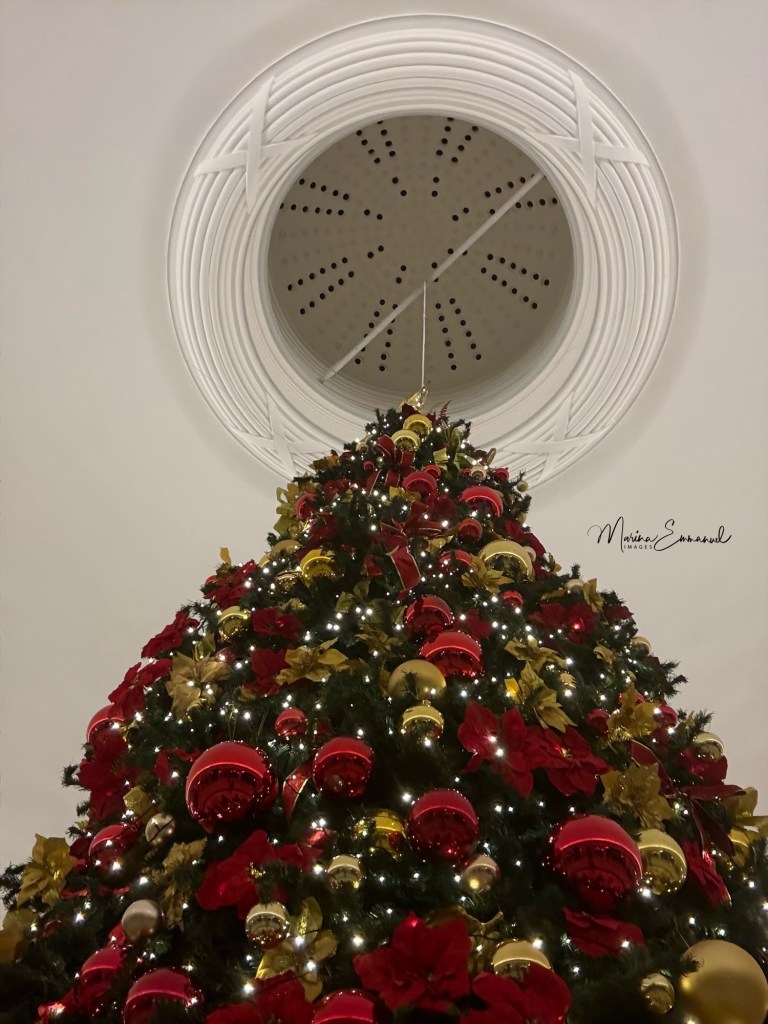
Finally, immerse yourself in the enchanting acoustics of the Echo Dome, an architectural wonder that virtually broadcasts sound throughout the lobby. Gather with friends and family, (especially during this 🎄holiday season 🎄) and experience the beautiful interplay of sound and space that defines this unique feature.
The hotel’s iconic Echo Dome
At the E & O Hotel, every corner whispers tales of grandeur and history, inviting you to create your own memories in this timeless setting. Whether you’re enjoying a leisurely afternoon tea or exploring this heritage hotel’s rich past, your stay promises to be an unforgettable experience.
On her 117th birthday on Sept 3, 2016, Google honoured Malaysian freedom fighter Sybil Medan Kathigasu with a dedicated doodle.
A doodle by Google to honour Sybil Medan Kathigasu
She is shown in her nurse’s uniform outside her former residence in Papan, Perak.
The patterned ribbon of the George Medal surrounds the doodle, a tribute to Kathigasu’s courageous contributions to the anti-occupation movement.
“On the 117th anniversary of Kathigasu’s birth,” Google said, “we remember and celebrate her tireless dedication to freedom.
“Thank you, Kathigasu, for your courage and the powerful legacy you’ve left behind.”
While we know that Sybil Kathigasu’s “war story” speaks of how her acts of courage during World War II had devastating consequences, not much is said of what her family had gone through.
History tells us she was married to Dr Abdon Clement Kathigasu at St John’s Cathedral in Kuala Lumpur and they had three children, a son (William whom they had adopted) and two daughters, Dawn and Olga.
After her parents had been arrested for resistance activities in 1943, Dawn was suspended over a fire and threatened with death unless her mother Sybil, who had already been tortured in vain, gave information about the guerillas.
The six year old, enduring her pain, implored her mother not to talk and was saved only by the intervention of a senior Japanese officer.
She later went to Britain to study medicine and is believed to have married and settled there.
A heart warming memory of Olga is relayed here by Deacon Dr Leslie Petrus.
Rev Deacon Dr Leslie Petrus (image from the Malacca Johore Diocese website)
“I first met Sybil’s eldest daughter Olga in 1971 when she moved into the house next to Matron Irene Stephens,” he recalls.
Stephens, Dr Petrus noted, was the matron-in-charge of women prisoners in Batu Gajah prison under the Japanese Government and Sybil was under her supervision.
“Matron Stephens, our close family friend, had retired from the Prisons Department in the mid- 60’s,” he added.
The deacon recalls Olga as “the lady in black.”
“She always wore a black dress with black shoes and a black veil and carried a black bag.
“She kept to herself and never talked to anyone or even smiled. I did not understand then, her unique character but I do now.”
His up close and personal experience with Olga was in 1972 when Queen Elizabeth, Prince Philip, and Princess Anne were on a royal visit to Malaysia and made a stopover at Penang.
“My mother,” he remembers,” decided to go and invited Matron Stephens and Olga to follow us.
“In a cramped Opel Record car, we were in Penang the whole day, and stood for few hours at Dewan Sri Pinang just to see them at the balcony.
“As we waved our handkerchiefs, she had a Union Jack flag, and wore a hat with the flag on it. I can still remember the first and only smile on her face. I sensed then she was proud of her mother as she carried the picture of her mum with the medal of George V for highest bravery. “
Later, that day, Dr Petruse said, Olga had wanted to see the Royal Brittania and he had to follow her into a small sampan boat, at the fishermen’s jetty, where Olga paid a premium price to a local fisherman for the ride.
“I could see her looking so intently and so connected. Even now, I can still remember how she never took her eyes off the ship, probably feeling grateful that her mother and her father were special people.
“As I recall that one day trip to Penang with her, (I was 13 years old then), I then knew why she always wore black.
“She had lost her father early 1972. With all that she had experienced since her childhood, she had kept the faith.
That day trip to Penang with Olga was described as a “blessing” by Dr Petruse.
“She was in deep pain and sadness. But she never showed it. Her silence each time I saw her spoke volumes of God’s grace and love.”
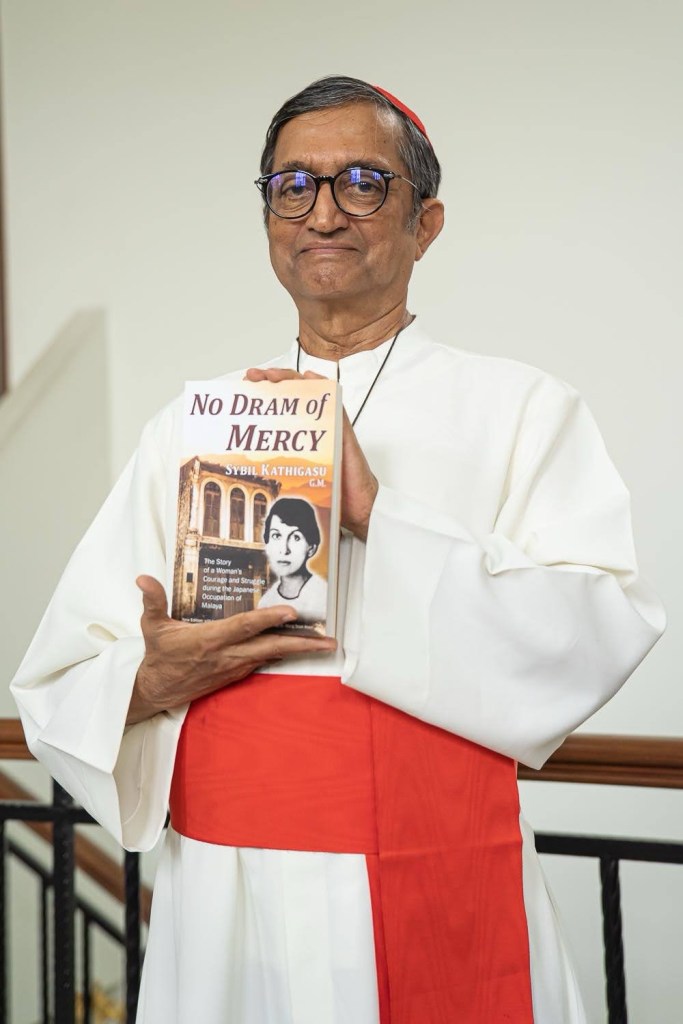
In her memoir `No Dram of Mercy’, Kathigasu or Mrs K as she was affectionately known to the people of Ipoh and Papan, Perak before and during World War II, tells a story of courage, compassion, defiance and faith.
As she offers a harrowing firsthand account of the Japanese occupation of Malaya during the war, she takes her readers into the chaos of the invasion and how her peaceful life as a nurse, wife, mother and daughter was disrupted.
This was a form of disruption which appeared to transcend just mere inconvenience; it becomes a brutal struggle for survival under oppressive Japanese rule.
As a nurse and a staunch supporter of the Malayan resistance against Japanese occupation, Kathigasu’s life is a powerful narrative of sacrifice, courage, and commitment to humanitarian principles.
The push for her beatification within the Catholic Church highlights her exemplary virtues and profound moral integrity, confirming her legacy as a beacon of hope in times of darkness.
“Her faith in God as a Catholic and a disciple of Christ is the primary orientation the Diocese of Penang is pursuing,” its bishop Cardinal Sebastian Francis said in an interview.
Cardinal Sebastian Francis with Sybil Kathigasu’s memoir ‘No Dram of Mercy’ (picture by Boon Tiong)
“Our focus is on her perseverance and fidelity to her profession as a nurse to the Florence Nightingale Pledge,” he added.
The pledge which is named in honour of the founder of modern nursing – Florence Nightingale – states:
“I solemnly pledge myself before God, and in the presence of this assembly, to pass my life in purity and to practise my profession faithfully.”
Cardinal Sebastian also said that the diocese will focus on Kathigasu’s courage and valour, to undergo persecution and suffering in her career as a nurse, and being honoured with the George Medal for bravery in 1947.
(She is the only Malayan woman ever to be awarded the George Medal. The George Medal (GM), instituted on 24 September 1940 by King George VI, is a decoration of the United Kingdom and Commonwealth, awarded for gallantry, typically by civilians, or in circumstances where military honours are not appropriate.)
Kathigasu died in 1948 and was buried at the cemetery in the Church of St. Michael in Ipoh, Perak.
Sybil Kathigasu’s final resting place in the grounds of St Michael’s Church, Ipoh (picture by Daniel Roy Santiyagu)
The Cardinal is also appealing to those with any information, photographs or any research on Sybil to forward these to Daniel Roy Santiyagu who is the head for social communication for the Diocese of Penang at: socialcomm@pgdiocese.org
Born in 1910 in Ipoh, Perak, Sybil Kathigasu was a trained nurse who, along with her husband, played a crucial role in providing medical care to resistance fighters during the Japanese occupation of Malaya from 1942 to 1945. Kathigasu’s work with the underground organization, known as the “Malayan People’s Anti-Japanese Army,” exemplified her courage as she operated in tremendous danger, often risking her life and those of her family for the greater good.
During the war, she not only offered essential medical assistance but also acted as a source of intelligence. Her contributions were instrumental in the efforts to undermine the occupying forces. Her actions reflect a selfless devotion to her fellow countrymen and a passionate commitment to justice, making her a symbol of resistance against tyranny.
The Diocese of Penang has officially opened the cause of beatification and canonization for Kathigasu, whom Sebastian said continues to inspire people even 76 years after her death.
“I see this as an opportunity to bring together and reflect on her life for us as people of faith,” said the cardinal.
While she was born in Medan, Indonesia, the story of this daughter of Malaysia unfolds in cities and towns in Perak like Papan (where she and her husband Dr Abdon Clement ran a clinic), Batu Gajah (where she was incarcerated) and the her final resting place, which is the cemetery in the grounds of St Michael’s Church in Ipoh.
“Groups are already visiting these places,” notes the cardinal, “including the Church of St Joseph in Batu Gajah, where one of its wings is dedicated to Sybil’s memory.”
Upon her release from prison, Kathigasu’s request was to be taken to St Joseph’s Church immediately to offer her thanksgiving.
Asked on what could be a potentially high cost to pursue her beatification, the cardinal said:
“We will cross that bridge when we get there. We do not start by talking about money.”
In questioning the choice of Kathigasu by some parties for impending sainthood, Cardinal Sebastian said the process itself, with its appointed moderator will question this and other concerns.
“It is normal to expect people to question her suitability (for beatification),” he added.
Cardinal Sebastian Francis, Bishop of Penang (picture by Boon Tiong)
















 postcodegeorgetown