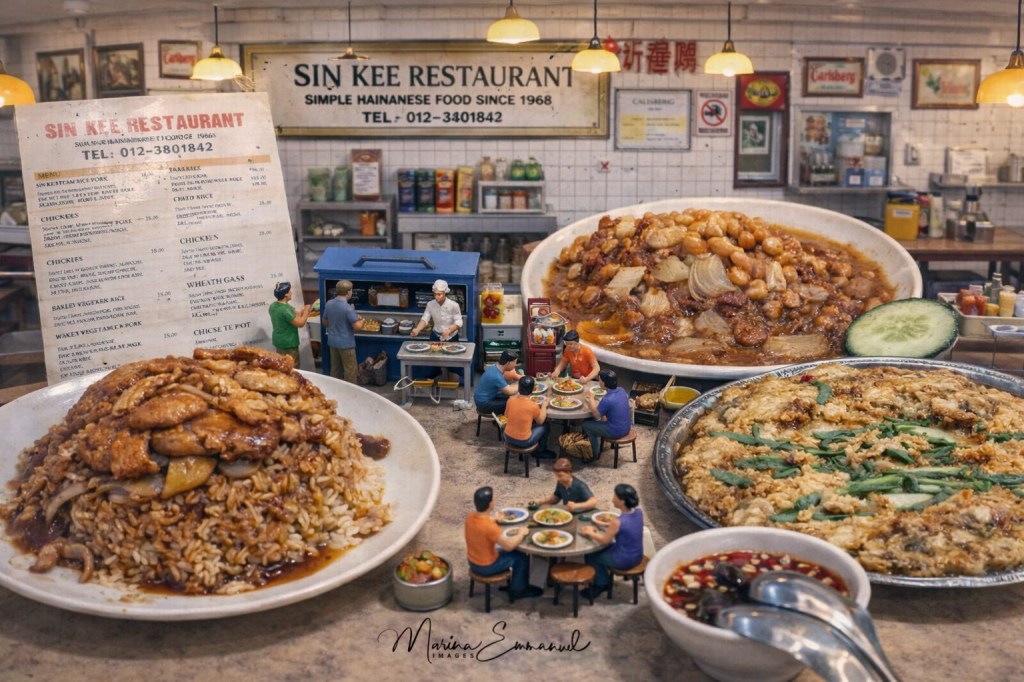
Welcome to my miniature take on Sin Kee Restaurant — a true old-school Hainanese kopitiam tucked away in Brickfields, Kuala Lumpur.
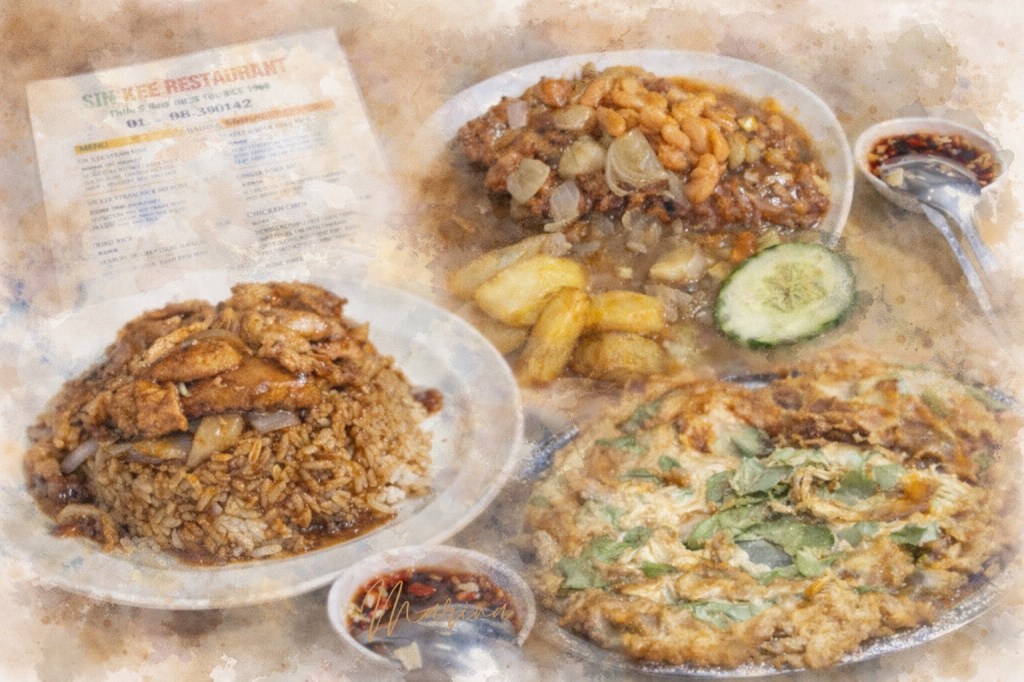
No frills, no fuss — just decades of honest cooking since 1968. Sin Kee has quietly built its reputation on comforting classics like Hainanese chicken chop, pork chop rice, and rich, gravy-soaked fried rice that hits every nostalgic note. It’s the kind of place where recipes haven’t changed, and neither has the charm.
In this little diorama, I imagined their iconic dishes as a bustling kopitiam scene — where tiny diners gather around larger-than-life plates, soaking in that familiar, comforting atmosphere we all know and love.
Because sometimes, the simplest places leave the biggest impressions.
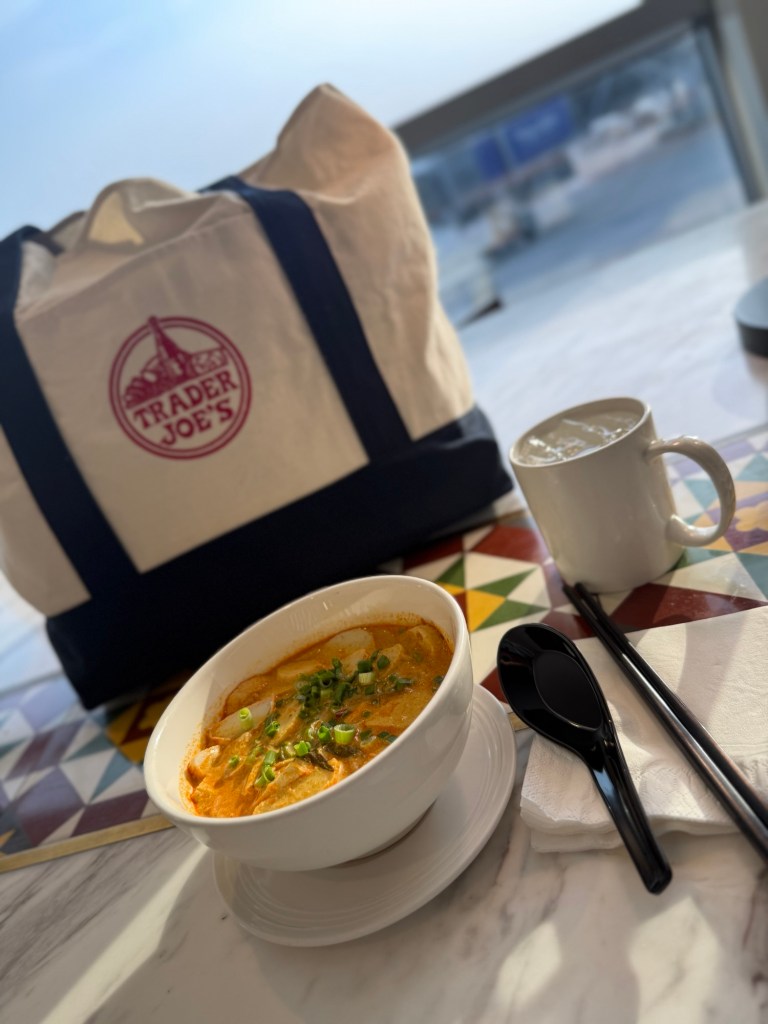
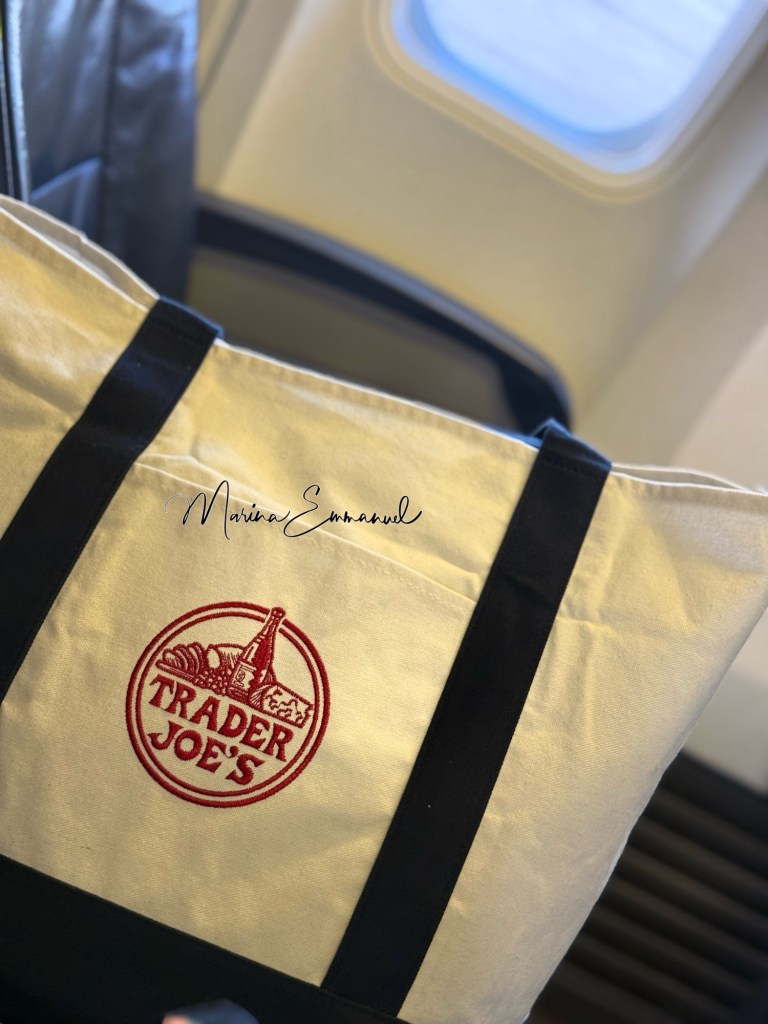
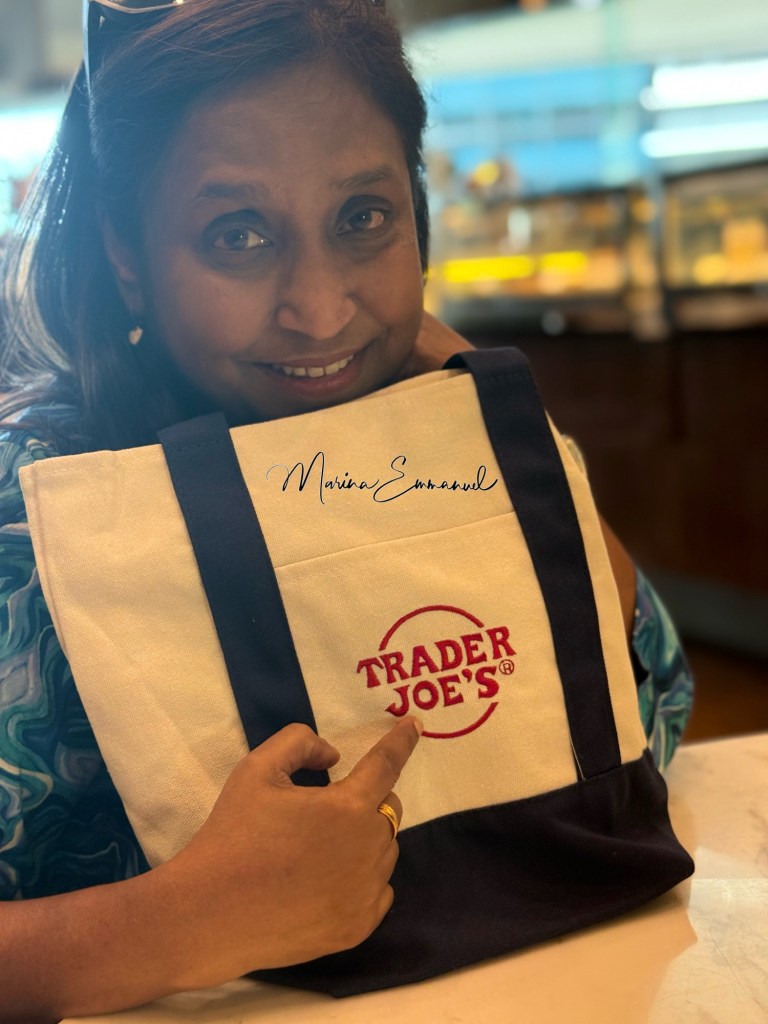
In a world where luxury brands and high-end fashion dominate the headlines, it’s astonishing to see a humble US$2.99 supermarket tote bag become a global sensation. The Trader Joe’s canvas tote bag has transcended its utilitarian purpose to become a coveted fashion statement, status symbol, and cultural phenomenon.
This simple, durable bag has captured the hearts of shoppers worldwide, with some reselling for up to US$10,000 on international platforms like eBay, Depop, and Karrot. The craze is particularly surprising given that Trader Joe’s doesn’t have any stores outside the United States.
So, what’s behind this frenzy? Experts attribute it to a combination of factors, including the bag’s affordability, durability, and collectible nature. The limited-edition designs and seasonal releases have created a sense of urgency and exclusivity, driving demand and fueling the resale market.
TJ totes are making waves globally
The Power of Scarcity and Social Media
The Trader Joe’s tote bag phenomenon highlights the power of scarcity and social media in creating hype and driving demand. With no official marketing or advertising, the bag’s popularity has spread organically through social media platforms like TikTok, Instagram, and Twitter (X).
As Holly Davies, a London-based podcast producer, notes, “The TJ’s tote is, as far as I can tell, the ‘It bag’ of 2025. And not just in London – the trend has recently been reported as far away as South Korea.”
A Symbol of Cultural Capital
For many, the Trader Joe’s tote bag represents more than just a practical accessory – it’s a symbol of cultural capital, indie charm, and liberal American values. The bag’s resemblance to L.L. Bean’s classic Boat and Tote, combined with Trader Joe’s hand-painted signage, has created an impression of independence and authenticity.
As the bag continues to travel the world, it’s clear that humble items can become global influencers, transcending their original purpose to become cultural phenomena.
Thank you Shol, for the intro and gifted influence, and to Isha for carrying the bags halfway across the world to me!
RG and Fer, Aud, Yu Tong, MaryEd and Lin, do enjoy your moments as IT-girls, even beyond 2025!
In the heart of George Town’s heritage district, Bishop Street whispers stories of elegance, history, and reinvention.
Once home to the prestigious B.P. de Silva jewellers, this iconic row carried a reputation for luxury, refinement, and timeless craftsmanship — with a clientele that included royalty and dignitaries along with high society from across the region.
Today, in a delightful twist of heritage, that very space once filled with velvet-lined showcases now draws admirers of a different kind — food lovers.
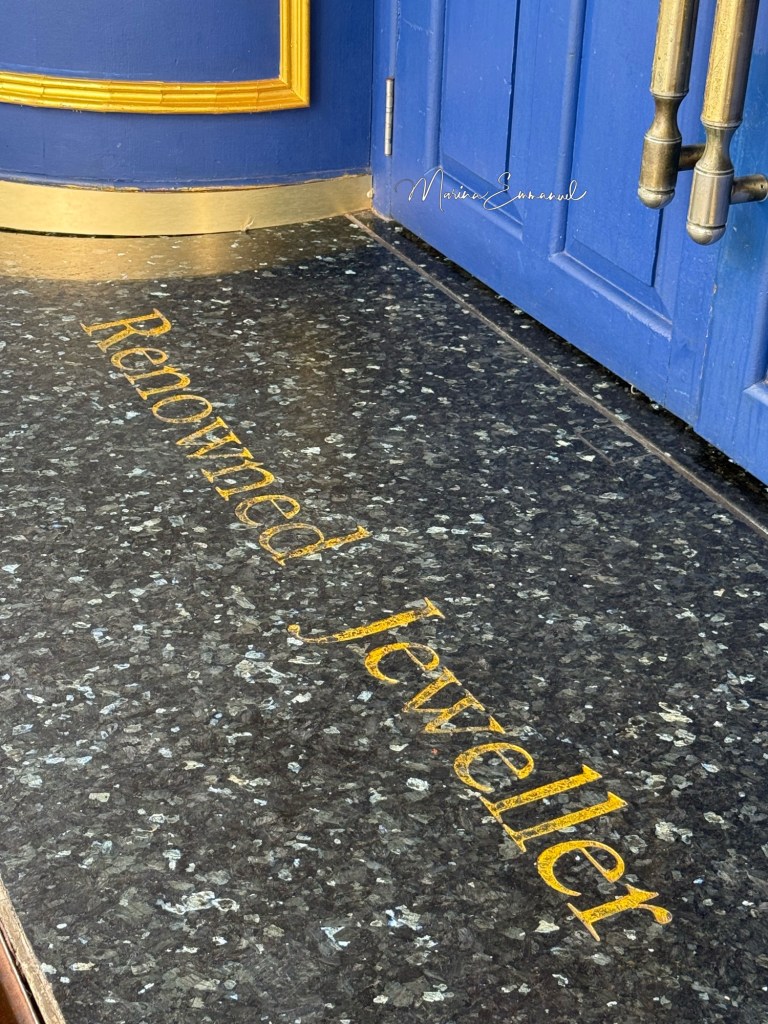
Entrance to the former B.P De Silva which is today home to Aunty Gaik Lean’s Old School EateryAward-winning one star Michelin restaurant
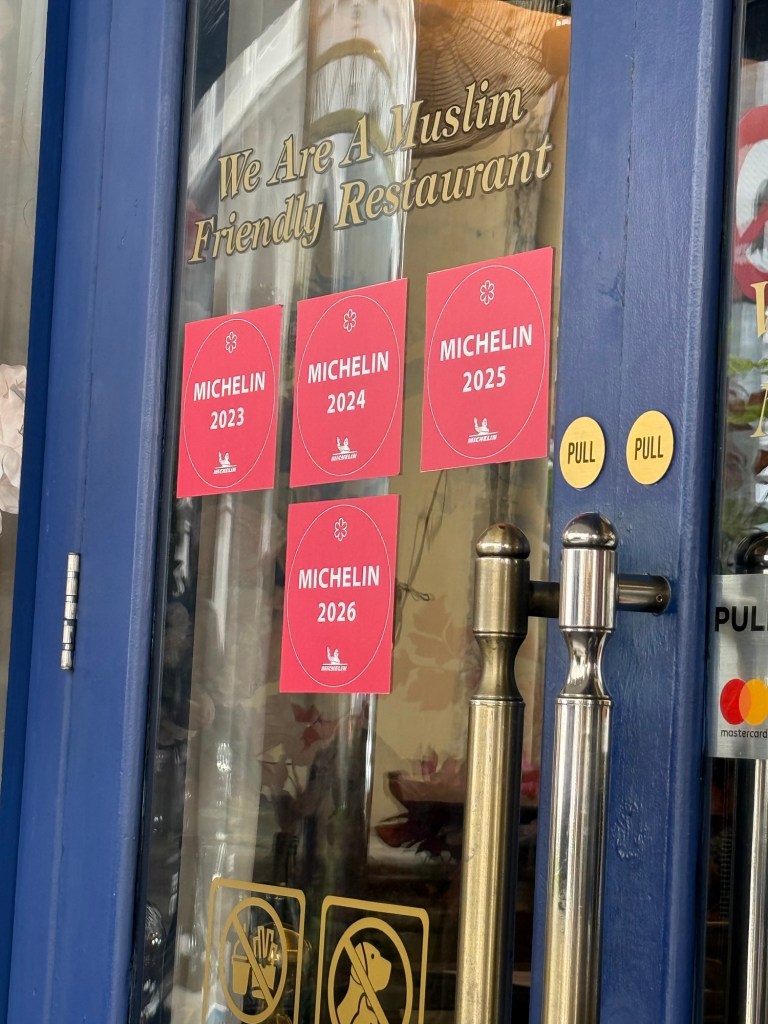
Stepping into the four-times awarded one-star Michelin Aunty Gaik Lean’s Old School Eatery, feels like walking into a lovingly preserved memory — with warm Peranakan hospitality, family recipes, and an unmistakable sense of home.
A Taste of Nostalgia, Reimagined
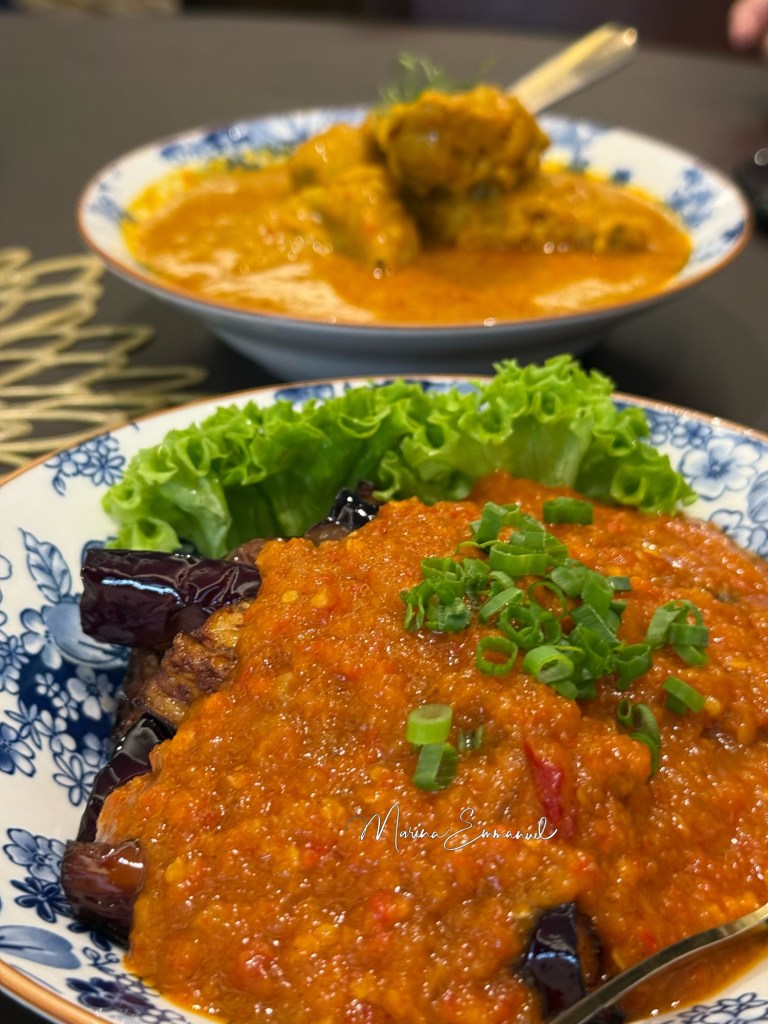
What sets Aunty Gaik Lean’s apart is not just its rich, authentic Nyonya flavours, but its Muslim-friendly menu that has not compromised on quality or taste. It’s a rare and respectful adaptation of traditional cuisine, made accessible to more diners without losing the heart of its heritage.
The nasi ulam is aromatic and vibrant, and the sambal belacan — bold as ever. Even vegetarian diners, including many from the Indian subcontinent, have found the dishes flavourful and deeply satisfying — a testament to the careful balance and generosity in the kitchen.
Where History Meets Heart
To dine here is to savour more than food. You sit where once patrons browsed fine gems under chandeliers, in a building that quietly cradles Penang’s evolving story — from colonial-era commerce to culinary celebration.
The echoes of B.P. de Silva’s prestige lend a quiet dignity to the eatery, while the cheerful clatter of cutlery and scent of shallots signal a more grounded kind of luxury: a meal made with love.
Whether you’re drawn by memories of kampung cooking or curiosity for the space’s storied past, Aunty Gaik Lean’s offers more than just lunch or dinner — it offers a taste of heritage, harmony, and hospitality.
So, pull up a chair. The past has never felt so warm.
Auntie Gaik Lean’s Old School Eatery is located at 1, Lebuh Bishop, 10200 George Town, Penang, Malaysia.
Presenting slices of precious insights into Penang’s retail scene (courtesy image: Marcus Langdon)
(BACK COVER BLURB)
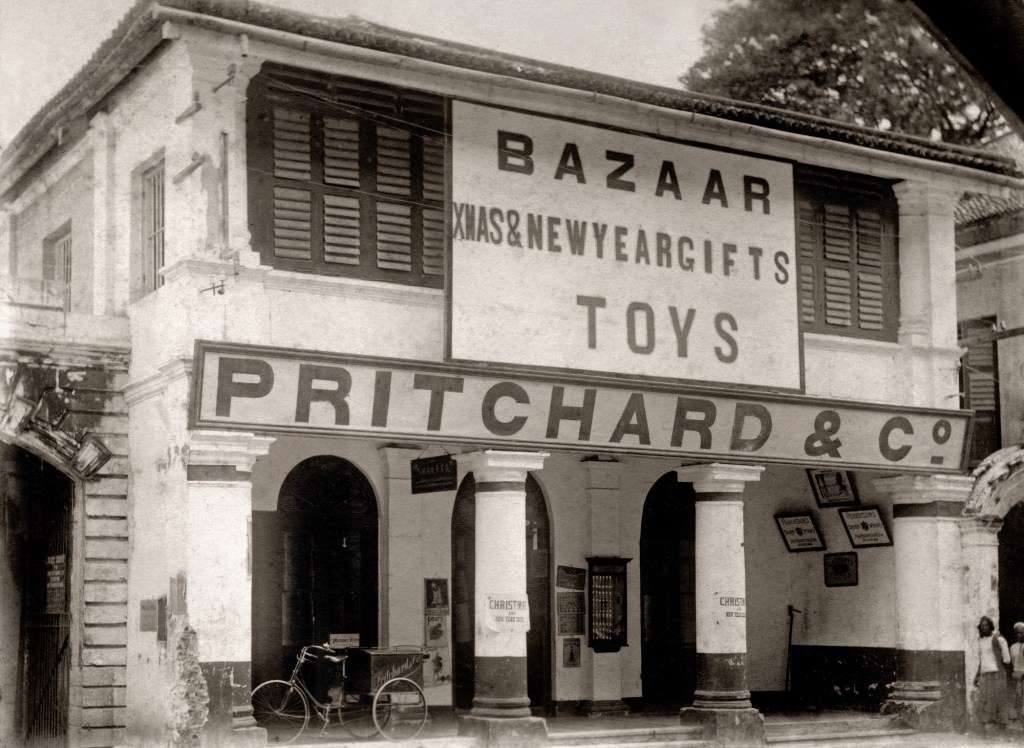
Pritchard & Co. Ltd. (1888–1959) is a name which has almost faded from memory in Malaysia. Its foundation and development encompass a period when Malaya saw unprecedented growth driven by an export boom in tin, rubber, and other agricultural produce which coincided with advances in technology such as the invention of electricity, telephones, motorised vehicles, and aircraft.
As the first widely-diversified department store in northern Malaya, with its main store in Penang and branches in Ipoh, Butterworth, and Sungai Petani, Pritchard’s became a key player in the growth of retailing in Malaya during the best and worst of times of British colonial Malaya.
Drawn from family documents and richly-illustrated with nearly 300 images, including many rarely seen photographs from inside the stores, this book captures spectacularly the essence of times past as it follows the fortunes, activities, and fate of the business and the family behind it.
9-11 Union Street, constructed by Pritchard & Co. in 1916, currently the Maybank building (Courtesy of The Robert Hussey Collection)
“Pritchard’s of Penang – Enterprise, Secession, and Murder” featuring items from The Robert Hussey Collection is a thoroughly-researched and richly-detailed exploration of one of Penang’s most iconic retail establishments.
Drawing from a wealth of memorabilia and personal insights provided by someone intimately connected to the Pritchard family, historian Marcus Langdon masterfully weaves a narrative that captures the essence of the island’s retail history from the British colonial era to modern times.
15 Beach Street, where Pritchard & Co. began (Courtesy of The Robert Hussey Collection)
“During a research trip to Singapore around 2011, a well-spoken gentleman named Robert Hussey contacted me,” says Langdon in the book’s preface.
“In his possession were some old Penang photographs which had been left to him, and he wondered if they might have some historical interest.”
Langdon had recently relocated to Penang and Hussey, too, was making plans to move from Singapore to Penang—the place of his birth. Some three years later he made that move.
“Over the next few years,” Langdon recalls “we met up regularly and I became aware of the extent of his collection.
“Essentially it was an assemblage of personal documents, photographs, drawings, and miscellaneous items relating to several generations of the Pritchard family, the core of the collection offered a wonderful insight into British life in Penang in the late nineteenth and early twentieth century.
“Understanding that Pritchard’s (as it was colloquially known) was acknowledged as the first true British-style department store in Penang and northern Malaya, we both felt it was important that the relevant portions of this rare collection were recorded for posterity.”
And so the book project took off and Langdon spent a great amount of time on it when what he dubs “a microscopic virus dubbed COVID-19”, came along.
“With Malaysia and the majority of the world’s population shut down and confined to our homes, and without the usual daily distractions of a publishing business, more work was accomplished at my desk in those far-too-many long months than thought humanly possible.
“The backbone of this book,” he explains, “was forged at that time.”
“Again, other projects and complications got in the way, and it is only now that the final touches, and providential updates, have been applied.”
The book chronicles Pritchard’s journey as more than just a store—it was a symbol of upscale shopping and a bellwether of Penang’s socio-economic landscape during its heyday.
Before the advent of Whiteaways—another historic department store that eventually became more dominant—Pritchard’s played a significant role in the retail landscape of Penang, embodying the colonial-era shopping experience.
Over the years, as shopping habits and retail environments evolved, Pritchard’s gradually declined in prominence, but it remains a nostalgic symbol of Penang’s rich commercial history.
Langdon’s meticulous approach shines through in his vivid descriptions and images of the store’s evolution, from its founding days during the British occupation, through the tumult of the Second World War, and into the post-war resurgence.
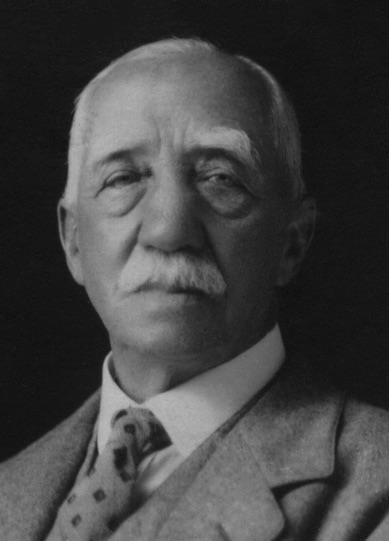
George Henry Pritchard, 1927 (Courtesy of The Robert Hussey Collection)
One of the most compelling aspects of the book is its detailed account of the advertising campaigns that helped cement Pritchard’s reputation as a premier shopping destination.
Langdon’s insights into marketing strategies of the time, are illuminated via the photographs and graphics of how the store maintained its allure and adapted to changing times.
The narrative also thoughtfully addresses the challenges faced during wartime, highlighting the resilience of the business and its ability to bounce back after setbacks.
What sets this book apart is the author’s ability to combine solid research with a personal touch, bringing to life the stories behind the memorabilia that made Pritchard’s a household name.
It is a nostalgic yet informative journey that not only celebrates a storied business but also offers a window into Penang’s broader cultural and economic history.
In sum, “Pritchard’s of Penang – Enterprise, Secession, and Murder”, is a must-read for history enthusiasts, retail aficionados, and anyone interested in the rich tapestry of Penang’s colonial past.
Inside the Union Street store, 1930s (Courtesy of The Robert Hussey Collection)
In crafting a compelling narrative that honours the legacy of Pritchard’s while providing valuable insights into the evolution of retail in Southeast Asia, Langdon has this to say:
“I cannot express how grateful I am to have been given the opportunity to bring this treasured cache of family and business history to light for a wider audience to share and preserve for posterity.”
“Despite the ‘colonial’ period now being frowned upon by upcoming generations, it is nevertheless an integral part of the development of Malaya as it was—and something future generations will undoubtedly be researching.
“Even today,” Langdon adds, “many Penangites, and indeed those further afield, would not have even heard of Pritchard’s. It was, after all, essentially an era long before their time.
“Hopefully this book, with its remarkable photographs, will restore Pritchard & Co. and the families behind it to its small but rightful niche in Penang, and indeed, Malaysian, history.”
Marcus Langdon (courtesy image from the author)
Below are several excerpts from the book for interested history buffs and shopaholics:
(For many years, Pritchard’s had been the tailors of choice to the Royal Court of Kedah under Sultan Abdul Hamid Halim Shah.
Remarkably, it was the practice of the royalty and members of the Court to wear Western clothing outside their private abodes.
Lighter drill materials were used for office wear, and often heavy Tweed was donned for formal occasions.
In his 1959 book Prince and Premier, Harry Miller stated that:
‘Twice a year an English tailor from Pritchard’s, a firm in Penang, travelled the sixty miles to Alor Star to measure members of the royal family for new clothes.
He returned a few weeks later for fittings. When the sultan’s son, Tunku Abdul Rahman, was awarded a scholarship to Cambridge University in 1919, ‘The man from Pritchard’s in Penang was summoned to fit the sixteen-year-old prince with suits.’
Excitement is also said to have prevailed at the Penang store when King Rama VI of Siam paid a visit on 7 October 1924.
After purchasing jewellery at B.P. de Silva’s store in Bishop Street, the King was reportedly hosted to tea at Pritchard’s.)
(“Pritchard’s of Penang – Enterprise, Secession, and Murder” will be launched during the George Town Literary Festival 2025 this November 28-30)
About the Author
Marcus Langdon has spent several decades researching the myriad fascinating stories in Penang’s developed history. Based in Penang, he also advises on historical projects and was a founding director of Entrepot Publishing Sdn Bhd.
Other titles by Marcus include:
• Penang: The Fourth Presidency of India 1805–1830
o Volume 1, ‘Ships, Men and Mansions’. Areca Books, 2013.
o Volume 2, ‘Fire, Spice and Edifice’. George Town World Heritage Incorporated, 2015.
o Volume 3, ‘Water, Wigs and Wisdom’. Entrepot Publishing, 2021.
• Biographical Dictionary of Mercantile Personalities of Penang, (contributing editor). Think City/MBRAS, 2014.
• George Town’s Historic Commercial and Civic Precincts(researcher/writer). George Town World Heritage Incorporated, 2015.
• Epitaph: The Northam Road Protestant Cemetery, George Town, Penang. George Town World Heritage Incorporated, 2017.
• The Habitat Penang Hill: a pocket history, Marcus Langdon & Keith Hockton. Entrepot Publishing, 2018.
• Penang Then & Now: A Century of Change in Pictures.Marcus Langdon & Keith Hockton, Entrepot Publishing, 2019.
• Pastoral Port: An Agrarian History of Penang. Penang Institute, 2023.
• George Town & Adelaide: Sister Cities 50th Anniversary 1973–2023, Marcus Langdon & Rachel Yeoh, MBPP, 2024.
A photo of the Assumption Church taken on a cloudy day . Transformed into an image on canvas with digitally-generated cotton representing the clouds based on actual photographs (courtesy image: Leonard Selva Gurunathan)
Nestled within the UNESCO World Heritage core zone of George Town, Penang, the Church of the Assumption stands as a testament to the island’s rich history and cultural tapestry.
Established in 1787, this historic Roman Catholic church has long been a spiritual and community cornerstone, seamlessly blending tradition with modernity.
Among its treasured heritage is its magnificent pipe organ, fondly known as ‘The Old Lady’ – a majestic instrument that has echoed through generations, accompanying countless masses, religious ceremonies, and musical celebrations, and holds the distinction of being Malaysia’s oldest pipe organ.
Recently, a passionate pipe organist and music enthusiast – Leonard Selva Gurunathan – embarked on an innovative project to trace and showcase the church’s musical roots.
Leveraging the power of artificial intelligence (AI) and a suite of cutting-edge tech tools with good old-fashioned research, he has crafted a compelling video narrative that highlights the journey of the pipe organ and its profound role in the life of the church.
The project began with meticulous research into the church’s history, archives, and the evolution of its musical traditions.
A digital image of the Assumption pipe organ transformed into a diorama setting by Leonard Selva Gurunathan
“ The visual part of the video was done with the use of AI, “said Leonard, “while the rest of it was based on old-school research methods which included going through newspaper archives as I typed the information I needed into the prompts,” he added.
The audio component of the video is based on a live recording put together by Leonard.
“I curated the story,” he notes, “based on the duration of the music.”
To visualize the church’s and pipe organ’s rich history, Leonard employed AI-powered video editing and animation software. These tools transformed static images and archival footage into dynamic visuals, illustrating the organ’s physical changes, restorations, and its integration into the church’s liturgical life over the years.
The entire production has served as a testament to how technology can serve as a bridge—connecting heritage, faith, and innovation.
The resulting video not only celebrates the Church of the Assumption’s storied past, but also highlights the enduring significance of its pipe organ as an instrument of worship and cultural identity.
It underscores how the organ has witnessed generations of worshippers and has become an integral part of the church’s spiritual and community life.
This project exemplifies how modern tools can be harnessed to preserve, interpret, and share heritage in compelling ways. It also emphasizes the importance of safeguarding such cultural treasures within UNESCO’s protected zones, ensuring that future generations continue to appreciate the rich tapestry of history, faith, and music.
As the Church of the Assumption continues to serve its community within the vibrant streets of George Town, its story—enhanced by AI, technology and old-school research methods – reminds us that tradition and innovation can go hand in hand.
By blending historical preservation with modern storytelling, Leonard’s creative endeavour invites us all to reflect on the enduring power of music, faith, and heritage in shaping our collective identity.
The Jubilee Concert at the Church of the Assumption (courtesy image – Boon Tiong)
Two Saturdays ago, the Church of the Assumption in Penang became a living instrument for a concert that stitched tradition, youth, and reverent sound into one unforgettable evening.
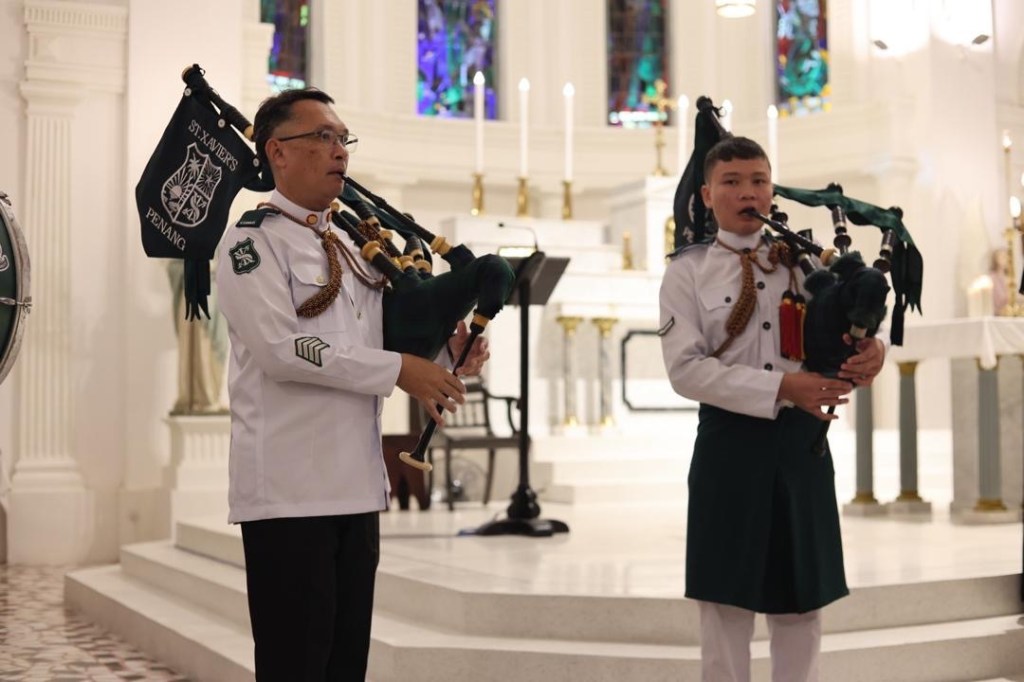
The church was welcoming, with the soft rustle of pews, as Saint Xavier’s Institution Corps of Pipes and Drums took the “stage”, their drums beating in confident, marching heartbeats and the pipes lifting like clear, silver voices. The opening procession felt less like a performance and more like a rite of passage—bold, bright, and glinting with pride.
The choir followed with a range soars-high and whispers-soft, a bright thread weaving through the nave. Their blend was lush yet precise, each phrase carried by a spine of harmony that filled every corner of the church. It’s a rare gift to hear a room feel both intimate and exultant at once, and that night, the choir’s voices did that subtle magic, lifting without ever shouting. Choir master Claude Richards’ baton moved with equal parts discipline and warmth, drawing clean lines and then dissolving them into shimmering colour, as if pulling rainbows through the arched ceiling.
Assumption Church Choir with His Eminence Sebastian Cardinal Francis, Bishop of Penang (courtesy image – Boon Tiong)
Between addresses and pieces, the “Old Lady”—the heritage church’s pipe organ—held court with patient majesty.
Resident organist Leonard Selva Gurunathan and neighbouring St George’s Church pipe organist, Matthew Arwinraj, took turns to coax “conversations” which began with a whispered echo and blossomed into grand, cathedral-scale statements.
Pedals clicked like distant thunder, and the tonal palette—great, flute, principal—poured through the nave with a timber that felt both ancient and newly-minted for the moment. If the pipes are the church’s memory, the Old Lady spoke it aloud: a history lesson told in luminous chords, each note lingering in the vaults long after it was spoken.
The ripple of the Corps of Pipes and Drums kept the energy alive even as the choir’s velvet harmonies settled the room into hushes of awe. When the final chord faded, the silence stretched, a shared breath between performers and listeners, before breaking into sustained applause that seemed to say, “Thank you for listening as deeply as you were listened to.”
Leaving the church, the night felt lighter, as if the walls themselves still hummed with the collaboration of youth, faith, and music. It was more than a concert; it was a celebration of community, tradition, and sound that lingers in the heart long after the bells have faded.
Choir master Claude Richards (extreme right, in white shirt) with his members and other concert performers (courtesy image – Boon Tiong)
My first “sighting” of this lovely and funny soul was at The Star Penang newsroom in 1993, when I joined as a reporter and she was the paper’s freelance writer/stringer.
Once she got behind the computer she would remain focussed and quiet as she went about putting together her famous food reviews.
The sub-editors usually found themselves needing to consult the dictionary when clearing her copies (Aiyo Fay, why are you using such big words, you think our readers can understand, meh? was usually conveyed to Fay by Anna Cheah our then chief sub-editor) Fay would simply smile and give some funny retort and everyone would laugh.
Her love for food was legendary. Some of us would join her for quick hawker meals close to the office when she stepped in to meet her deadlines. As most people know, this foodie was just as adept in appreciating fine food and made no bones when any dish did not meet her exacting standards.
When she moved on to other interests, especially in publishing, I used to pick up her nifty card sets with watercolour images of all things Malaysiana and even tried her ‘Miss Khoo’s Asian Deli’ gourmet products at the time, as I heard they had found their way to the shelves of Harvey Nichols in the United Kingdom.
The writer, TV and radio host, publisher, lover of all things nautical and much-loved daughter, always had a kind word for everyone and we missed her laughter and teasing when she left The Star to pursue other projects and adventures.
It was shocking and painful to many of us to hear that Fay, who was then 48, had left us after a brief illness in April, 2017.
Bettina Chua Abdullah and I had a mutual friend in Fay and our stories and friendship with this fun-loving soul are different and yet, the same. Fay shared different friendships with different people and made her mark which can never be erased.
Which now brings us to the third edition of the Fay Khoo Award for Food and Drink Writing which Bettina organised and has been directing to honour Fay’s legacy.
The call for entries has been made and details found below. The 2019 winners will be announced at this year’s George Town Literary Festival which takes place in Penang from Nov 21-24 (please mark your calendars)
Thank you Bettina, for your dedication in keeping Fay’s memory and our friendships alive!
(In addition to written narrative entries for the award, comics and graphic stories are also open to authors and illustrators wishing to submit illustrated narratives)
CALL FOR ENTRIES 2019
The aim of The Fay Khoo Award for Food+Drink Writing is to recognise new and talented voices, and to encourage and develop excellence in food and drink narratives. We believe that there is a space and a need for well-researched and impactful food journalism, because it is through such writing that we can shine a light on people, culture, health, economics and the environment of culinary delight.
This year we hope to present awards to the three best entries, regardless of category. Please read the conditions of entry and submission guidelines carefully, as these have changed from previous years.
The CONDITIONS OF ENTRY are as follows:
• All writing must fall into the categories of personal narrative, reportage or creative non-fiction.
• Entries should not exceed 2000 words.
• Entries must be submitted in English, and must be the sole work of the entrant.
• Entries must never have been published, self-published, broadcast or uploaded on any
website, blog or online forum.
• Anyone over the age of 16 years at the time of the closing date, who is a citizen or resident
of ASEAN countries, may submit up to three (3) entries.
• A fee of RM 20 per submission will be levied to cover administrative costs.
Processing of fees is made by Hikayat Lebuh Pantai, which manages The Fay Khoo Award, upon submission of entry/entries.
Bank details are as follows:
Maybank | Hikayat Lebuh Pantai Sdn Bhd | 557018565194
Please reference your payment with FKA and your WhatsApp number: eg FKA 012-345-6789
If you do not have a mobile phone, please use a landline number.
SUBMISSION GUIDELINES
• Entries must be saved in Microsoft Word format, and emailed to
thefaykhooaward@hikayat.asia
• Entries need to be double-spaced and the word-count noted at top of the first page.
• Entries must include a WhatsApp or landline number, so that you can be sent a confirmation
that your entry has been received, and we can link submission fees to your entry.
• To protect the integrity of the judging process, entries must not include your name or email address. We will contact you via the WhatsApp or landline number you have provided, for your name and other necessary information.
• Amendments or revised versions will not be accepted.
• Entries will be accepted from July 15, 2019 and must be received by September 15, 2019.
• A fee of RM 20 per submission will be levied to cover administrative costs.
• Entrants who have not turned 18 by November 1, 2019 must provide a parent/legal guardian’s name and contact details.
NOTES ON JUDGING
• There will be three (3) judges for the Fay Khoo Award. The judges’ decision is final.
• The judges will not comment on individual entries.
• The Fay Khoo Award reserves the right to change the panel of judges without notice.
• A Longlist of up to 15 entries will be announced by October 10, 2019, and writers notified by WhatsApp and email.
• A Shortlist of 6 entries will be announced by October 28, 2019, and writers notified by
WhatsApp and email.
PRIZE-GIVING
• The winning entries will be announced at the George Town Literary Festival between
November 21-24, 2019. Accommodation will be provided for the day of the prize-giving.
INTELLECTUAL PROPERTY
• Worldwide copyright of each entry remains with the author, but by virtue of submitting an entry, participants are assigning unrestricted right to publish the winning entry, shortlisted entries and long-listed entries in any format. This right is granted to the managers of The Fay Khoo Award, Hikayat Lebuh Pantai Sdn Bhd and its associates in perpetuity, upon submission of the entry for consideration.
• The Fay Khoo Award will retain fully all income generated by publication of the winning entries, shortlisted entries and long-listed entries, while the author will retain all income generated by their publication separate to this.
• In cases where the author of a winning, shortlisted or longlisted entry independently publishes said submission, the author will mention that the piece was a winner or shortlisted or longlisted entry in The Fay Khoo Award for Food+Drink Writing.
PRIZES:
• Each of the three winners receives a cash award of MYR1500, and a book voucher for MYR500
• Shortlisted entries may also receive other supplementary prizes, at the discretion of the organisers.
AMENDMENTS:
• The organisers of the Fay Khoo Award reserve the right to amend these conditions of entry
if deemed necessary. Any changes will be posted on the award’s Facebook page.
• For further information, please email thefaykhooaward@hikayat.asia
(Images courtesy from the FKAward Facebook and Fay’s)
As the sun dips below the horizon and the vibrant hues of twilight envelop Penang, the Kek Lok Si Temple transforms into a mesmerizing spectacle, particularly on the eve of the Lunar New Year. This iconic Buddhist site, nestled atop a hill, becomes a beacon of hope and gratitude, drawing not only our Buddhist sisters and brothers but also Malaysians from all walks of life and visitors from around the globe.
The atmosphere is electric with anticipation as families and friends ascend the temple grounds, each step a journey of devotion—giving thanks for the past year and seeking blessings for the one to come. The air is filled with the soft sounds of prayers, the rustle of red envelopes, and the gentle whispers of wishes that float like the incense smoke rising to the heavens.
Family and friends make their way to the grounds of the Kek Lok Si Temple
What makes this gathering even more heartwarming is the sight of diverse communities coming together.
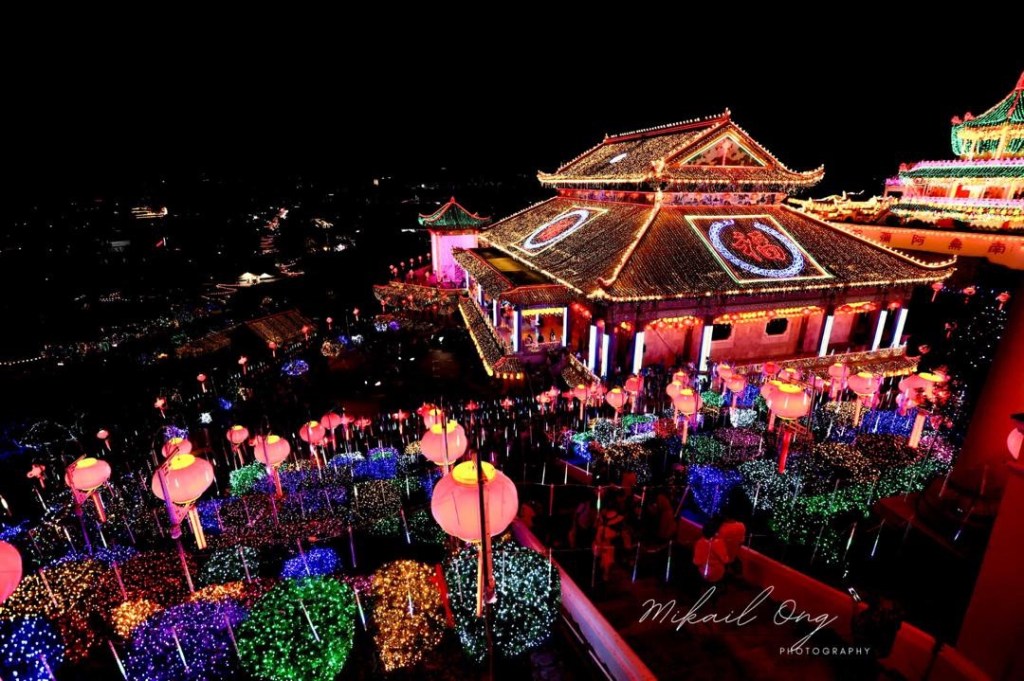
Malaysians (and tourists) of various races and faiths joined in unison, united by a shared appreciation for the stunning beauty of the temple, which glowed with thousands of LED lights. The sight was nothing short of breathtaking—a harmonious blend of spirituality and artistry that captivates the senses and inspires the soul.
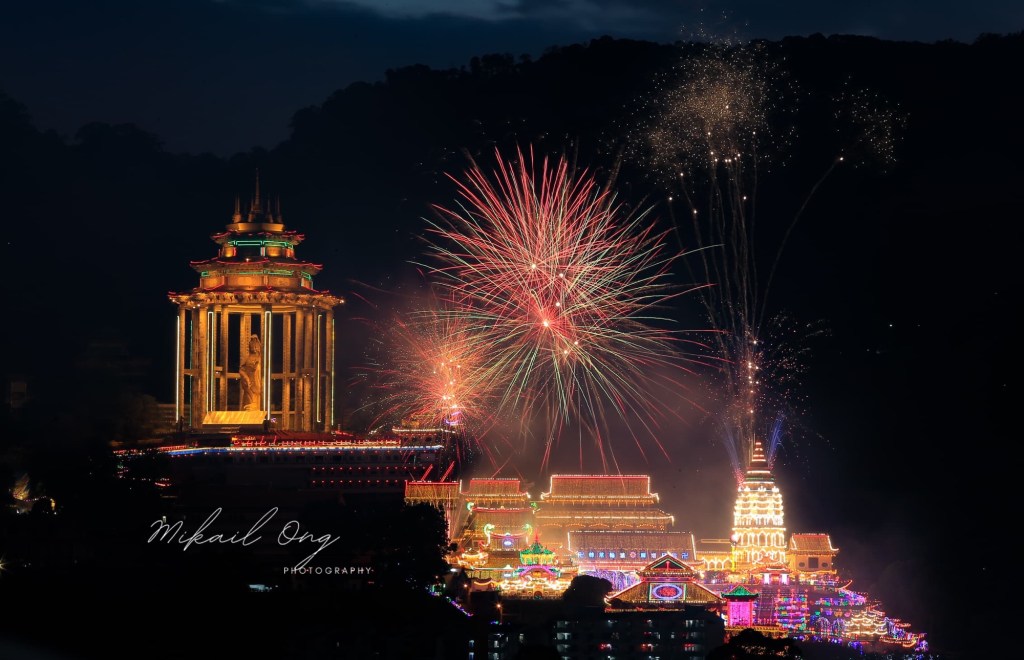
Among the highlights of the Kek Lok Si Temple at Air Itam on Penang island, are its intricate pagodas and the towering statue of the Goddess Kuan Yin, which stands as a reminder of compassion, unity, and love.
The Goddess Kuan Yin smiles down on all visitors against the backdrop of a fireworks display
As visitors pause to admire the architectural wonders and intricate details, they are also reminded of the values that bind us all together, transcending differences in belief and background. It’s a beautiful testament to the spirit of Malaysia—a melting pot of cultures, where respect and appreciation for one another flourish.
Lensman Mikail Ong had the unique opportunity to capture this enchanting scene on assignment, and he has generously shared his stunning photographs with us.
His lens reveals the magic of the moment—each shot telling a story of joy, reverence, and the shared human experience. Aud and I, as his sisters in the media, can only dream of capturing such beauty; Mikail’s work encapsulates the essence of what makes Kek Lok Si Temple on Lunar New Year’s Eve a sight to behold.
A Lunar New Year icon … the Kek Lok Si Temple
As you scroll through the images in this post, let each photograph transport you to that hilltop sanctuary, where the glow of lights and the warmth of community create an unforgettable tapestry of life and celebration.
Whether you are a seasoned photographer or simply someone who enjoys the beauty of the world, visiting Kek Lok Si Temple during this festive season is truly a treat for shutterbugs and a heartwarming reminder of the bonds that tie us all together.
May the blessings of the new year fill your hearts with joy, compassion, and unity, just as they do at the Kek Lok Si Temple. Happy Lunar New Year!
Nestled along the picturesque coastline of Penang, the Eastern and Oriental Hotel (E&O) is a treasure trove of history and charm. As you wander through its hallowed halls, you’ll uncover a wealth of unique features that pay homage to Penang & Malaysia’s rich heritage.
A courtesy map in every room is a good reference and here are some highlights:
The E & O Map
E & O Gallery
One of the highlights of your visit should undoubtedly be the E & O Gallery, where the exquisite handsewn wedding dress of Patsy Addington is proudly displayed. This stunning piece is not just a garment; it’s a testament to love and craftsmanship that resonates with the stories held within the hotel’s walls.
Waygood-Otis Lift
Step into the historic Waygood-Otis lift, a marvel of engineering from the 1920s. This charming lift whisks you between floors while evoking a sense of nostalgia, reminding you of the elegance of a bygone era.
19th Century Cannon
Don’t miss the iconic 19th-century cannon that stands sentinel, pointing out towards the Andaman Sea. This relic of the past serves as a reminder of the hotel’s storied history and the strategic importance of Penang in maritime trade.
Echo Dome
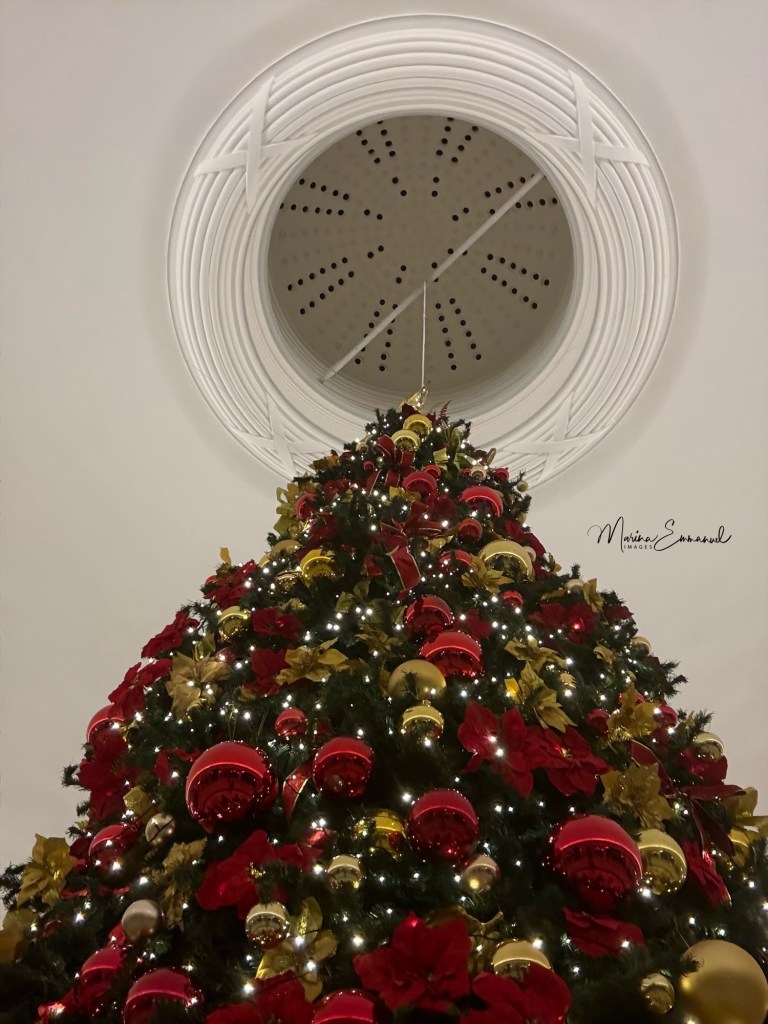
Finally, immerse yourself in the enchanting acoustics of the Echo Dome, an architectural wonder that virtually broadcasts sound throughout the lobby. Gather with friends and family, (especially during this 🎄holiday season 🎄) and experience the beautiful interplay of sound and space that defines this unique feature.
The hotel’s iconic Echo Dome
At the E & O Hotel, every corner whispers tales of grandeur and history, inviting you to create your own memories in this timeless setting. Whether you’re enjoying a leisurely afternoon tea or exploring this heritage hotel’s rich past, your stay promises to be an unforgettable experience.
Kim, a vibrant and colourful soul whose love for fabric and textiles was matched by her passion for travel and devotion to music, has left us after an illness.
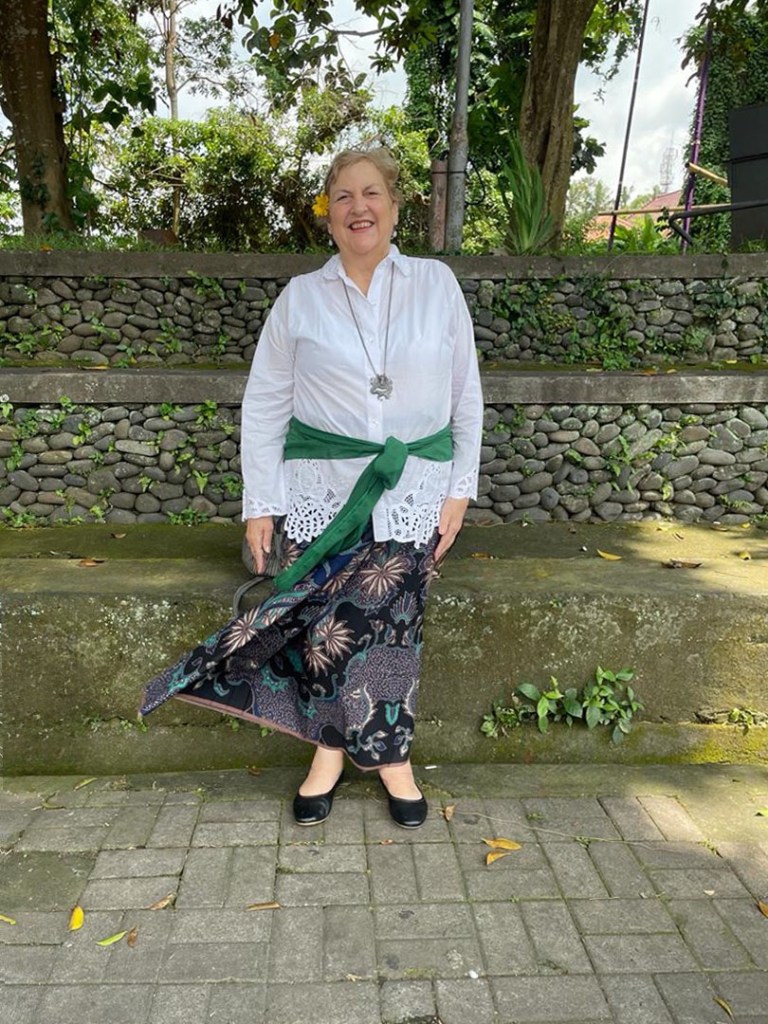
Kim at one of her favourite travel destinations (Bali) this year (photo by Tess tweaked by Boon Tiong)
Her creative spirit shone brightly through her work with textiles which saw the production of a book.
The book authored by Kim
An avid traveler, Kim, embarked on countless adventures, exploring new cultures and gathering inspiration for her work, as she set up homes with her late husband Michael Saunders, in various Asian cities. She cherished every journey, finding joy in discovering new places, meeting new friends, and experiencing the beauty of the world.
Her devotion and love for dogs is legendary and she will be remembered for always being the first to lend a hand and donation to those in need.
Kim’s love for music, particularly choral singing, enriched her life and the lives of those around her.
Whether performing in local choirs or sharing her love of music for God in church, her voice resonated always with passion and joy. She found solace and connection through song and hymns, and her spirit will undoubtedly echo in the hearts of those who sang alongside her.
Kim sang in the Church of the Immaculate Conception, Penang’s choir
Now, Kim is reunited with her beloved Michael, and together they continue their journey in the beyond. May their love inspire us to embrace our passions and cherish every moment.
Rest in peace, Kim. Your legacy of love, service and inspiration will be etched in all our hearts.















 postcodegeorgetown